Italian is more than just the language of opera and fine cuisine. Learning Italian can open doors to a rich cultural heritage, facilitate travel, and boost your cognitive skills. Starting with A1—the official beginner level—you’ll build the foundations for practical everyday conversation.
WHY LEARN ITALIAN?
Italian connects you to culture, travel opportunities, and personal growth. At the A1 level, you begin your journey with the essentials for communicating in simple daily situations.
WHAT IS A1 LEVEL?
The A1 level is the starting point for Italian learners, defined by the Common European Framework of Reference for Languages (CEFR). At this stage, you will be able to:
- Understand and use simple phrases.
- Introduce yourself and others.
- Answer basic questions about personal details.
KEY ELEMENTS OF ITALIAN A1
Focus on building a strong foundation with these core elements:
- Greetings and Introductions: Say hello (ciao, buongiorno), goodbye (arrivederci), and introduce yourself (Mi chiamo…).
- Numbers and Colors: Count, tell your age, and name colors.
- Everyday Vocabulary: Learn words for family, food, places, and common objects.
- Basic Grammar: Practice present tense regular verbs, articles (il, la, lo, l’), and forming simple questions (Come ti chiami?).
- Useful Expressions: Essential phrases for shopping, ordering at a café, and asking for directions.
TIPS FOR SUCCESS
Enhance your learning experience with these strategies:
- Practice Every Day: Even short daily sessions reinforce vocabulary and structures.
- Listen and Repeat: Use online audio materials to improve pronunciation and comprehension.
- Join a Community: Connect with fellow learners or native speakers for practice.
- Make It Fun: Watch Italian movies with subtitles, listen to Italian music, or follow Italian cooking shows.
SAMPLE A1 CONVERSATION
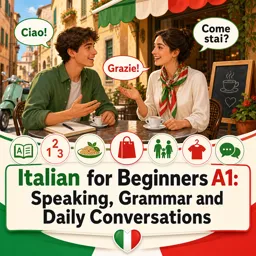
A: Ciao! Come ti chiami?
B: Mi chiamo Marco. E tu?
A: Sono Anna. Piacere!
B: Piacere!
NEXT STEPS
Start with A1 and progress at your own pace. With regular practice and curiosity, you’ll soon communicate confidently in Italian daily situations.