What is Auslan?
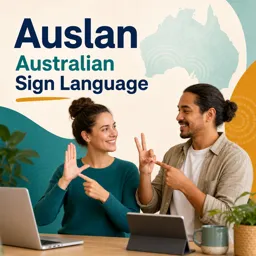
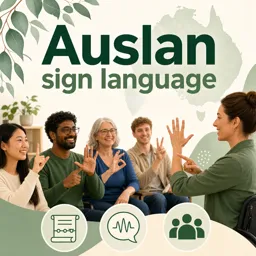
Auslan, short for Australian Sign Language, is the primary sign language of the Australian Deaf community. Developed organically, it is a rich, fully-fledged language with its own grammar and vocabulary distinct from both English and other sign languages, like American Sign Language (ASL) or British Sign Language (BSL).
The Structure of Auslan
Unlike spoken languages, Auslan relies on hand shapes, movements, facial expressions, and body language to convey meaning. The language’s structure is uniquely visual and spatial, including:
- Handshapes: Auslan uses dozens of basic hand formations, each with various meanings depending on context.
- Location: Signs are made at particular points on or near the body, influencing their interpretation.
- Movement: The path and direction of a sign’s motion can alter its meaning.
- Non-manual Features: Facial expressions and body posture are vital, often conveying grammatical information or emphasis.
Deaf Culture and Auslan
Auslan is more than a means of communication; it is a cornerstone of Australian Deaf culture. For many Deaf people, Auslan is a key part of identity, community, and social interaction. Deaf clubs and organizations across Australia use Auslan as their working language, and events such as visual arts exhibitions, theatre performances, and festivals often feature Auslan prominently.
Learning and Using Auslan
Interest in Auslan has grown in recent years. Many schools, universities, and community centers now offer Auslan courses for beginners and advanced learners alike. People choose to learn Auslan for a variety of reasons, including communicating with Deaf friends or family, working as interpreters, or supporting inclusive environments in healthcare, education, and the workplace.
Why is Auslan Important?
Auslan enriches the linguistic landscape of Australia and supports the basic rights of Deaf individuals to access information and participate fully in society. Promoting Auslan awareness also encourages greater inclusivity and understanding across communities, breaking down barriers between hearing and Deaf Australians.