
Exercises
Explore how singers coordinate chest-dominant, head-dominant, mixed, and falsetto-like production across their range. This quiz examines passaggio terminology, common causes of vocal breaks, vowel modification, semi-occluded exercises, acoustic resonance, and safe practice strategies. The questions combine practical situations with visual interpretation to assess your ability to recognize and manage register transitions efficiently.
Answer the questions below and check the explanation for each answer.
0/10 answered
Auto audio on: the next questions will be read aloud when you click Continue.
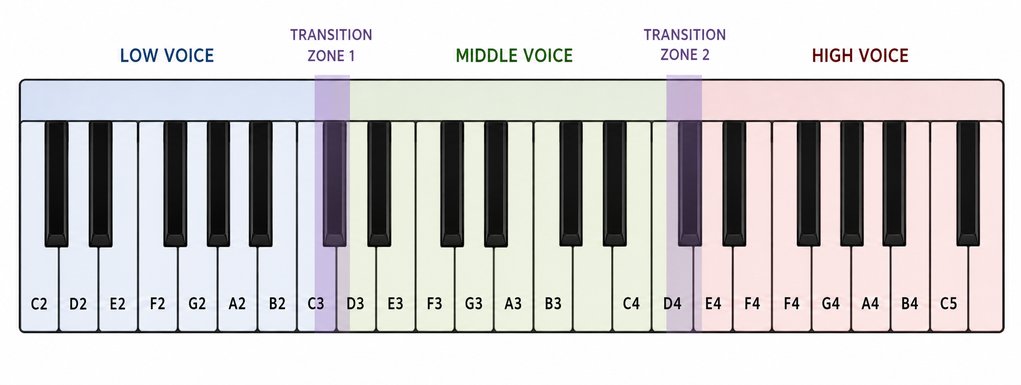
The passaggio is a transitional region in which vocal-fold coordination and vocal-tract resonance must adjust as pitch changes. Skilled singers learn to cross it without a noticeable break.
Carrying excessive vocal weight upward can destabilize the transition. Reducing pressure and permitting gradual changes in fold coordination and resonance usually produces a smoother passaggio.
Balanced mixed registration does not require an unchanging tone. It allows coordinated adjustments so that changes in timbre and intensity remain gradual rather than producing a sudden break.
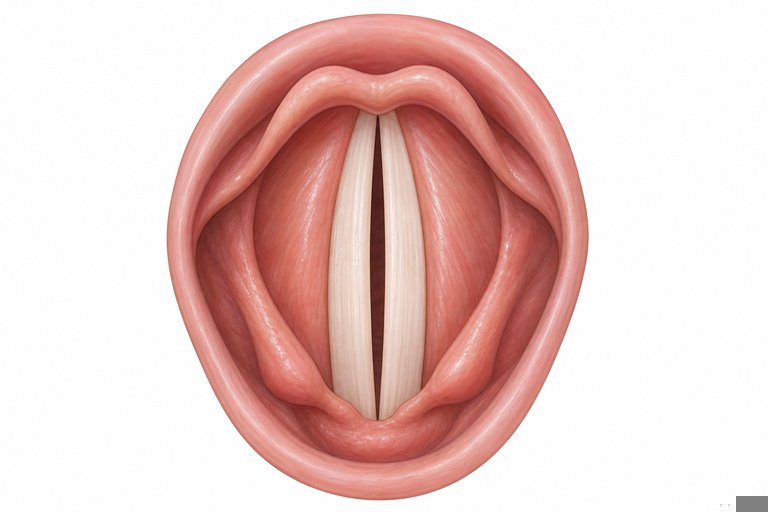
A persistent glottal gap allows more air to escape during phonation. This reduced closure is commonly associated with a breathy, falsetto-like quality, although individual production patterns vary.
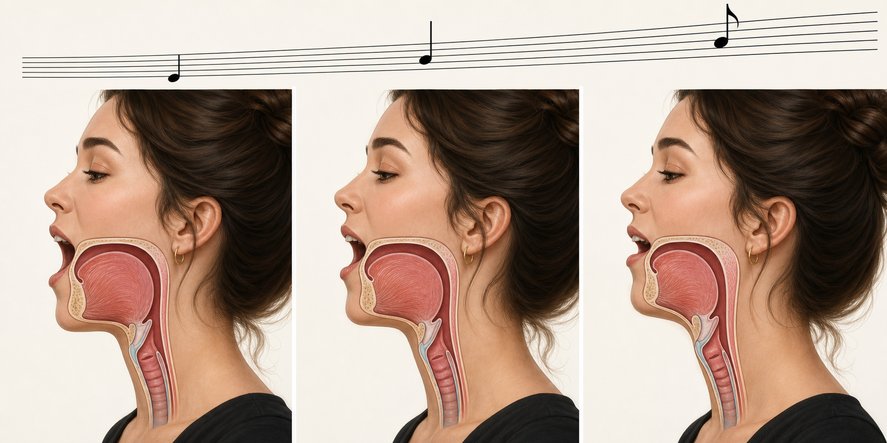
Vowel modification subtly changes the vocal tract so its resonances remain compatible with rising pitches. It can reduce strain and help preserve clarity through the passaggio.

Straw phonation partially closes the vocal tract and creates helpful back pressure. This can encourage efficient vocal-fold vibration and make register-transition practice feel more stable.
In classical terminology, the zona di passaggio is the pitch region bounded by the first and second transition points. Registration and vowel strategies are coordinated throughout this zone.
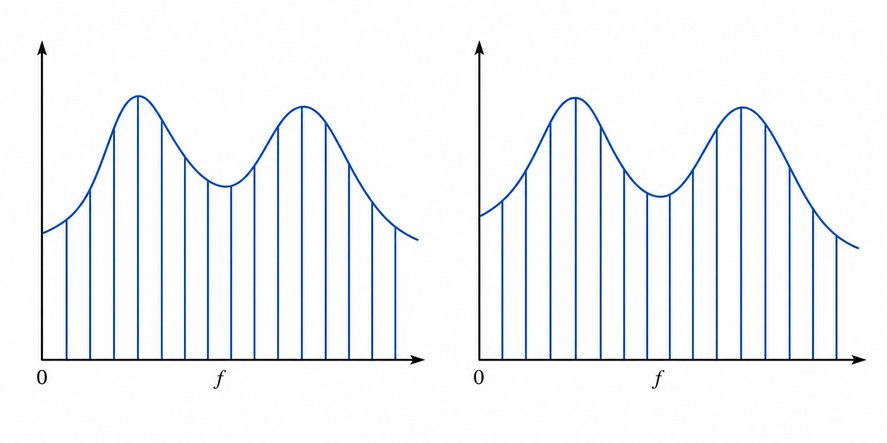
Formant tuning occurs when a singer adjusts the vocal tract to change resonance frequencies and their relationship to sound-source harmonics. This becomes especially important at higher pitches.
A sudden heavy shift on the way down often means the singer postponed the gradual return toward chest-dominant coordination. Practicing slow descending glides can help distribute that adjustment.
Moderate, controlled glides allow registration and resonance to coordinate without excessive force. Gradual range expansion and regular rest are safer and more effective than high-volume repetition.

Free CourseComplete Vocal Course
5

(3)

1h14m

2 exercises

Free CourseHow to Sing Opera
5
(1)
3h48m
15 exercises

Free CourseSinging Lessons
5
(2)
2h08m
27 exercises

Free CourseBe a Professional Singer
5
(1)
1h26m
25 exercises

Free CourseVoice Lessons
5
(1)
22h40m
48 exercises

Free Course30 Day How to Sing
5
(1)
59m
29 exercises

Free CourseLearn to Sing
5
(1)
10h58m
38 exercises

Free CourseSinging Lessons for Beginners
4.9
(133)
5h00m
19 exercises
Thousands of online courses in video, ebooks and audiobooks.
To test your knowledge during online courses
Generated directly from your cell phone's photo gallery and sent to your email

Download our app via QR Code or the links below:.



Carry knowledge in your pocket.
Download the Cursa app.
There are hundreds of free courses available, with a free certificate of completion that is saved in your mobile image gallery.
Download the app to access the Course Completion Certificate for Free.


+ 10 million
students

Free and Valid
Certificate

60 thousand free
exercises

4.8/5 rating in
app stores

Free courses in
video and ebooks