
Exercises
Explore how American Sign Language uses classifiers and depicting verbs to represent people, vehicles, objects, movement, location, handling, and spatial relationships. These questions assess your ability to distinguish classifier types, interpret visual parameters, maintain referential locations, and understand how handshape, movement, orientation, and nonmanual signals work together.
Answer the questions below and check the explanation for each answer.
0/12 answered
Auto audio on: the next questions will be read aloud when you click Continue.
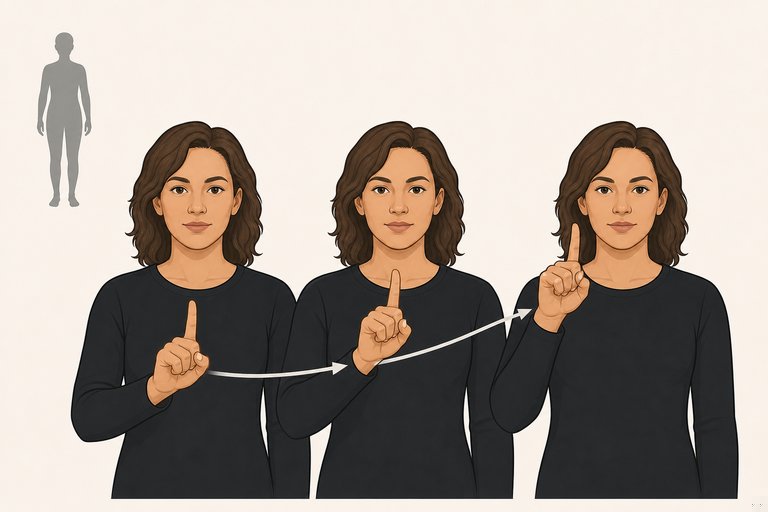
An entity classifier represents a referent as a whole. An upright index handshape can represent a standing or moving person after that referent has been established.
A handling classifier depicts how the hand grips, carries, turns, or otherwise manipulates an object. Its form is influenced by the manner of handling.

The ASL 3 handshape is commonly used as an entity classifier for vehicles such as cars, trucks, and bicycles. Its movement can depict a vehicle's path.
The signer normally identifies the referent first. A classifier can then represent that established person or object while showing its movement, location, or orientation.
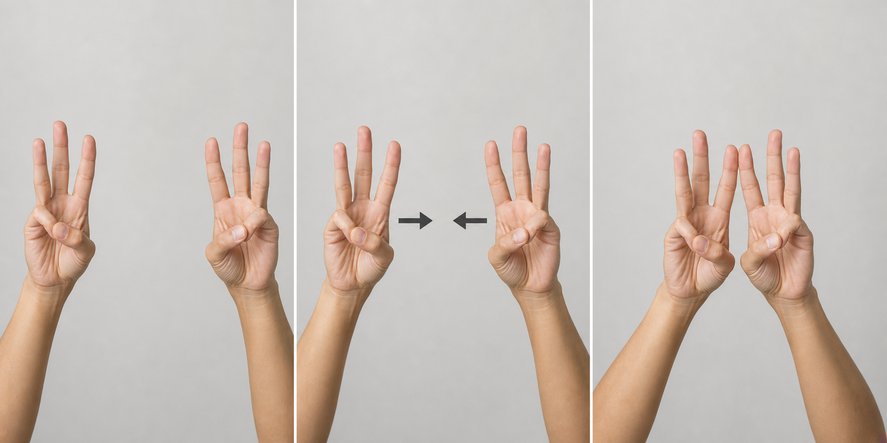
The converging movement paths and abrupt contact depict a collision. Classifier movement can visually represent both an object's path and the manner in which an event occurs.
Consistent loci help viewers track who or what is being discussed. Moving references unpredictably can obscure actions and spatial relationships between referents.
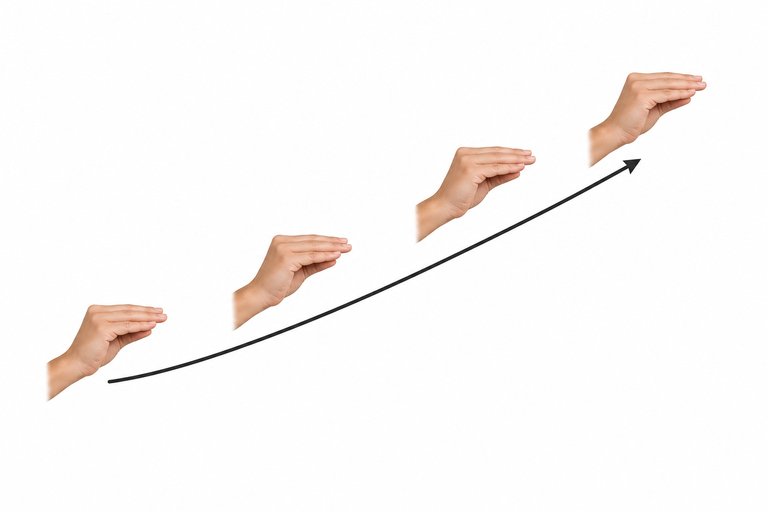
In a depicting construction, the movement component can show a referent's direction, path, speed, or manner of travel while the classifier handshape identifies its category.
The hand depicts how a person grasps and moves the cup, so this is a handling classifier. The emphasis is on manipulation rather than representing the cup as a whole entity.
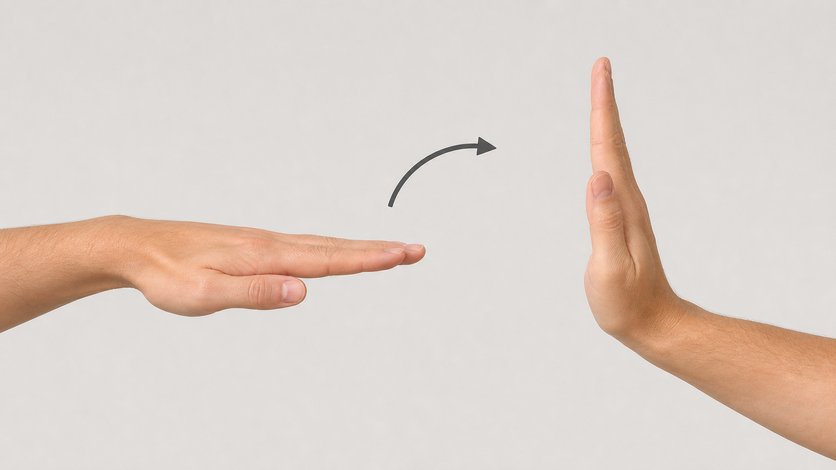
When an established classifier rotates while its location remains stable, the rotation can depict a change in the represented object's orientation.
Alternating between established loci allows the signer to track separate referents and depict how their positions or actions relate to one another.
Classifier selection is guided by properties such as whether something is a person, vehicle, flat object, or handled item. The intended depiction and discourse context also matter.
Facial expression, body movement, and conventional mouth movements can enrich a depiction by indicating qualities such as effort, speed, size, or intensity alongside the manual components.

Free CourseWorld Sign Languages
5

(1)

4h51m

35 exercises

Free CourseAmerican Sign Language ASL
5
(11)
30h07m
46 exercises
Free CourseAmerican Sign Language
5
(3)
4h25m
32 exercises

Free CourseAuslan Australian Sign Language
5
(3)
58m

Free CourseAmerican Sign Language (ASL)
5
(1)
48h13m
1 exercises

Free CourseInternational sign language
4.7

(115)
48m

Free CourseAuslan sign language
4.5
(2)
12m
1 exercises

Free CourseAmerican sign language
4
(18)
5h51m
22 exercises
Thousands of online courses in video, ebooks and audiobooks.
To test your knowledge during online courses
Generated directly from your cell phone's photo gallery and sent to your email

Download our app via QR Code or the links below:.



Carry knowledge in your pocket.
Download the Cursa app.
There are hundreds of free courses available, with a free certificate of completion that is saved in your mobile image gallery.
Download the app to access the Course Completion Certificate for Free.


+ 10 million
students

Free and Valid
Certificate

60 thousand free
exercises

4.8/5 rating in
app stores

Free courses in
video and ebooks