
Exercises
Assess your practical understanding of studio lighting and off-camera flash. This quiz covers light modifiers, metering, inverse-square behavior, flash synchronization, lighting patterns, spill control, color correction, background exposure, and common portrait setups. Questions range from foundational concepts to more advanced decisions encountered when building and refining a controlled lighting setup.
Answer the questions below and check the explanation for each answer.
0/20 answered
Auto audio on: the next questions will be read aloud when you click Continue.
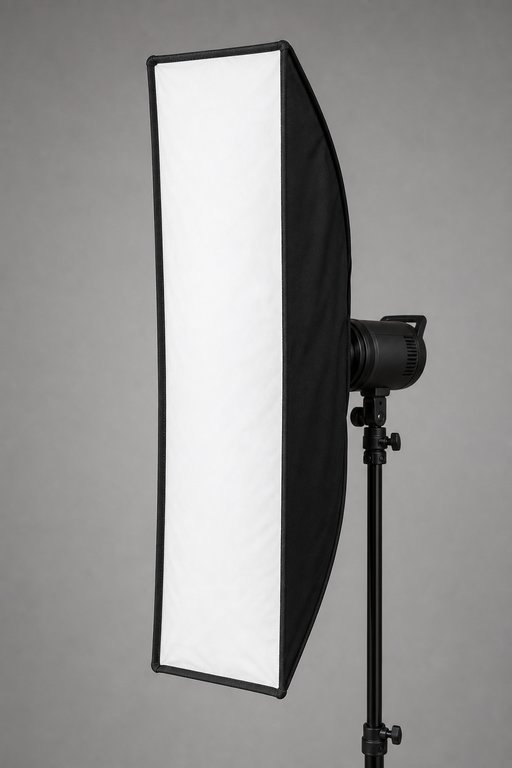
A stripbox is a tall, narrow softbox that produces a long, controlled highlight. It is commonly used as a rim light or to illuminate full-length subjects.
A larger apparent light source wraps light around the subject and creates broader transitions between highlights and shadows. Moving a large modifier closer also increases its apparent size.
Illumination is inversely proportional to the square of the distance. Doubling the distance produces 1 divided by 2 squared, so only one-quarter of the illumination remains.
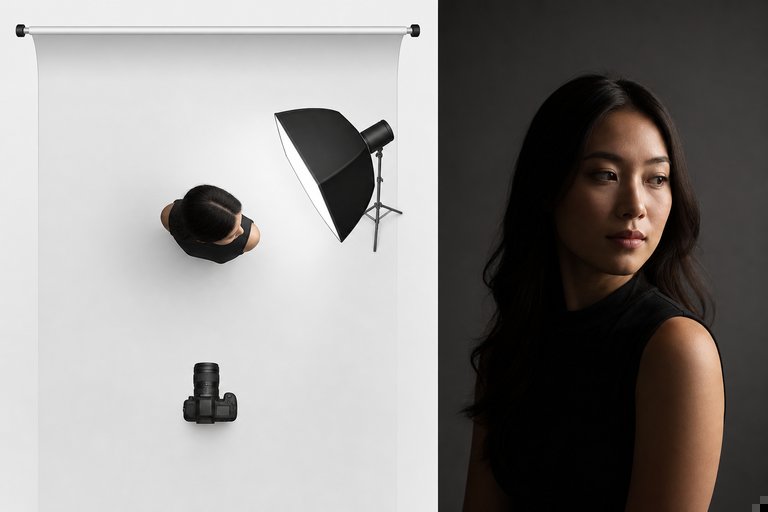
In short lighting, the side of the face turned away from the camera receives the main light. The camera-facing side remains darker, which can visually narrow the face.
An incident meter measures light falling on the subject, so it is placed at the subject's position. Dome orientation depends on whether the photographer is measuring overall exposure or an individual light.
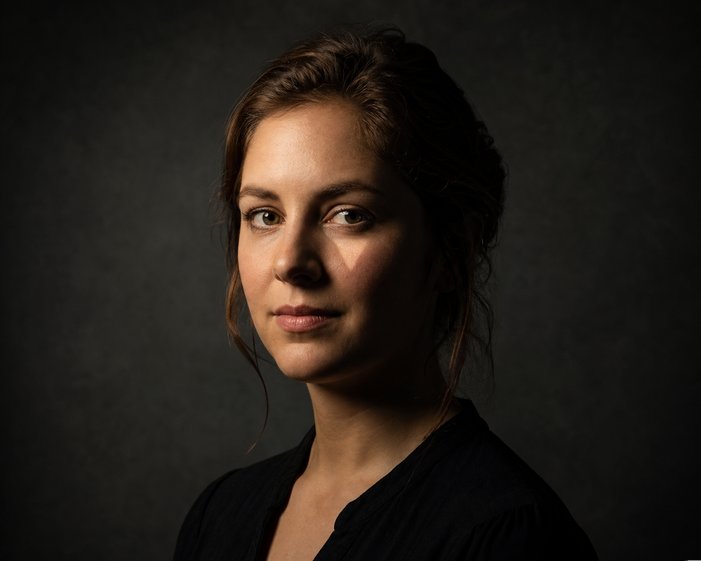
Rembrandt lighting is recognized by a small illuminated triangle on the cheek on the shadow side of the face, created when the nose and cheek shadows connect.
A grid narrows the direction of light leaving the softbox and reduces spill onto the background or nearby surfaces. It does not increase power or change the light's operating mode.
Above normal sync speed, the shutter curtains may form a moving slit instead of fully exposing the sensor at once. A conventional flash burst can then illuminate only part of the frame.
High-speed sync emits a rapid series of pulses while the shutter slit travels across the sensor. This is less power-efficient than a single burst, reducing effective output and range.
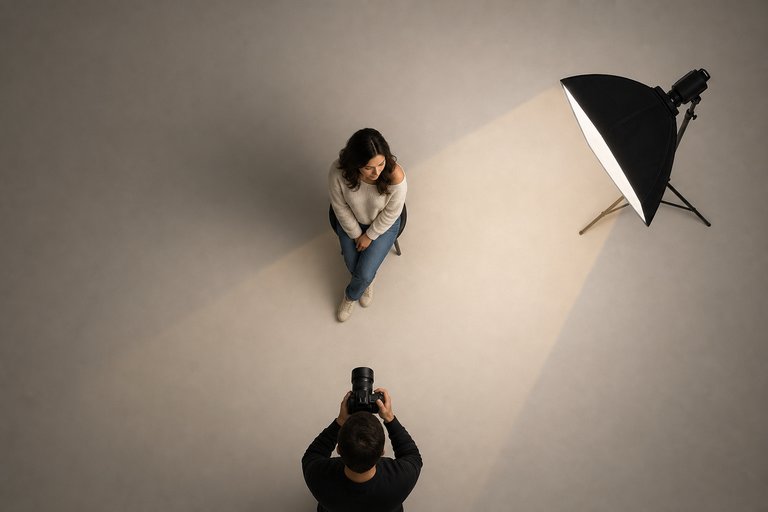
Feathering uses the edge of a light's beam rather than its center. It can control hotspots, reduce spill, and create more even illumination across parts of the subject.
A black surface absorbs stray light instead of reflecting it back toward the subject. This negative fill increases shadow density and can add shape and contrast.
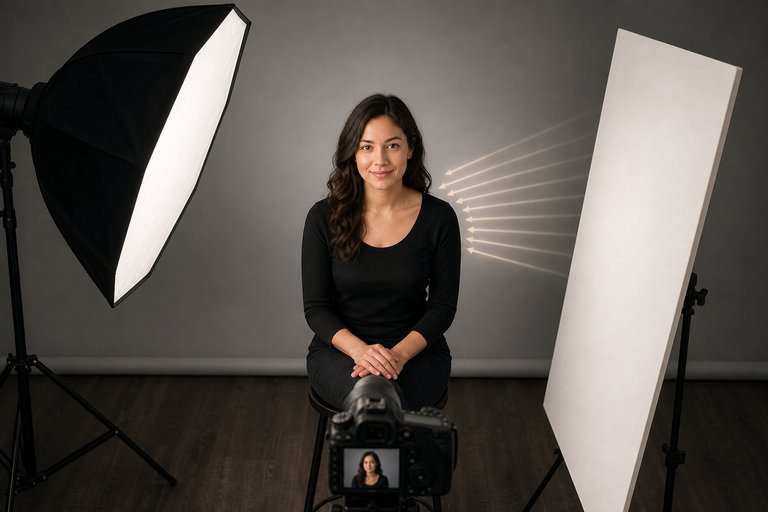
The white panel returns some of the key light to the subject's shadow side. This creates passive fill and lowers contrast without requiring a second powered light.
When ambient light contributes little, the brief flash burst becomes the effective exposure time. A shorter flash duration reduces the distance a moving subject travels while illuminated.
Each stop represents a doubling of light. A two-stop difference equals two doublings: 2 multiplied by 2 equals four times the illumination.
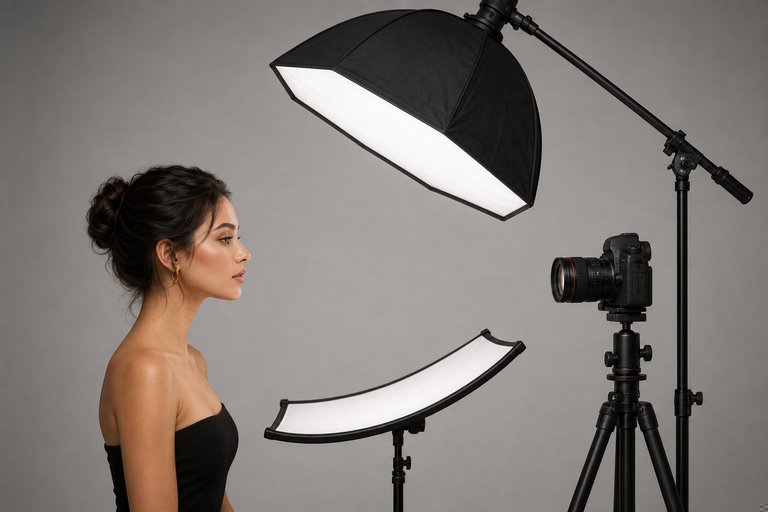
Clamshell lighting places a key light above and in front of the face with a reflector or second light below. It produces even beauty lighting and distinctive upper and lower catchlights.
Separate background lighting allows its exposure to be controlled without flattening the subject. The background can be raised toward white while flags, distance, and careful metering limit spill.
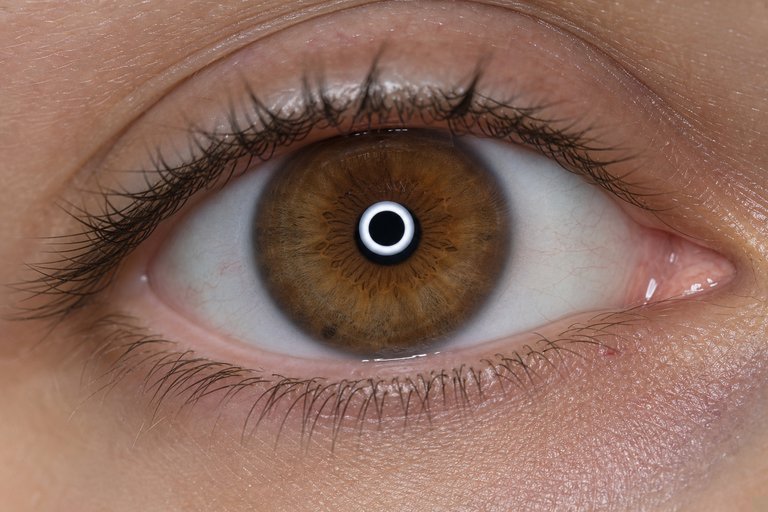
A ring light surrounds the lens and commonly produces a circular or doughnut-shaped catchlight centered around the pupil. Other modifiers generally create catchlights resembling their own shapes.
A full color temperature orange gel converts daylight-balanced flash toward tungsten color. This helps match warm ambient lighting or intentionally warms the flash.
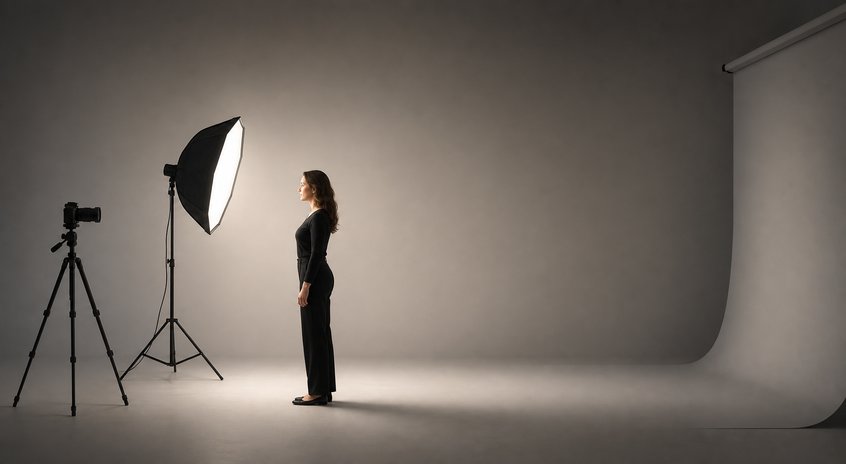
Increasing subject-to-background distance allows more light to fall off before it reaches the background. The key can then be adjusted or metered to preserve the subject's exposure.
Gelling the daylight flash with CTO brings it closer to tungsten light. A tungsten-appropriate white balance can then render both sources approximately neutral, assuming their spectra are reasonably compatible.

Free CourseBeginners Guide of Photography and Videography
5

(5)

4h24m

15 exercises
Free CourseArchitectural Photography Basics
5
(1)
3h19m
11 exercises

Free CourseLearn Photography for beginners
5
(4)
4h01m

Free CourseBeginning Photography Fundamentals
5
(1)
6h50m
6 exercises

Free CoursePhotography complete course
5
(5)
10h30m
39 exercises

Free CourseBeginners Guide to Photography
4.9
(122)
3h23m
14 exercises
Free CourseWedding photography
4.8
(38)
4h49m
21 exercises
Free CoursePhotography complete course
4.8
(156)
2h36m
9 exercises
Thousands of online courses in video, ebooks and audiobooks.
To test your knowledge during online courses
Generated directly from your cell phone's photo gallery and sent to your email

Download our app via QR Code or the links below:.



Carry knowledge in your pocket.
Download the Cursa app.
There are hundreds of free courses available, with a free certificate of completion that is saved in your mobile image gallery.
Download the app to access the Course Completion Certificate for Free.


+ 10 million
students

Free and Valid
Certificate

60 thousand free
exercises

4.8/5 rating in
app stores

Free courses in
video and ebooks