
Exercises
Build practical knowledge of fingerspelling in American Sign Language (ASL). This quiz examines the one-handed manual alphabet, distinctive handshapes, the moving letters J and Z, production techniques, and strategies for understanding fingerspelled words. Visual identification questions reinforce important differences among commonly confused letters. The quiz also covers appropriate signing space, doubled letters, lexicalized fingerspelling, and common situations in which fingerspelling is used.
Answer the questions below and check the explanation for each answer.
0/16 answered
Auto audio on: the next questions will be read aloud when you click Continue.
The ASL manual alphabet is a one-handed system. This differs from the two-handed manual alphabets used in some other sign languages.
Fingerspelling is normally produced with the signer's dominant hand. Consistent use supports clarity and smooth movement.
J and Z are the alphabet's principal moving letters. J is traced with the little finger, while Z is traced with the index finger.

The closed fist with the thumb resting along the outside of the index finger forms A. In S, the thumb crosses the front of the curled fingers.
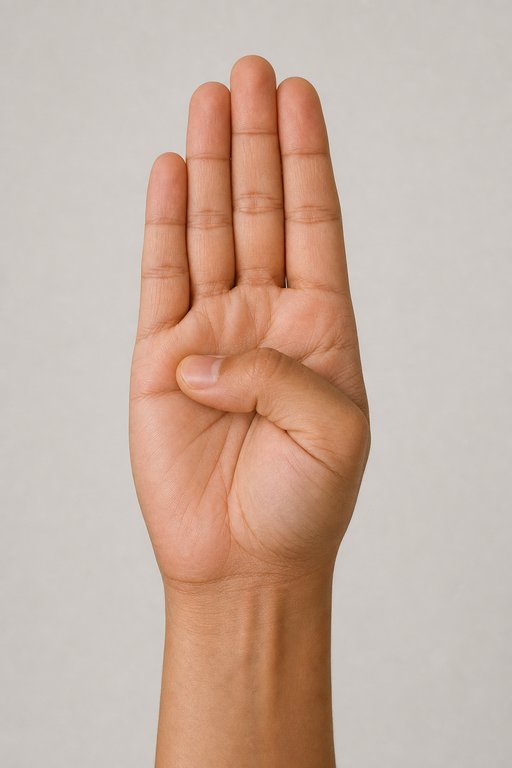
B uses four straight fingers held together while the thumb folds across the palm. U uses only the index and middle fingers upright.
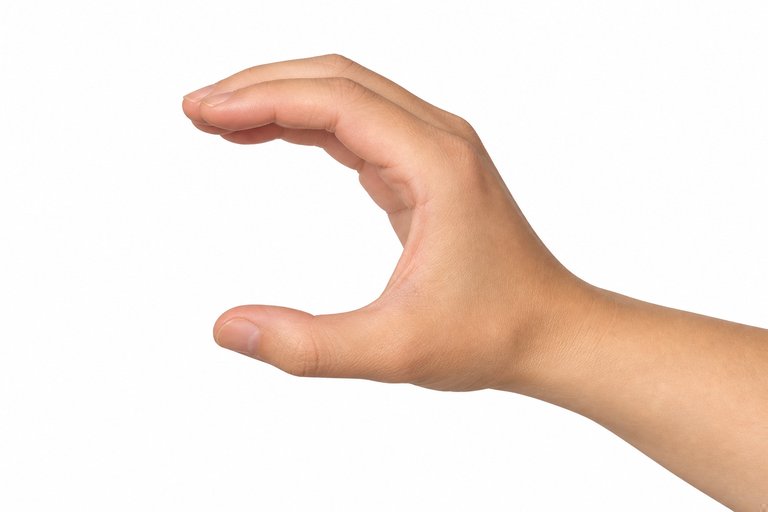
The fingers and thumb curve toward one another while remaining separated to form C. In O, the fingertips and thumb meet.

In M, the thumb is tucked beneath three fingers. N places it beneath two fingers, while T places it between the index and middle fingers.
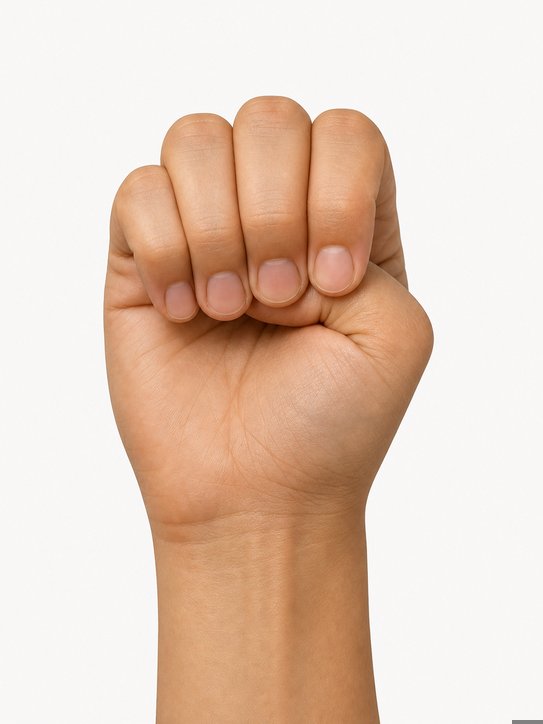
N is distinguished by the thumb being tucked beneath two fingers. The number of fingers covering the thumb helps separate M from N.
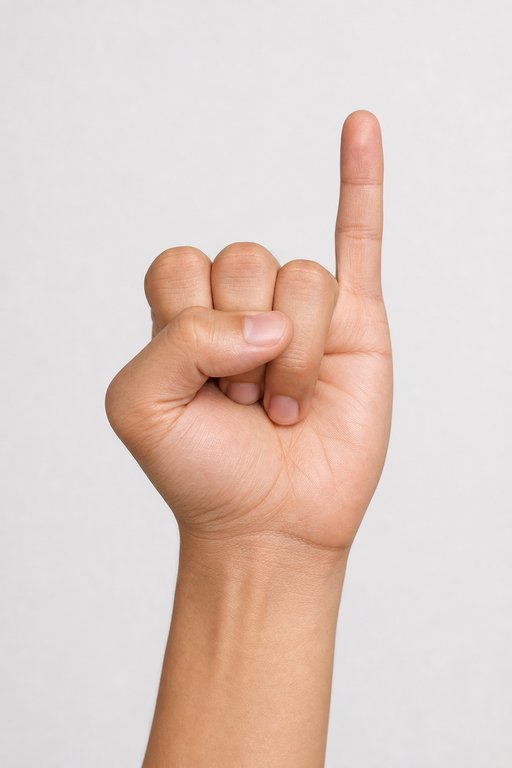
I is formed with the little finger extended while the other fingers and thumb are closed. Y extends both the thumb and little finger.
A doubled letter is often shown by repeating or slightly shifting the handshape sideways. The exact movement can vary with the letter, but it should remain compact and controlled.
Fingerspelling is usually kept in a comfortable space near the dominant shoulder or upper torso, where the hand and face can be viewed without excessive eye movement.
The number sign commonly marks lexicalized fingerspelling: a fingerspelled form that has developed sign-like movement, rhythm, or letter reduction.
Skilled viewers recognize whole-word patterns, rhythm, transitions, and context instead of decoding each letter separately. This supports faster comprehension.
J begins with the little finger extended and uses that finger to trace a curved path. Z instead uses the index finger in a zigzag movement.
Z is produced with the index finger tracing a compact zigzag. It is one of the two principal moving letters in the ASL alphabet.
Fingerspelling is especially useful for names, places, brands, abbreviations, and specialized terms that lack established signs. ASL is not simply English spelled on the hands.
Thousands of online courses in video, ebooks and audiobooks.
To test your knowledge during online courses
Generated directly from your cell phone's photo gallery and sent to your email

Download our app via QR Code or the links below:.


Carry knowledge in your pocket.
Download the Cursa app.
There are hundreds of free courses available, with a free certificate of completion that is saved in your mobile image gallery.
Download the app to access the Course Completion Certificate for Free.


+ 10 million
students

Free and Valid
Certificate

60 thousand free
exercises

4.8/5 rating in
app stores

Free courses in
video and ebooks