Exercises
Explore the mechanics and mathematics of the perfect Faro shuffle. This quiz covers equal packet division, in-faro and out-faro behavior, controlled interlacing, position calculations, restoration cycles, common execution errors, and practical applications in card magic. Questions combine conceptual knowledge with visual analysis to help you understand both how the shuffle is performed and how it predictably changes a 52-card deck.
Answer the questions below and check the explanation for each answer.
0/13 answered
Auto audio on: the next questions will be read aloud when you click Continue.
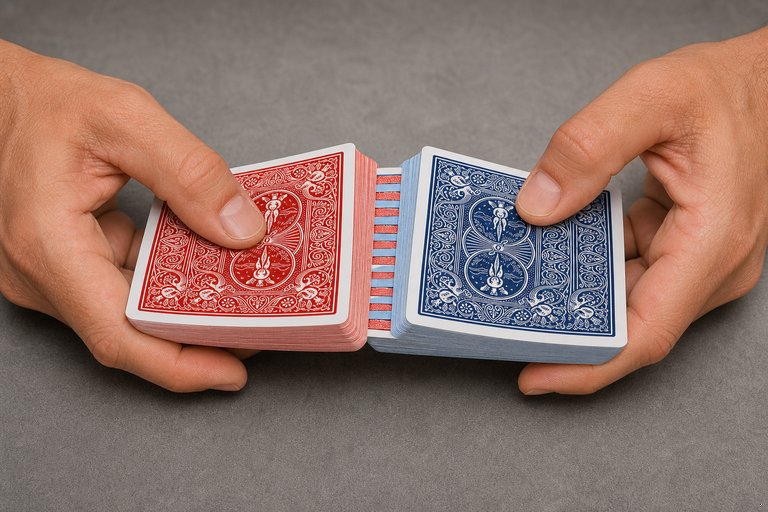
The initial weave occurs when the two packets begin interlacing one card at a time. Squaring or cascading happens only after the weave has been completed.
A full perfect Faro requires two equal packets. With a 52-card deck, each packet must contain 26 cards so every card can alternate with one card from the other packet.
In an out-faro, the outermost cards remain on the outside. Therefore, the original top card stays on top and the original bottom card stays on the bottom.
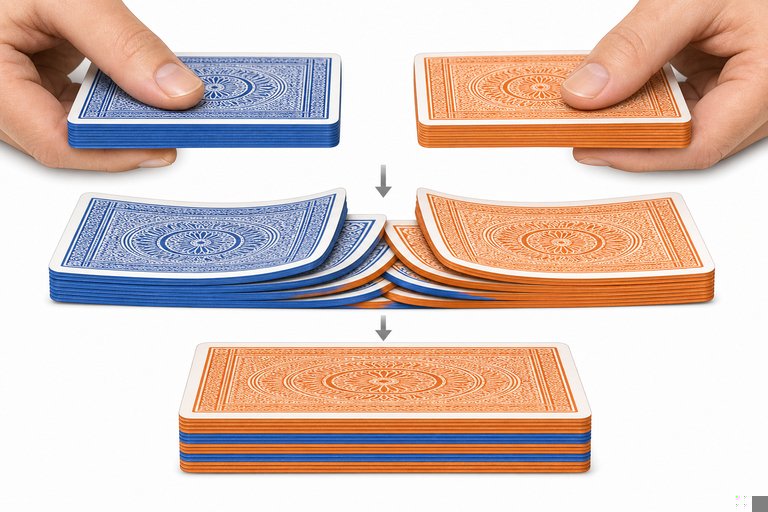
During an in-faro, the original top card moves inward to second position because the top card of the other packet is woven above it.
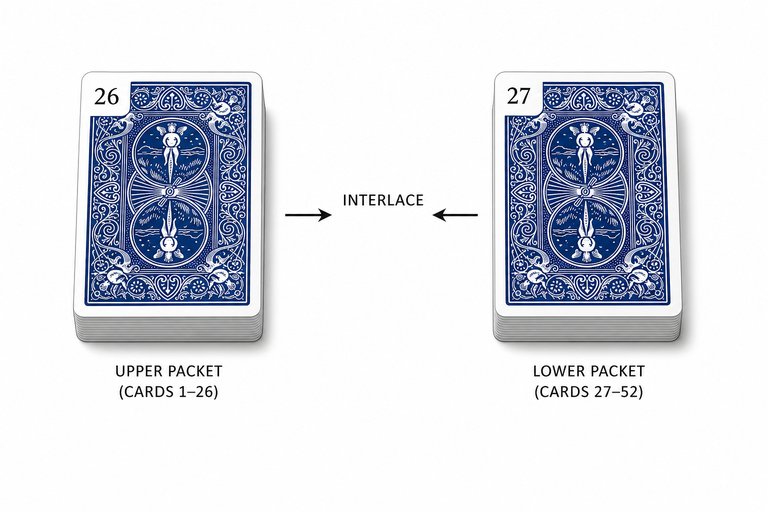
The 27th card is the top card of the lower half after a 26–26 split. In an out-faro, it is woven directly below the original top card, so it moves to position 2.
The original 26th card is the bottom card of the upper packet. In an out-faro sequence, it is followed by the original bottom card, placing it at position 51.
A 52-card deck returns to its starting order after eight perfect out-faros. This restoration cycle is a key mathematical property used in advanced card magic.
In an in-faro, cards from the lower packet occupy the odd-numbered positions. Its final card, originally the bottom card, therefore moves inward from position 52 to position 51.
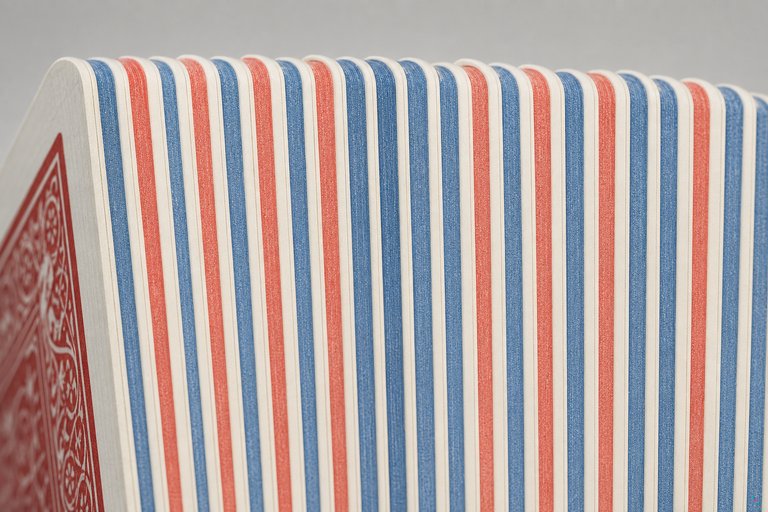
A perfect Faro must alternate cards strictly between the two packets. Two adjacent cards from the same packet indicate a doubled or skipped card, making the weave imperfect.
A full perfect weave requires equal packet sizes. Transferring one card from the 27-card packet produces the necessary 26–26 split without changing the deck's total size.
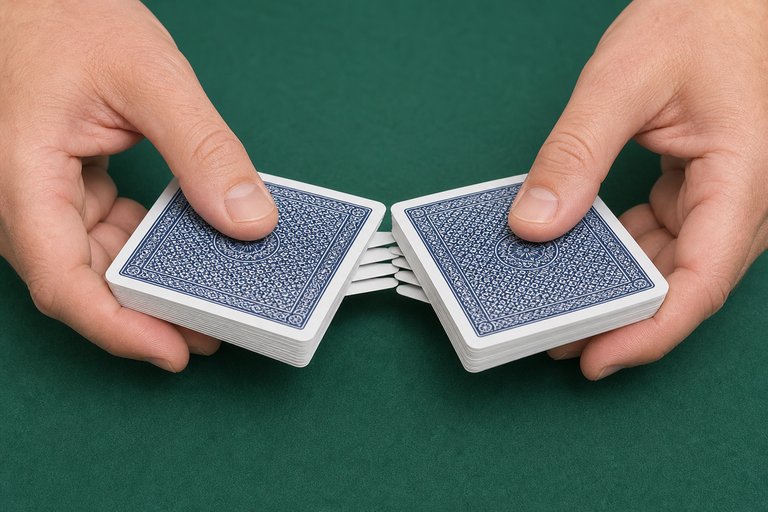
A slight bevel and controlled corner contact encourage cards to separate and enter progressively. This reduces binding and avoids the damage caused by forcing the packets together.
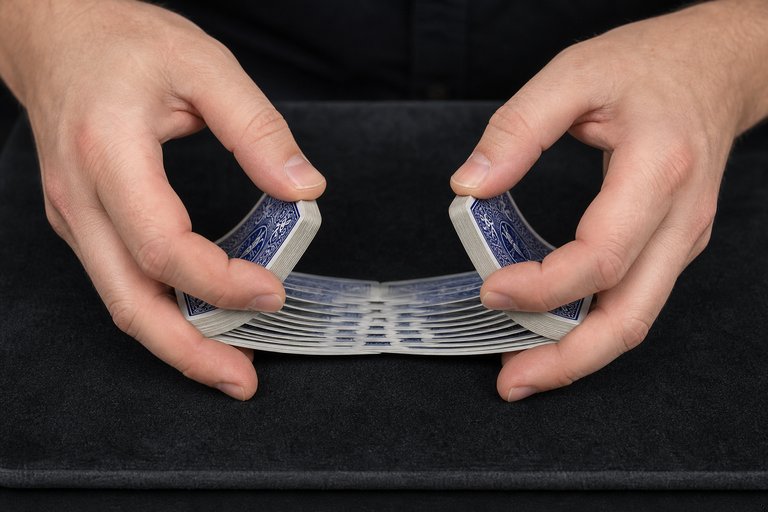
The finish brings the woven packets together and helps square the deck. It does not repair an incorrect alternation or change whether the weave was an in-faro or out-faro.
A perfect Faro is deterministic rather than random. Because every card moves according to a known rule, performers can calculate positions, preserve patterns, build stacks, or produce controlled revelations.
Thousands of online courses in video, ebooks and audiobooks.
To test your knowledge during online courses
Generated directly from your cell phone's photo gallery and sent to your email

Download our app via QR Code or the links below:.



Carry knowledge in your pocket.
Download the Cursa app.
There are hundreds of free courses available, with a free certificate of completion that is saved in your mobile image gallery.
Download the app to access the Course Completion Certificate for Free.


+ 10 million
students

Free and Valid
Certificate

60 thousand free
exercises

4.8/5 rating in
app stores

Free courses in
video and ebooks