
Exercises
Learn how to disclose brand relationships clearly and responsibly under U.S. Federal Trade Commission endorsement guidance. This quiz examines material connections, disclosure wording and placement, affiliate links, temporary content, video sponsorships, livestreams, product claims, and shared compliance responsibilities. The questions use realistic influencer scenarios to help you recognize common disclosure mistakes and apply good practices across social media formats.
Answer the questions below and check the explanation for each answer.
0/12 answered
Auto audio on: the next questions will be read aloud when you click Continue.
A free product can create a material connection because it may affect how viewers evaluate the endorsement. Payment is not required for a disclosure obligation to arise.
An effective disclosure should be clear and conspicuous. Viewers should notice and understand the relationship without searching for it or interpreting vague language.
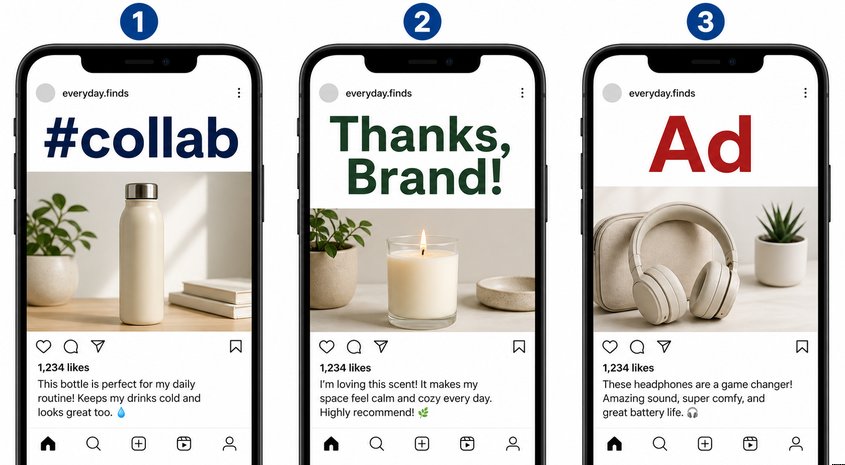
“Ad” directly communicates that content is advertising. Expressions such as “#collab” or “Thanks, Brand!” can be ambiguous and may not tell viewers that a material connection exists.
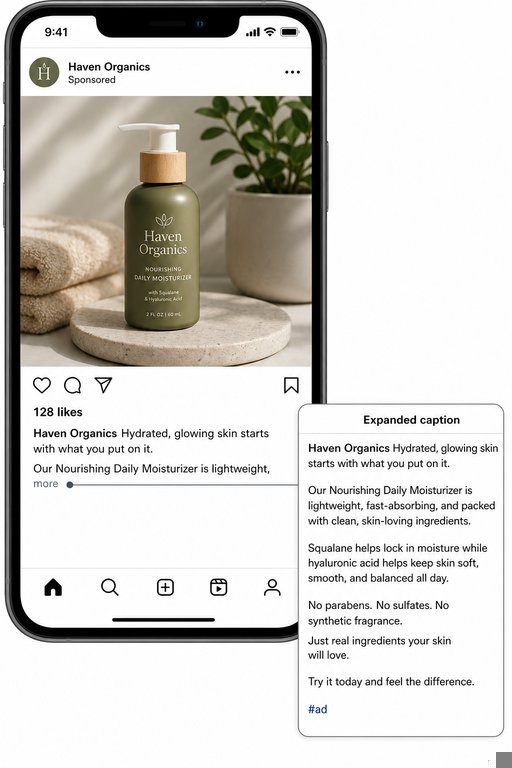
A disclosure should not be buried where users are unlikely to see it. In a truncated caption, it should generally appear before the cutoff rather than requiring viewers to select “more.”
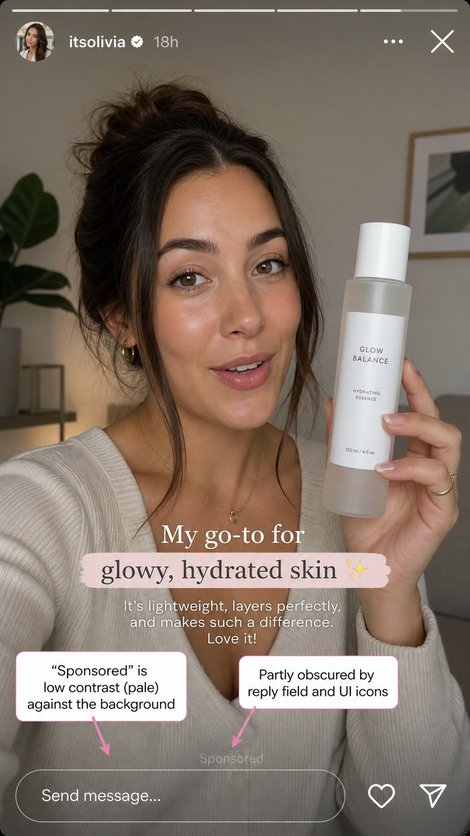
Story disclosures should be easy to notice and read during the limited viewing time. Strong contrast, readable size, and placement away from interface elements improve visibility.
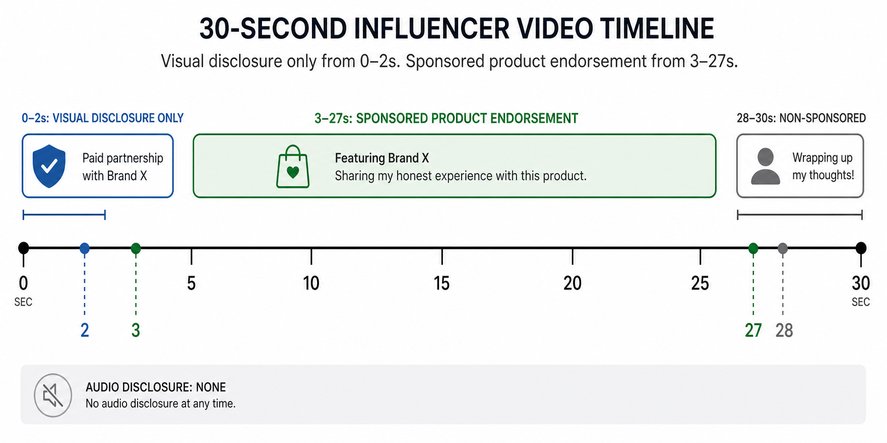
Video viewers may miss a brief visual label. Using both audio and visual disclosure, with sufficient duration and clear presentation, makes the sponsorship harder to overlook.
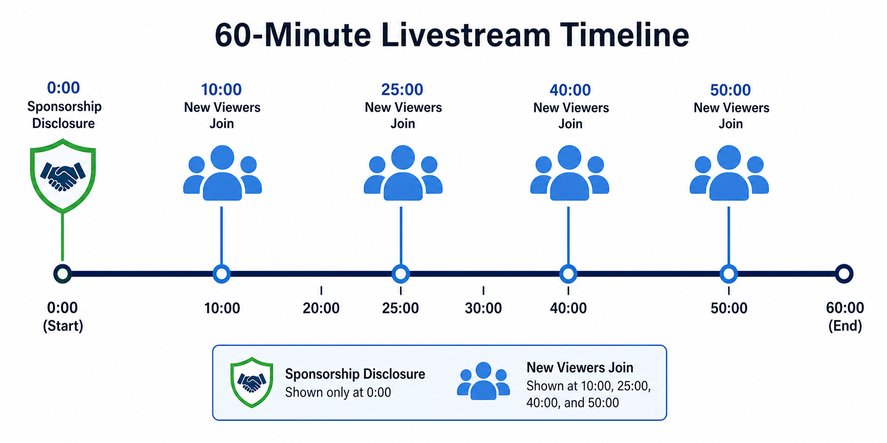
Viewers enter livestreams at different times. Repeating a clear disclosure periodically gives late arrivals a reasonable opportunity to understand the sponsorship.
A disclosure does not make a false or unsupported claim acceptable. Influencers should describe their genuine experiences and avoid objective health claims that lack appropriate substantiation.
Compliance is not solely the platform's or brand's concern. Influencers must disclose their relationships, while brands should provide guidance and take reasonable steps to monitor sponsored content.
A platform tool can help, but its label, visibility, or placement may not always be sufficient. The influencer should ensure that the overall disclosure remains clear and conspicuous.
The first statement clearly tells readers that purchases can financially benefit the influencer. Vague requests for support do not adequately explain an affiliate relationship.
Disclosure effectiveness depends on the intended audience. Content aimed at children requires particular care because children may interpret advertising and sponsorship differently from adults.
Thousands of online courses in video, ebooks and audiobooks.
To test your knowledge during online courses
Generated directly from your cell phone's photo gallery and sent to your email

Download our app via QR Code or the links below:.


Carry knowledge in your pocket.
Download the Cursa app.
There are hundreds of free courses available, with a free certificate of completion that is saved in your mobile image gallery.
Download the app to access the Course Completion Certificate for Free.


+ 10 million
students

Free and Valid
Certificate

60 thousand free
exercises

4.8/5 rating in
app stores

Free courses in
video and ebooks