
Exercises
This quiz explores the principles behind professional wet roller setting. You will assess roller selection, section dimensions, end-paper use, base placement, winding direction, drying, roller removal, and comb-out techniques. The questions combine practical salon scenarios with visual analysis to help you create smooth, controlled curls and waves while avoiding fishhooks, unwanted gaps, tangles, and weak results.
Answer the questions below and check the explanation for each answer.
0/12 answered
Auto audio on: the next questions will be read aloud when you click Continue.
A smaller roller bends the hair around a tighter circumference, producing a tighter curl. Larger rollers create broader curls, waves, or volume.
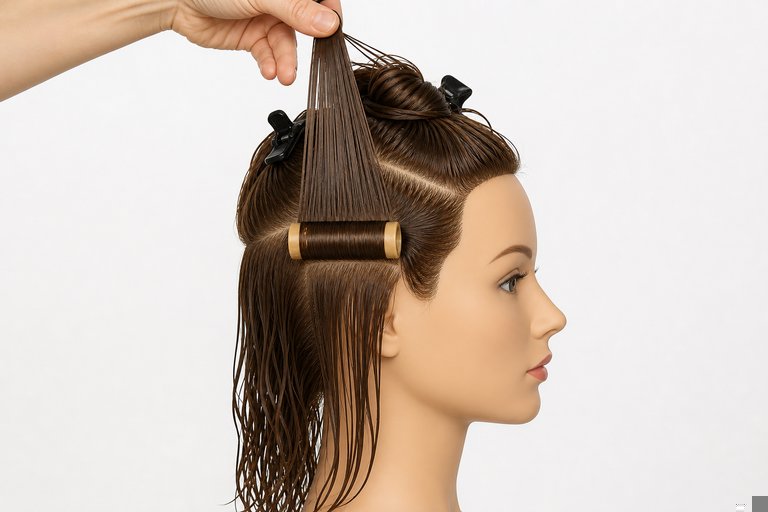
On-base placement positions the roller directly on its base and produces the greatest elevation and volume at the scalp.
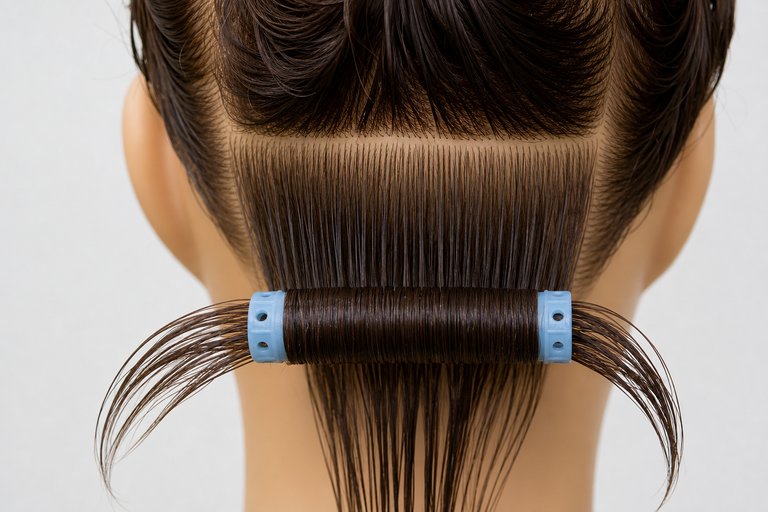
The section should be no wider than the roller's working length. Excess width allows side strands to escape, reducing smoothness and control.
End papers gather and control the ends so they lie smoothly around the roller. This helps prevent bent, hooked, or frizzy ends.
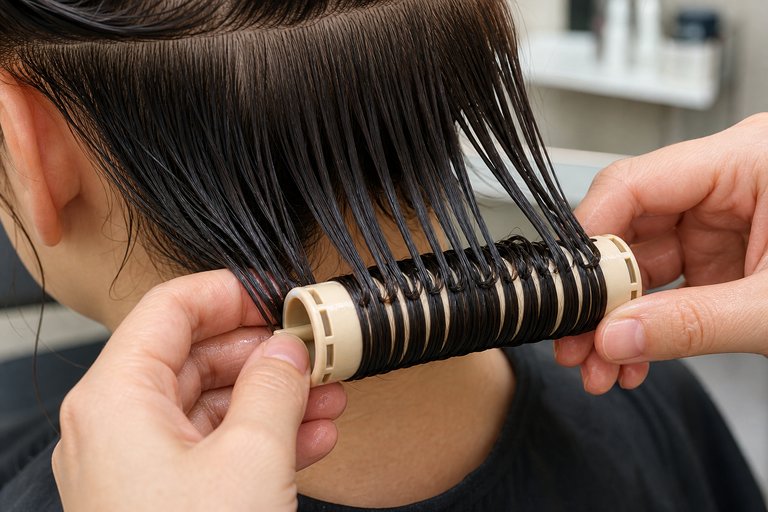
Hair ends that are not flat and evenly controlled can fold during the first turn of the roller, creating defects commonly called fishhooks.
Water temporarily disrupts hydrogen bonds in the hair. The new shape develops as the hair dries, so remaining moisture can cause the set to lose definition.
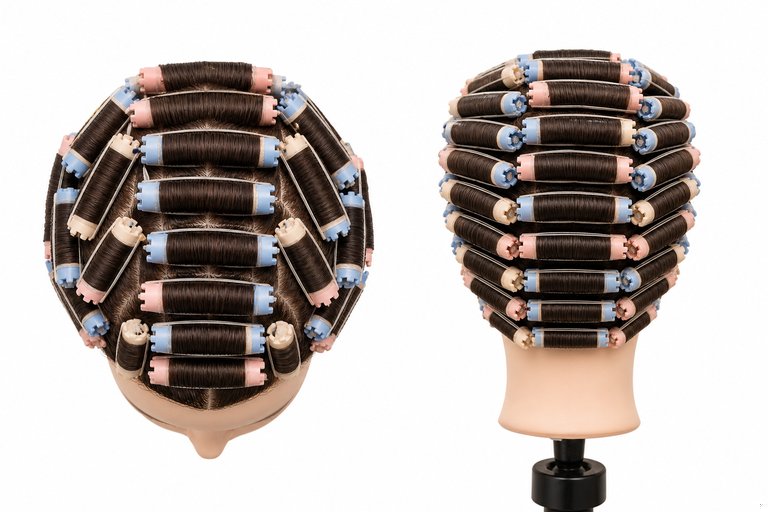
A bricklay pattern staggers the rollers so the partings do not form uninterrupted lines. This reduces gaps and splits in the finished style.
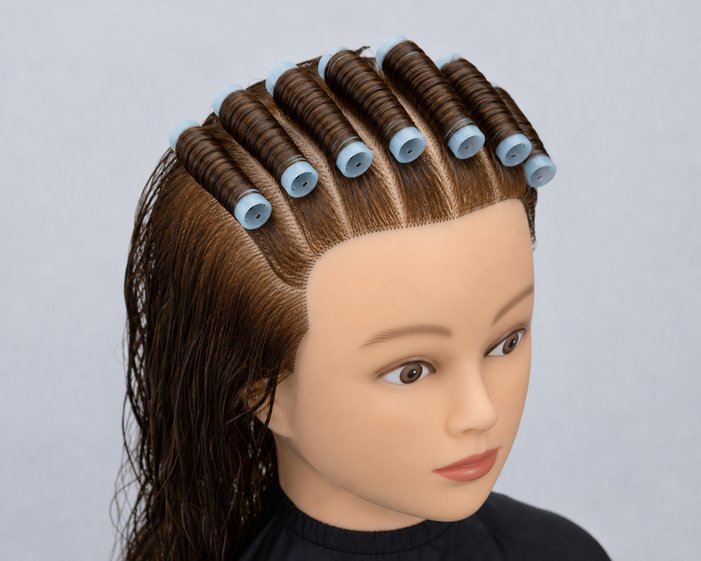
Rollers should follow the planned movement of the style. Winding the front sections away from the face supports a backward, open facial sweep.
Off-base placement uses lower elevation and positions the roller away from its base. It creates minimal root lift while allowing greater mobility in the finished hair.
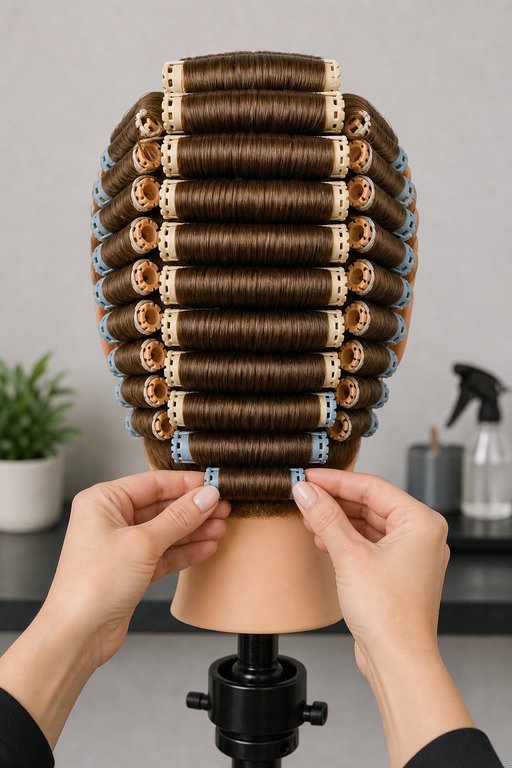
Removing rollers from the nape upward keeps released hair from falling over rollers that still need to be removed, helping reduce tangling and disruption.
Warm curls can relax when handled aggressively. Allowing them to cool and settle helps preserve their shape before controlled brushing or combing.
A limited number of turns produces less curvature along the strand. About one turn generally creates a bend or C-shaped movement rather than a complete curl formation.
Free CourseHaircut tutorial
5

(2)

12m

2 exercises
Free CourseBasics of Woman Haircutting
5
(2)
17m
3 exercises
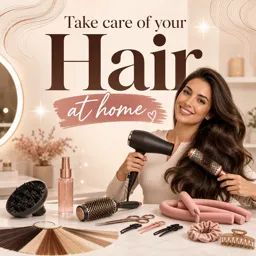
Free CourseTake care of your Hair at home
5
(1)
4h44m
15 exercises
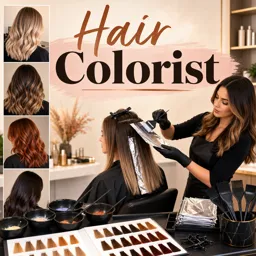
Free CourseHair Colorist
5
(1)
33m
7 exercises
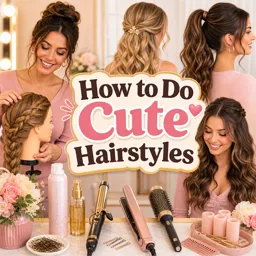
Free CourseHow to Do Cute Hairstyles
4.8

(8)
3h47m
29 exercises
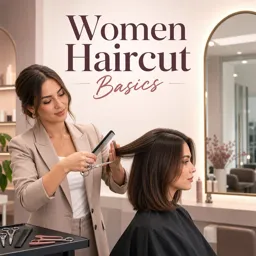
Free CourseWomen haircut basics
4.5
(4)
2h38m
6 exercises
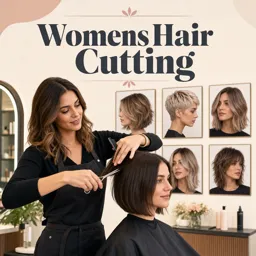
Free CourseWomens Hair Cutting
4.5
(2)
3h31m
26 exercises
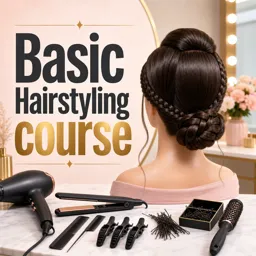
Free CourseBasic Hairstyling course
4
(3)
1h01m
2 exercises
Thousands of online courses in video, ebooks and audiobooks.
To test your knowledge during online courses
Generated directly from your cell phone's photo gallery and sent to your email

Download our app via QR Code or the links below:.


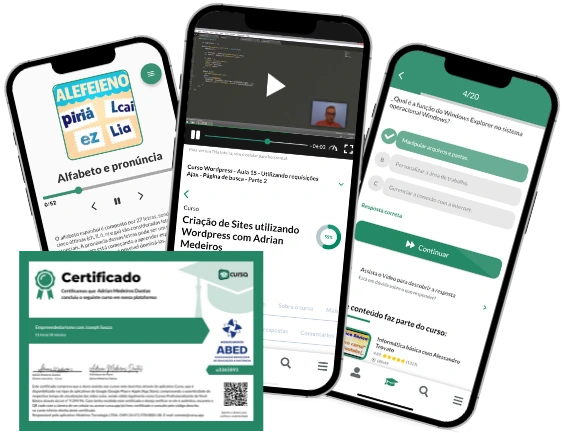
Carry knowledge in your pocket.
Download the Cursa app.
There are hundreds of free courses available, with a free certificate of completion that is saved in your mobile image gallery.
Download the app to access the Course Completion Certificate for Free.


+ 10 million
students

Free and Valid
Certificate

60 thousand free
exercises

4.8/5 rating in
app stores

Free courses in
video and ebooks