
Exercises
Learn how to protect a Boehm-system concert flute and keep it functioning reliably. This quiz covers safe assembly, moisture removal, pad care, cork-position checks, tarnish prevention, temperature changes, tenon care, storage, and signs that require a repair technician. The questions combine practical situations with visual identification tasks to reinforce maintenance habits that help prevent leaks, corrosion, bent keys, and costly damage.
Answer the questions below and check the explanation for each answer.
0/12 answered
Auto audio on: the next questions will be read aloud when you click Continue.
A lint-free cloth attached to a cleaning rod safely absorbs condensation. Removing moisture after each session helps protect pads and reduces residue inside the tubing.
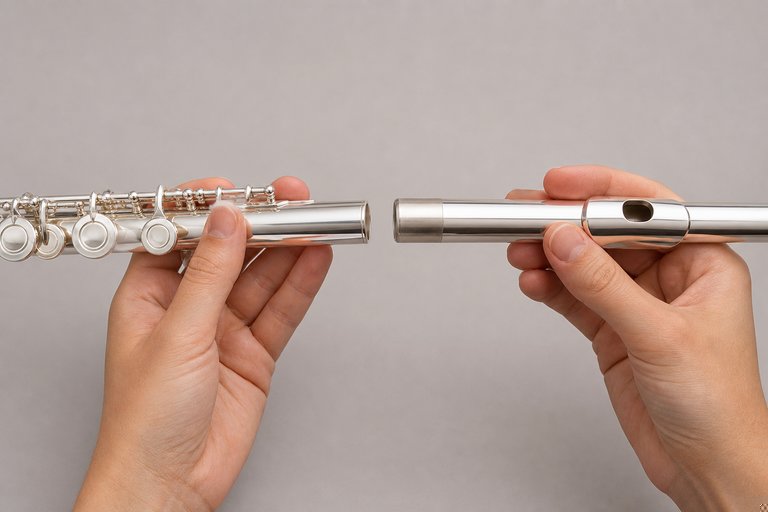
Holding the smooth tubing keeps pressure away from delicate keys and rods. A gentle twisting motion reduces the risk of bending the mechanism or damaging the tenons.
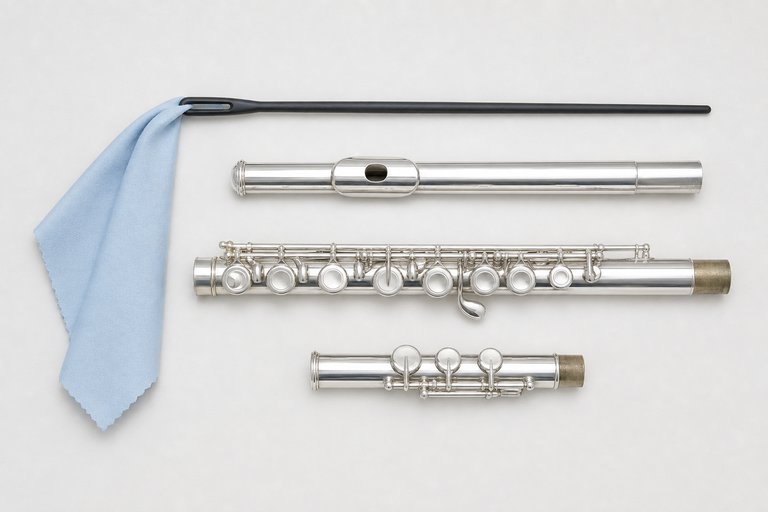
A cleaning rod carries an absorbent, lint-free cloth through the flute's bore. Metal repair tools should not be used for routine internal drying.
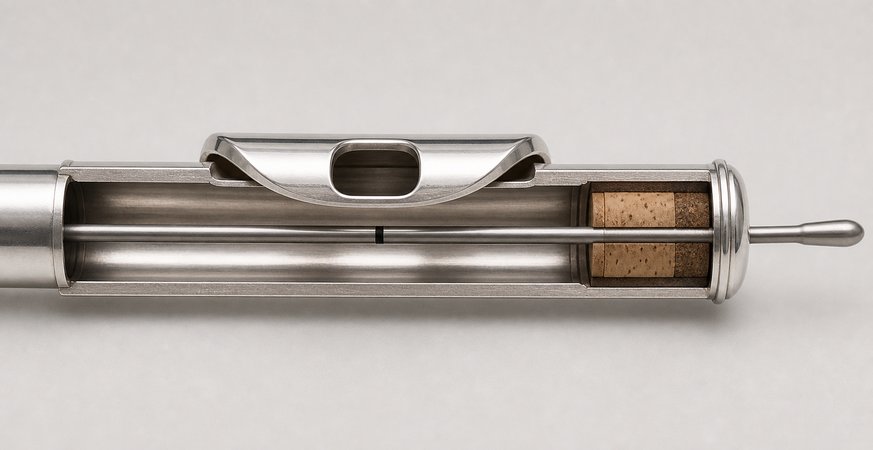
The reference line on a standard cleaning rod is used to check the cork assembly's position. When centered in the embouchure hole, it generally indicates the standard placement.
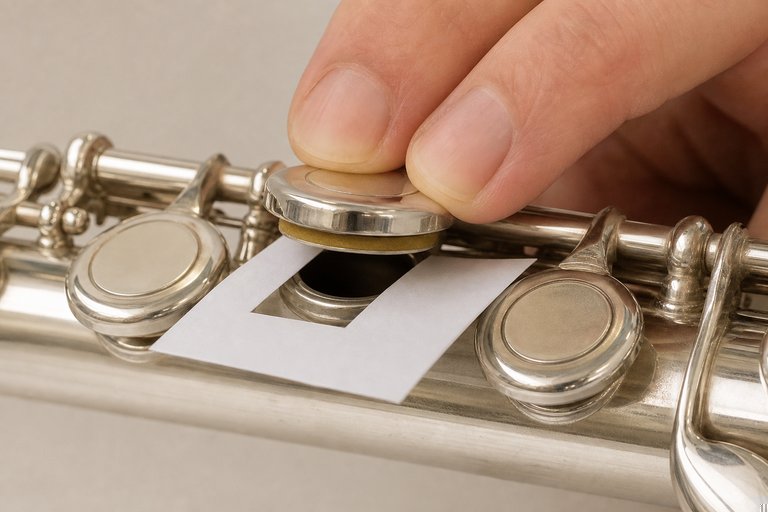
Clean ungummed paper can absorb light moisture or residue. Releasing the key before removing the paper avoids dragging it against the delicate pad skin.
A fitted case protects the disassembled flute from impacts, dust, and accidental handling. A stable environment also limits damage caused by humidity and temperature extremes.
Airy notes across part of the range can result from a leaking pad or misregulated key. Bending keys or applying oil can worsen the damage, so diagnosis belongs to a technician.
A soft microfiber cloth removes fingerprints without introducing liquids near pads or abrasives to the finish. Aggressive polishing products should be avoided unless recommended by a technician.
Gradual warming reduces condensation and thermal stress. Direct heat can damage pads, adhesives, corks, finishes, and fitted mechanical parts.
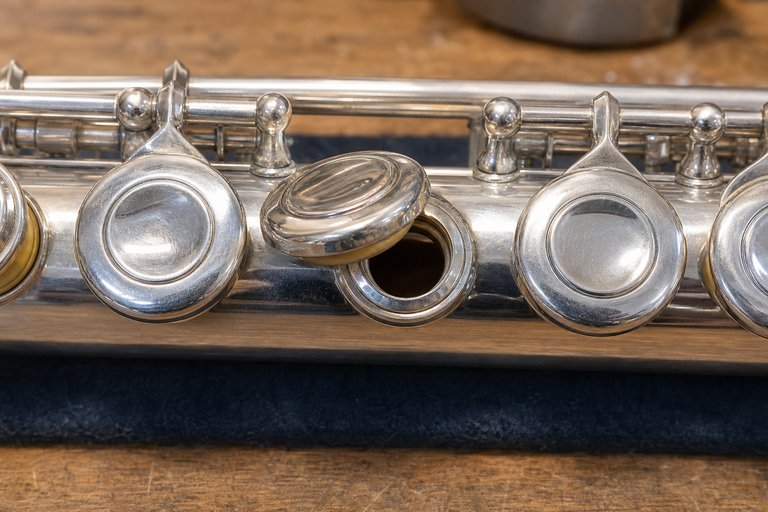
An angled key cup may indicate a bent key, damaged mechanism, or pad problem. Attempting to bend or dismantle it without proper tools can cause additional leaks and mechanical damage.
Metal flute tenons are normally kept clean and dry rather than greased. Persistent tightness can indicate dirt, distortion, or an improper fit that requires professional correction.
COA stands for clean, oil, and adjust. A technician services the mechanism, checks regulation and pad sealing, and identifies wear before it becomes a larger problem.

Free CourseFlute
4.8

(33)

1h43m

1 exercises

Free CourseBeginner Flute lessons
New
6h20m
36 exercises

Free CourseFlute crash course
New
26m
5 exercises

Free CourseLearn Irish Flute
New
2h48m
12 exercises

Free CourseBeginner Flute Lessons
New
1h09m
8 exercises

Free CourseFlute for beginners
New
3h40m
51 exercises

Free CourseFlute step
New
8h20m
10 exercises
Thousands of online courses in video, ebooks and audiobooks.
To test your knowledge during online courses
Generated directly from your cell phone's photo gallery and sent to your email

Download our app via QR Code or the links below:.



Carry knowledge in your pocket.
Download the Cursa app.
There are hundreds of free courses available, with a free certificate of completion that is saved in your mobile image gallery.
Download the app to access the Course Completion Certificate for Free.


+ 10 million
students

Free and Valid
Certificate

60 thousand free
exercises

4.8/5 rating in
app stores

Free courses in
video and ebooks