
Exercises
Challenge your understanding of advanced flute fundamentals in this educational quiz. Explore the purpose of the embouchure hole and headjoint, the role of keys, correct flute assembly and maintenance, and how regular cleaning protects your instrument. Test your knowledge of fingering charts, alternate fingerings, intonation, and effective breath support, while examining how the flute differs from many other woodwind instruments. Ideal for flute students, developing performers, music educators, and anyone seeking to strengthen their command of flute technique and instrument care.
Answer the questions below and check the explanation for each answer.
0/10 answered
Auto audio on: the next questions will be read aloud when you click Continue.
The embouchure hole is the opening where the flutist blows air to produce sound. It's crucial for directing the airstream into the instrument to create sound.
A fingering chart is a diagram that shows which keys on the flute need to be pressed to play each note, helping flutists learn correct finger placements.
Regular cleaning prevents moisture buildup inside the flute, which can lead to corrosion and affect the instrument's performance and lifespan.
The keys on a flute are used to cover and uncover tone holes, changing the effective length of the air column and thus altering the pitch of the note played.
The flute is unique among woodwinds because it produces sound without the use of reeds. Instead, it uses an airstream directed over the edge of an opening.
The headjoint is the top part of the flute that contains the embouchure hole, crucial for producing sound as the player blows into this part.
When assembling a flute, the headjoint is usually attached to the body first, allowing the player to set up the complete instrument structure progressively.
Intonation refers to how well the notes are tuned in relation to each other and to standardized pitch levels, ensuring accuracy and pleasant sound.
Proper breath support is essential for flute players as it helps maintain a consistent air pressure, resulting in a fuller and more stable sound quality.
Alternate fingerings are used on the flute to make transitions between notes smoother, especially in complex pieces or to adjust the tuning of certain notes.

Free CourseFlute
4.8

(33)

1h43m

1 exercises

Free CourseBeginner Flute lessons
New
6h20m
36 exercises

Free CourseFlute crash course
New
26m
5 exercises

Free CourseLearn Irish Flute
New
2h48m
12 exercises

Free CourseBeginner Flute Lessons
New
1h09m
8 exercises

Free CourseFlute for beginners
New
3h40m
51 exercises

Free CourseFlute step
New
8h20m
10 exercises
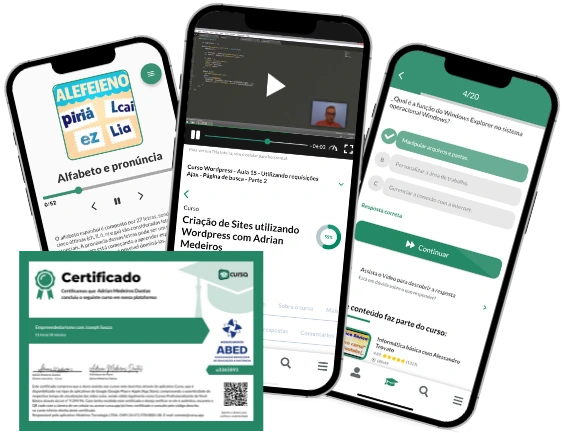
Thousands of online courses in video, ebooks and audiobooks.
To test your knowledge during online courses
Generated directly from your cell phone's photo gallery and sent to your email

Download our app via QR Code or the links below:.


Carry knowledge in your pocket.
Download the Cursa app.
There are hundreds of free courses available, with a free certificate of completion that is saved in your mobile image gallery.
Download the app to access the Course Completion Certificate for Free.


+ 10 million
students

Free and Valid
Certificate

60 thousand free
exercises

4.8/5 rating in
app stores

Free courses in
video and ebooks