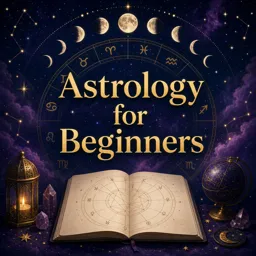
Most people know their “star sign,” but in astrology that is only the beginning. Practitioners often start a birth chart reading with what is called the Big Three: the Sun sign, the Moon sign and the Rising sign, also known as the Ascendant. This article explains what each one represents in astrological tradition, how they are determined and how they are read together. Astrology is a symbolic and cultural tradition, not a science, so treat it as a framework for reflection rather than a prediction tool.
What is a birth chart?
A birth chart, or natal chart, is a diagram of the sky as seen from a specific place at the exact time a person was born. It shows the positions of the Sun, Moon and planets against the twelve zodiac signs, and divides the sky into twelve sections called houses. To draw one, an astrologer needs three pieces of information: date of birth, time of birth and place of birth.
The Sun sign: identity and core drive
The Sun sign is the zodiac sign the Sun occupied on your birth date. It is the one found in magazines and daily horoscopes. In astrological tradition, the Sun represents your core identity, your sense of purpose and the qualities you tend to express most naturally.
Because the Sun moves through one sign in roughly a month, you only need your birth date to find it. Keep in mind that people born near the boundary between two signs, known as being “on the cusp,” may need a birth chart calculation to confirm which sign applies, since the change can happen at different hours of the day each year.
The Moon sign: emotions and inner life
The Moon sign is the sign the Moon occupied when you were born. In astrology, the Moon is associated with emotions, instincts, habits and what makes a person feel safe. If the Sun describes what you show the world, the Moon is often described as how you feel and react in private.
The Moon moves quickly, spending only about two and a half days in each sign. For this reason, your birth date, and sometimes your birth time, matter for finding it. Online chart calculators can do the math in seconds.
The Rising sign: first impressions and approach to life
The Rising sign, or Ascendant, is the zodiac sign that was rising over the eastern horizon at the exact moment and place of your birth. It changes roughly every two hours, which is why a precise birth time is essential. In tradition, the Rising sign describes your outward style, first impressions and the way you approach new situations.
It also marks the beginning of the first house in the chart, so it sets the framework for how the other houses are arranged.
The Big Three at a glance
| Placement | Traditionally linked to | What you need to find it |
|---|---|---|
| Sun sign | Core identity, purpose, vitality | Date of birth |
| Moon sign | Emotions, instincts, comfort | Date of birth (time helps) |
| Rising sign | Outward style, first impressions | Date, exact time and place of birth |
How to read the three together
Astrologers rarely read a single placement alone. The idea is to see how the three interact. For example, someone with the Sun in a fire sign, such as Aries, and the Moon in an earth sign, such as Taurus, might be described as energetic in action but cautious and steady in emotional needs. Their Rising sign would add a third layer, describing how that mix appears to other people.
A helpful way to organize the reading is to ask three questions:
- Who am I at the core? Look at the Sun sign.
- What do I need to feel secure? Look at the Moon sign.
- How do I meet the world? Look at the Rising sign.
The four elements and three modalities
To compare signs, astrology groups them in two ways. By element: fire (Aries, Leo, Sagittarius), earth (Taurus, Virgo, Capricorn), air (Gemini, Libra, Aquarius) and water (Cancer, Scorpio, Pisces). By modality: cardinal (initiating), fixed (sustaining) and mutable (adapting). When you look at your Big Three, noticing which elements and modalities repeat can give a quick summary of the chart’s overall tone.
Common misconceptions
- “My Sun sign explains everything.” In astrological practice, it is only one part of a larger chart.
- “Astrology can predict my future.” Astrology is a symbolic tradition; scientific studies have not shown that it predicts events or personality.
- “An approximate birth time is good enough for the Rising sign.” Because the Rising sign changes about every two hours, even small errors can change the result.
- “Traits are fixed labels.” Most thoughtful astrologers treat descriptions as themes for reflection, not as destiny.
How to get your own Big Three
Find your birth time on a birth certificate or ask a family member. Then enter date, time and place in a free birth chart calculator. It will list your Sun, Moon and Rising signs, along with the other planets. If you cannot find your birth time, you can still learn your Sun and Moon signs, and some astrologers offer techniques to estimate the Rising sign.
Conclusion
The Big Three offer a simple entry point into astrology: Sun for identity, Moon for emotions and Rising for outward style. Reading them together gives a richer picture than any single sign, and treating the results as a prompt for self-reflection keeps the practice grounded. If you are curious about astronomy and astrology and want to learn how the sky actually works, explore the related courses available at Cursa.