 NodeJS
 Express.js
 TypeScript
 Django
 FASTAPI
 Flask
Flask
 Firebase
 GraphQL
 Ruby on Rails
 Strapi
 HTMX
HTMX
Backend development builds the server-side logic, databases, APIs, authentication, and infrastructure that power web and mobile applications.

23

2

4

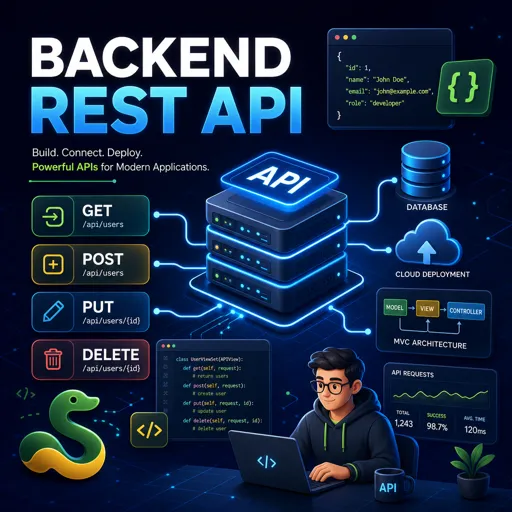
Launch your backend skills with a free REST API course: build Django endpoints, auth, permissions, and deploy to AWS to boost your developer profile.
5

(9)

5h24m

25 exercises
Build real APIs with Node.js and Express in this free course—routing, middleware, JSON, MongoDB basics, and practical backend skills for your portfolio.
5
(5)
4h32m
20 exercises
Build REST APIs with FastAPI and Python, from setup to PostgreSQL integration. Free course to practice GET/POST/PUT/DELETE, validation and status codes.
4.8
(5)
1h34m
14 exercises
Free CourseNodeJS complete
5
(1)
1h30m
12 exercises
Free CourseFlask
5
(1)
8h50m
14 exercises
Free CourseDjango for Everybody
5
(1)
18h32m
Free CoursePython Django Full Stack Developer
5
(2)
14h23m
27 exercises
Free CourseMaster Vue JS API
5
(-4)
6h14m
6 exercises
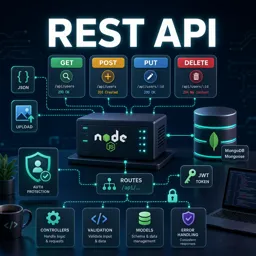
Free CourseREST API
4.7

(6)
4h14m
10 exercises
Free CourseAPIs for beginners
4.5
(2)
3h07m
Free CourseNodeJS for beginners
4
(1)
6h51m
32 exercises
Free CourseBackend Engineering from First Principles (HTTP, REST APIs, Postgres, Caching, Security, Scaling)
New
25h13m
20 exercises
Free CourseExpress JS Full Tutorial
New
7h57m
21 exercises
Free CourseBuild a Full-Stack Web App
New
5h10m
13 exercises
Free CourseBuild a RESTful API
New
57m
8 exercises
Free CourseBuild An API With Python and Django
New
1h33m
12 exercises
Free CourseExpress JS for backend
New
2h27m
6 exercises
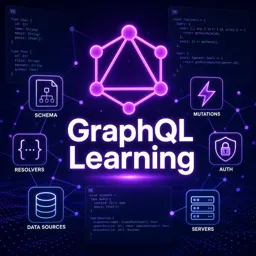
Free CourseGraphQL Learning
New
1h02m
10 exercises
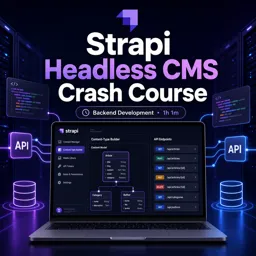
Free CourseStrapi Headless CMS crash course
New
1h01m
6 exercises
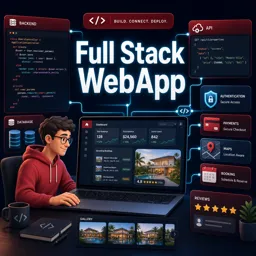
Free CourseFull Stack WebApp
New
34h20m
51 exercises
Exercises
Test your knowledge of OAuth 2.0, OpenID Connect, secure token handling, PKCE, scopes, claims, and backend authorization flows.
Start exercisesTest your backend data validation skills: input validation, schemas, SQL injection prevention, secure APIs, frameworks, and HTTP error handling.
Start exercisesTest your knowledge of backend middleware functions, Express.js, request handling, logging, body parsing, CORS, and the next() callback.
Start exercisesTest your advanced REST API development knowledge, including HTTP methods, status codes, REST constraints, HATEOAS, CORS, URIs, and testing tools.
Start exercisesTest your knowledge of web servers, HTTP, HTTPS, Nginx, proxies, load balancers, modules, and backend development fundamentals.
Start exercisesTest your knowledge of scalable backend architectures, microservices, load balancing, reverse proxies, distributed data, and databases.
Start exercises
Idempotency in APIs: Why Retrying a Request Should Be Safe
Learn what idempotency means in backend development, which HTTP methods provide it, and how idempotency keys prevent duplicate operations.

What Is an API? A Beginner’s Guide to How Software Talks
A clear beginner’s guide to APIs: what they are, how they work, real-world examples, and why they power the apps you use every day.

Database Indexing for Backend Developers: Make Queries Fast Without Guesswork
Learn practical database indexing for backend developers to speed up queries, improve joins, optimize pagination, and reduce API latency.

Backend Observability 101: Logging, Metrics, and Tracing for Debuggable APIs
Learn backend observability with logging, metrics, and tracing to debug APIs faster, monitor performance, and improve reliability.

Building Dynamic Web Applications With HTMX: A Practical Guide
Learn how to build dynamic web apps with HTMX, a lightweight library that simplifies interactivity and keeps backend-driven development efficient.

How HTMX Revolutionizes Server-Driven Web UIs
Discover how HTMX transforms server-driven web UIs, reducing complexity while enabling dynamic, responsive, and maintainable backend-driven applications.

HTMX in Backend Development: Unlocking the Power of Dynamic HTML Interactions
Discover how HTMX empowers backend developers to build dynamic, interactive web applications with minimal JavaScript and simplified workflows.

Understanding HTMX: Enhancing Backend Development with Modern HTML
Discover HTMX, a lightweight library that enhances backend-driven web development with dynamic HTML attributes and minimal JavaScript.
Web Development

Programming Languages ( Python, Ruby, Java, C )

Office Productivity (Excel, Word and More)

Artificial Intelligence and Machine Learning

App Development

Databases

Software testing

Cyber Security

Cloud Computing and Web Servers

Robotics and Drones

Data Science and Business Intelligence
Programming Fundamentals

Developer and IT Tools

Hardware, Operating Systems and IT Support

Computer Basics

Game development
Learn how to design, build, test, and maintain the server-side components that power modern websites and applications. These free online courses cover essential programming concepts, web servers, databases, authentication, routing, middleware, API architecture, security, caching, and application deployment. Whether you are beginning a software development pathway or expanding your full-stack knowledge, the lessons provide structured educational content, practical exercises, and opportunities to develop job-relevant coding skills. Every course is free and includes free certification upon completion.
Build a strong technical foundation by exploring widely used languages, frameworks, and development platforms. Study asynchronous JavaScript and server programming through NodeJS courses, learn Python-based web architecture with Django courses, examine cloud databases and authentication in Firebase courses, or improve type safety and maintainability through TypeScript courses. These related learning paths help students compare technology stacks and select suitable tools for different software projects.
The course collection supports progressive learning, from introductory syntax and HTTP fundamentals to scalable system design. Begin with APIs for beginners to understand requests, responses, endpoints, and status codes. Continue with Build a RESTful API for applied API development, or study Python web services in Python Fast API. Learners seeking broader engineering knowledge can access Backend Engineering from First Principles, covering HTTP, REST APIs, PostgreSQL, caching, security, and scaling.
To access the courses, lessons, exercises, and free certification, users must install the Cursa app. Android users can install it through Google Play using Download for Android. iPhone users can install it through the App Store using Download for iOS / iPhone. Start learning at your own pace and build a practical portfolio of server applications, APIs, database integrations, and full-stack projects.
What is backend development?
Backend development builds the server-side logic, databases, APIs, authentication, and infrastructure that power web and mobile applications.
Which programming languages are used for backend development?
Popular backend languages include JavaScript with Node.js, Python with Django, Flask, or FastAPI, as well as Java, PHP, Ruby, Go, and C#.
What is a REST API in backend development?
A REST API lets applications exchange data over HTTP using endpoints and methods such as GET, POST, PUT, PATCH, and DELETE.
Should beginners learn Node.js or Python for backend development?
Both are strong choices. Node.js is ideal for JavaScript developers, while Python offers beginner-friendly frameworks such as Django, Flask, and FastAPI.
What database skills does a backend developer need?
Backend developers should understand database design, SQL, PostgreSQL or MySQL, data modeling, indexing, queries, and basic caching concepts.
What is the difference between Django, Flask, and FastAPI?
Django is a full-featured Python framework, Flask is lightweight and flexible, and FastAPI is designed for fast, modern API development with type hints.
How do I become a backend developer?
Learn a backend language, HTTP and APIs, databases, authentication, security, testing, deployment, and build practical projects such as REST APIs and full-stack apps.

Complete any course and issue your certificate via the app — at no cost.

Download the app! to have access to more than 4,000 Online Courses + Certificate, all free!
Download the app! 100% free courses.


Carry knowledge in your pocket.
Download the Cursa app.
There are hundreds of free courses available, with a free certificate of completion that is saved in your mobile image gallery.
Download the app to access the Course Completion Certificate for Free.


+ 10 million
students

Free and Valid
Certificate

60 thousand free
exercises

4.8/5 rating in
app stores

Free courses in
video and ebooks