
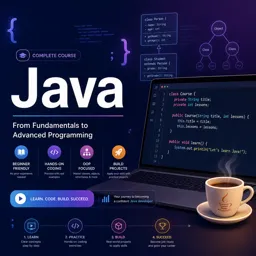
Duration of the online course: 22 hours and 17 minutes
4.84

(56)
Build job-ready Java skills with a free online course: learn programming fundamentals, methods, arrays, OOP basics, and practical problem-solving—fast.
Strengthen your programming foundations while learning Java in a practical, methodical way. This free online course is designed for learners who want more than syntax: you will develop the ability to think like a programmer, break problems into steps, and turn ideas into working programs. The lessons emphasize clear reasoning, disciplined debugging, and building solutions that are readable, reusable, and easy to improve over time.
Starting from core concepts such as variables, data types, input, and casting, you will gain confidence with the building blocks of the language and learn how small choices in design affect correctness and maintainability. As you progress, you will work with strings, control flow, and functions, then move into structured code with methods and parameters. You will also explore how computers represent information, which helps you understand what your code is doing under the hood and make better decisions when writing it.
The course then transitions into essential Java structures used in real projects: arrays, matrices, and working with collections of data. You will practice manipulating values, tracking results, and organizing information in ways that scale beyond single examples. You will also be introduced to object references and what it means when one object is set equal to another, an important concept for avoiding unexpected behavior in larger programs.
To connect fundamentals with real application development, you will encounter event-driven ideas and graphical components, building intuition for how interactive programs respond to user actions. Along the way, you will be exposed to interfaces and the role they play in designing flexible code. Exercises reinforce each step, helping you move from understanding concepts to applying them confidently.
Whether you are starting from scratch, transitioning from another language, or refreshing your computer science basics, this course offers a structured path to stronger Java skills and better problem-solving habits you can reuse in any programming context.

22 hours and 17 minutes of online video course

Digital certificate of course completion (Free)

Exercises to train your knowledge

100% free, from content to certificate
Ready to get started?Download the app and get started today.
Install the app now
to access the course
Over 5,000 free courses
Programming, English, Digital Marketing and much more! Learn whatever you want, for free.

Study plan with AI
Our app's Artificial Intelligence can create a study schedule for the course you choose.

From zero to professional success
Improve your resume with our free Certificate and then use our Artificial Intelligence to find your dream job.
You can also use the QR Code or the links below.



Free CourseLearn Python
5
(3)

13h00m

17 exercises
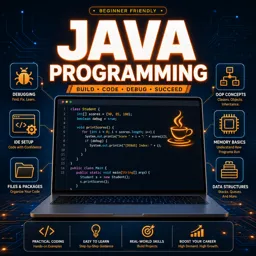
Free CourseJava Programming
5
(4)
9h15m
48 exercises
Free CourseCreate Desktop App
5
(4)
5h33m
30 exercises
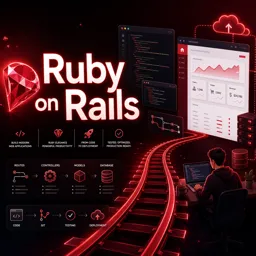
Free CourseRuby on Rails
5
(7)
9h39m
34 exercises
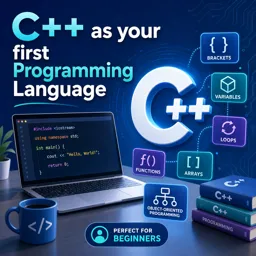
Free CourseC++ as your first Programming Language
4.79
(105)
5h12m
23 exercises
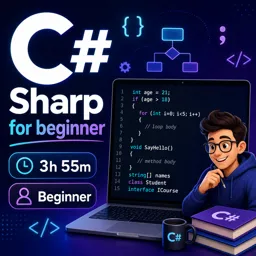
Free CourseC# Sharp for beginner
4.78
(37)
3h55m
15 exercises
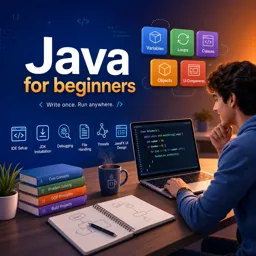
Free CourseJava for beginners
4.77
(183)
26h50m
49 exercises
Free CourseComputer science and Java
4.75
(65)
9h15m
31 exercises
Free CourseMachine Learning
4.74

(121)
25h09m
20 exercises
Free CourseJava Object Oriented Programming
4.71
(7)
1h19m
10 exercises
Carry knowledge in your pocket.
Download the Cursa app.
There are hundreds of free courses available, with a free certificate of completion that is saved in your mobile image gallery.
Download the app to access the Course Completion Certificate for Free.


+ 10 million
students

Free and Valid
Certificate

60 thousand free
exercises

4.8/5 rating in
app stores

Free courses in
video and ebooks


Course comments: Java
Shraddha Gudage
best
Biswarup Das
It's really helpfull.