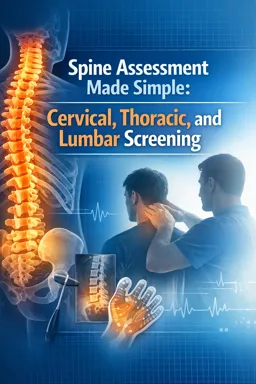
A spine assessment typically covers posture, movement, range of motion, neurological screening, palpation, and functional testing of the cervical, thoracic, and lumbar regions.

6

1


Free CourseSpine Assessment
4.7


(108)

2h04m

28 exercises
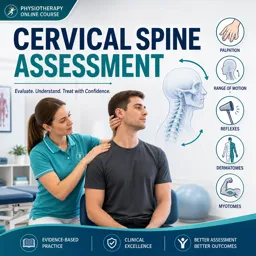
Free CourseCervical Spine assessment
5
(1)
2h21m
11 exercises
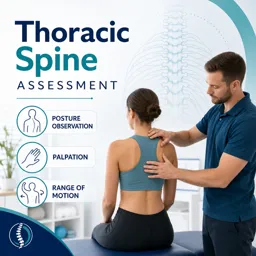
Free CourseThoracic Spine assessment
4.5
(2)
1h19m
8 exercises
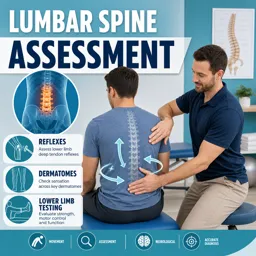
Free CourseLumbar Spine assessment
New
1h46m
9 exercises

Free CourseOrthopaedics training
5
(1)
5h41m
13 exercises
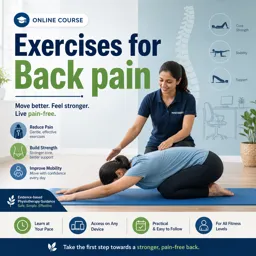
Free CourseExercises for Back pain
4
(1)
3h17m
11 exercises
Develop valuable clinical knowledge with our selection of free online Spine Assessment courses. These educational courses introduce essential principles for evaluating spinal health, recognizing musculoskeletal dysfunction, and understanding the relationship between posture, movement, pain, and functional performance. Study online through accessible lessons designed for students, healthcare learners, fitness professionals, and anyone interested in spine anatomy and assessment techniques.
Explore educational content covering spinal anatomy, vertebral regions, biomechanics, posture analysis, range of motion, and common signs of cervical, thoracic, and lumbar conditions. The courses may also address patient history, observation, palpation principles, neurological screening, mobility evaluation, and the identification of findings that may require referral to a qualified healthcare professional.
These free Spine Assessment courses combine theoretical instruction with exercises that support knowledge retention and practical reasoning. Activities can help learners review anatomical landmarks, compare assessment findings, examine case-based situations, and organize a systematic evaluation process. Online study offers the flexibility to learn at your own pace and revisit important lessons whenever additional revision is needed.
The educational material can benefit physiotherapy and physical therapy students, nursing learners, medical students, sports science learners, personal trainers, massage therapy students, rehabilitation professionals, and other people seeking introductory or continuing education in spinal assessment. Course content is intended for learning purposes and does not replace professional diagnosis, supervised clinical training, or medical care.
To access these courses, complete the lessons, work through the included exercises, and obtain your free certification, it is necessary to install the Cursa application. Android users can install it through Google Play by selecting Download for Android. iPhone users can access the App Store by selecting Download for iOS / iPhone.
Start learning today with free online education focused on Spine Assessment, clinical examination concepts, spinal biomechanics, posture evaluation, and musculoskeletal health. Build a stronger educational foundation, test your understanding through exercises, and document your learning with free certification.
What is included in a spine assessment?
A spine assessment typically covers posture, movement, range of motion, neurological screening, palpation, and functional testing of the cervical, thoracic, and lumbar regions.
How is a cervical spine assessment performed?
A cervical assessment examines neck posture, active movements, muscle strength, sensation, reflexes, and possible signs of nerve involvement.
What does a thoracic spine assessment involve?
Thoracic assessment focuses on upper-back posture, rib and thoracic mobility, rotation, breathing mechanics, tenderness, and related shoulder or neck movement.
What is checked during a lumbar spine assessment?
A lumbar assessment commonly reviews low-back movement, pelvic control, pain patterns, lower-limb neurological signs, functional tasks, and hip contribution.
Why is neurological screening important in spine assessment?
Neurological screening helps identify changes in strength, sensation, reflexes, or nerve tension that may indicate nerve-root or spinal cord involvement.
Can spine assessment help guide exercises for back pain?
Yes. Assessment findings can help select appropriate mobility, strengthening, posture, and movement-control exercises for an individual’s symptoms and goals.
Who can benefit from a spine assessment course?
Physiotherapists, clinicians, exercise professionals, students, and other healthcare practitioners can benefit from learning systematic cervical, thoracic, and lumbar screening methods.

Complete any course and issue your certificate via the app — at no cost.

Download the app! to have access to more than 4,000 Online Courses + Certificate, all free!
Download the app! 100% free courses.


Carry knowledge in your pocket.
Download the Cursa app.
There are hundreds of free courses available, with a free certificate of completion that is saved in your mobile image gallery.
Download the app to access the Course Completion Certificate for Free.


+ 10 million
students

Free and Valid
Certificate

60 thousand free
exercises

4.8/5 rating in
app stores

Free courses in
video and ebooks




What are people saying about free online courses of Spine Assessment
SUSHANTH Sushanth
very nice very usefull thank you
CourseSpine Assessment
MEZROU HICHAM
best course . thank youbso much mr.adrian
CourseSpine Assessment
Tahmid Apurba
Alhamdulillah.I am enjoying a lot.
CourseSpine Assessment
Nelbert Orias
it's a big help for me as massage therapist
CourseSpine Assessment
Raneem Ezat Mored
very useful thank you
CourseSpine Assessment
Aisha Aldhymayri
good job thank you for everything
CourseSpine Assessment
Aazad siddiki
best teachers and comfortable langauge i like it
CourseOrthopaedics training