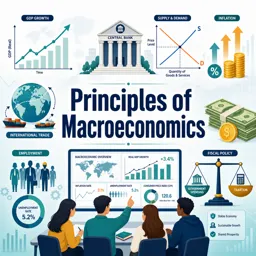


Macroeconomics studies the economy as a whole, including GDP, inflation, unemployment, economic growth, and government policy.

2

2

Exercises
Test your knowledge of corporate economic strategies, inflation, interest rates, trade, diversification, market structures, and fiscal policy.
Start exercisesTest your knowledge of business economics fundamentals, including demand, market structures, production, economies of scale, and competition.
Start exercisesTest your knowledge of business economics basics, including costs, markets, inflation, liquidity, risk, and economies of scale.
Start exercisesTest your understanding of macroeconomics, including GDP, inflation, unemployment, fiscal policy, monetary policy, CPI, and recessions.
Start exercises
An Introduction to Macroeconomics: Understanding the Big Picture
Learn the basics of macroeconomics, including GDP, inflation, unemployment, and policies that shape the overall economy.

Business Cycles: How Macroeconomies Expand and Contract
Learn about business cycles, the phases of expansion and contraction, and how they impact economies, policies, and everyday life.

Fiscal and Monetary Policy: Tools for Managing the Macroeconomy
Explore fiscal and monetary policy and learn how governments and central banks use these tools to manage economic growth, inflation, and stability.

Key Concepts in Macroeconomics: GDP, Inflation, and Unemployment Explained
Learn the basics of macroeconomics with this guide on GDP, inflation, and unemployment, and understand how these indicators shape economic policy.
Develop essential economic knowledge with our selection of free online Macroeconomics courses. These educational courses introduce the theories, indicators, policies, and analytical methods used to understand national and global economies. Whether you are a student, educator, professional, or independent learner, you can study Macroeconomics online at your own pace, complete practical exercises, and receive free certification.
Build a strong foundation through structured lessons covering economic growth, inflation, unemployment, interest rates, business cycles, aggregate supply, aggregate demand, and international trade. The courses explain how households, businesses, governments, and central banks influence economic activity, helping learners connect economic theory with real-world events.
Every course is free and designed to support accessible, flexible education. Lessons include exercises that reinforce important concepts and help you assess your understanding. After completing the required educational content, you can obtain free certification to document your learning, enrich your résumé, support academic development, or demonstrate continuing professional education.
To access these free Macroeconomics courses, exercises, and certificates, you must install the Cursa application. Android users can install it through Google Play by selecting Download for Android. Apple users can access the App Store by selecting Download for iOS / iPhone. Once installed, explore the course catalog and begin learning from your mobile device.
Choose a course that matches your educational goals and strengthen your ability to evaluate economic news, public policy, financial conditions, and global market changes. With free access, practical exercises, flexible study, and free certification, these online Macroeconomics courses provide a convenient pathway to valuable economic knowledge.
What is macroeconomics?
Macroeconomics studies the economy as a whole, including GDP, inflation, unemployment, economic growth, and government policy.
What will I learn in a Principles of Macroeconomics course?
You will learn core concepts such as national income, aggregate demand and supply, inflation, unemployment, fiscal policy, and monetary policy.
Is macroeconomics suitable for beginners?
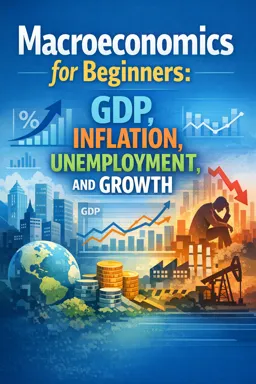
Yes. Beginner macroeconomics courses introduce essential ideas step by step, often starting with GDP, inflation, unemployment, and growth.
What is GDP in macroeconomics?
Gross domestic product, or GDP, measures the total market value of final goods and services produced within an economy over a period.
How are inflation and unemployment related to macroeconomics?
Inflation tracks rising overall prices, while unemployment measures people seeking work without jobs. Both are key indicators of economic performance.
What are scarcity, trade-offs, and incentives?
Scarcity means resources are limited; trade-offs are choices between alternatives; incentives are rewards or costs that influence decisions.
What is the difference between fiscal policy and monetary policy?
Fiscal policy uses government spending and taxes, while monetary policy uses interest rates and the money supply to influence the economy.

Complete any course and issue your certificate via the app — at no cost.

Download the app! to have access to more than 4,000 Online Courses + Certificate, all free!
Download the app! 100% free courses.


Carry knowledge in your pocket.
Download the Cursa app.
There are hundreds of free courses available, with a free certificate of completion that is saved in your mobile image gallery.
Download the app to access the Course Completion Certificate for Free.


+ 10 million
students

Free and Valid
Certificate

60 thousand free
exercises

4.8/5 rating in
app stores

Free courses in
video and ebooks
What are people saying about free online courses of Macroeconomics
Dev Lekhwani
Good course for understanding Macroeconomics deeply
CoursePrinciples of Macroeconomics