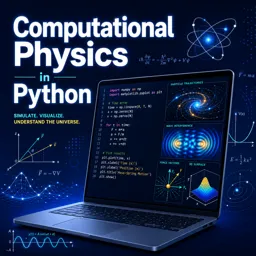


Computational physics uses numerical methods, algorithms, and simulations to solve and study physical systems.

1



The Role of Computational Physics in Modern Scientific Research
Computational physics combines physics, math, and computing to solve complex problems, driving scientific breakthroughs and enabling exploration across many disciplines.

Key Techniques and Applications of Computational Physics
Computational physics uses numerical methods, simulations, and data analysis to solve complex physical problems, with applications from materials science to astrophysics, advancing rapidly with emerging technologies.

Exploring Computational Physics: Tools and Methods for Numerical Solutions
Computational physics combines algorithms, numerical methods, and visualization to solve complex physical problems across diverse fields, despite computational and validation challenges.

An Introduction to Computational Physics: Bridging Theory and Simulation
Computational physics combines theory and simulation using numerical methods to solve complex physical problems across diverse scientific fields.
Explore free online Computational Physics courses designed for students, educators, researchers, and professionals who want to connect physics, mathematics, programming, and numerical analysis. This educational collection provides accessible learning opportunities for developing practical computational skills while studying how algorithms and simulations can solve complex physical problems.
These free courses introduce essential concepts through structured lessons and educational resources. Study at your own pace, review important topics, and apply theoretical knowledge with exercises included in the courses. The activities help learners practice calculations, interpret numerical results, create models, and strengthen scientific reasoning.
In addition to free educational content and exercises, these online courses also offer free certification. A course certificate can demonstrate continuing education, support an academic portfolio, and highlight knowledge of computational modeling, numerical techniques, scientific computing, and physics problem-solving.
The course collection is suitable for university students, physics learners, programmers, teachers, engineers, data science enthusiasts, and researchers. Whether you are beginning your studies or reviewing advanced educational topics, you can choose learning materials aligned with your goals and build valuable interdisciplinary skills.
To access the free Computational Physics courses, complete the exercises, and obtain free certification, you must install the Cursa application. Android users can visit Google Play and select Download for Android. Apple users can access the App Store and select Download for iOS / iPhone. Install the application, choose a course, and begin your free online Computational Physics education today.
What is computational physics?
Computational physics uses numerical methods, algorithms, and simulations to solve and study physical systems.
What will I learn in a Computational Physics in Python course?
You will learn to model physical systems in Python, implement numerical algorithms, visualize results, and validate simulations.
Do I need Python experience for computational physics?
Basic Python knowledge is helpful, especially variables, functions, loops, arrays, and plotting.
Which numerical methods are used in computational physics?
Common methods include numerical integration, root finding, differential equation solvers, Monte Carlo methods, and linear algebra.
Can computational physics courses help me simulate real-world systems?
Yes. They can teach you to simulate motion, waves, fluids, quantum systems, statistical mechanics, and other physical phenomena.
Why is Python popular for computational physics?
Python is readable and has powerful scientific libraries such as NumPy, SciPy, and Matplotlib for computation and visualization.
Who should take a computational physics course?
Physics students, researchers, engineers, and programmers interested in using simulations and numerical models to solve physics problems.

Complete any course and issue your certificate via the app — at no cost.

Download the app! to have access to more than 4,000 Online Courses + Certificate, all free!
Download the app! 100% free courses.


Carry knowledge in your pocket.
Download the Cursa app.
There are hundreds of free courses available, with a free certificate of completion that is saved in your mobile image gallery.
Download the app to access the Course Completion Certificate for Free.


+ 10 million
students

Free and Valid
Certificate

60 thousand free
exercises

4.8/5 rating in
app stores

Free courses in
video and ebooks