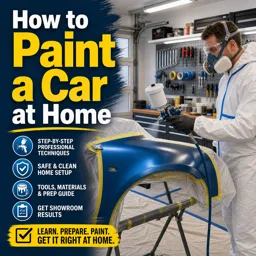


Yes, with a clean, well-ventilated workspace, proper safety equipment, and the right paint supplies. The How to Paint a Car at Home course covers the home-garage process.

2



Essential Tools and Materials for Painting a Car Like a Pro
Discover the essential tools and materials needed for professional car painting. From prep to finishing, get equipped for flawless results.

How to Prepare Your Car for a Professional Paint Job
Learn essential steps to prepare your car for a professional paint job. From cleaning to priming, ensure a flawless, long-lasting finish.

Understanding Car Paint Finishes: Gloss, Matte, and More
Car paint finishes vary in style and maintenance: gloss is shiny and easy to clean, matte offers a unique look but needs special care, while satin and pearlescent balance elegance and upkeep.

A Beginner’s Guide to Car Painting: Steps and Techniques
Painting a car involves preparation, priming, and precise spraying techniques. Follow steps like sanding, masking, and applying clear coats to achieve a professional finish.
Learn how to paint a car with free online courses designed for students, automotive enthusiasts, beginners, and professionals who want to develop practical auto body refinishing skills. These educational courses explain the complete vehicle painting process, from surface preparation and color selection to clear coat application and final polishing. Study at your own pace, complete learning exercises, and strengthen your knowledge without paying tuition fees.
The course content introduces the tools, materials, and techniques commonly used in automotive refinishing. Lessons may cover workshop safety, personal protective equipment, paint types, spray gun settings, sanding methods, masking, primer application, base coat preparation, and clear coat finishing. By following structured instruction, students can better understand how careful preparation affects adhesion, color consistency, gloss, and durability.
You can also explore educational guidance on identifying surface defects, removing rust, repairing minor imperfections, mixing automotive paint, maintaining a suitable spray distance, and applying even coats. The courses include exercises that help reinforce important concepts and allow learners to review each stage of the car painting workflow.
All courses listed on this page are free and provide accessible learning opportunities for anyone interested in car painting and auto body repair. They also include free certification, giving successful learners a useful way to demonstrate course completion and add educational achievements to a résumé or professional profile. Exercises support knowledge retention and help you assess your understanding of materials, procedures, and quality-control principles.
To access and study these free car painting courses, it is necessary to install the Cursa application. Android users can install it through Google Play using Download for Android. iPhone users can install it through the App Store using Download for iOS / iPhone.
Start your automotive painting education today and build a stronger foundation in surface preparation, spray application, finishing, and paint defect correction through convenient online study.
Can I paint a car at home?
Yes, with a clean, well-ventilated workspace, proper safety equipment, and the right paint supplies. The How to Paint a Car at Home course covers the home-garage process.
What equipment do I need to paint a car?
You typically need a spray gun, air compressor, respirator, sanding tools, masking materials, primer, automotive paint, and clear coat.
How do I prepare a car before painting?
Wash and degrease the surface, repair imperfections, sand the old finish, mask areas not being painted, and apply primer where needed.
What grit sandpaper should I use before painting a car?
Use coarser grits for rust or bodywork and finer grits, commonly 400 to 600 grit, for final paint preparation. Follow the paint system instructions.
Do I need primer before painting a car?
Primer is recommended on bare metal, repaired areas, and surfaces that need improved adhesion. It also helps create an even base for color.
How many coats of paint should I apply to a car?
Most automotive finishes require two to three color coats, followed by two to three clear-coat layers. Allow proper flash time between coats.
How can I avoid runs and orange peel when painting a car?
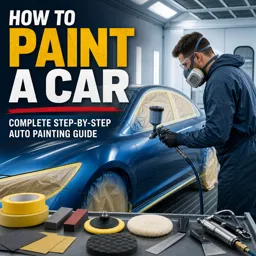
Use correct gun settings, maintain a consistent spraying distance, apply even passes, and avoid applying overly heavy coats. The Complete Step-by-Step Auto Painting Guide explains these techniques.

Complete any course and issue your certificate via the app — at no cost.

Download the app! to have access to more than 4,000 Online Courses + Certificate, all free!
Download the app! 100% free courses.


Carry knowledge in your pocket.
Download the Cursa app.
There are hundreds of free courses available, with a free certificate of completion that is saved in your mobile image gallery.
Download the app to access the Course Completion Certificate for Free.


+ 10 million
students

Free and Valid
Certificate

60 thousand free
exercises

4.8/5 rating in
app stores

Free courses in
video and ebooks