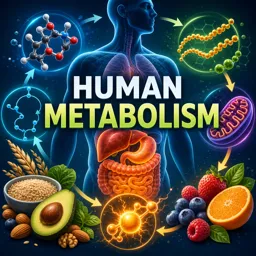


Human metabolism is the set of chemical reactions that convert food and nutrients into energy and materials needed for growth, repair, and normal body function.

1


Boosting Your Metabolism: Practical Strategies for Better Health and Weight Loss
Discover practical strategies to boost metabolism naturally, improve energy, support weight loss, and enhance overall health through lifestyle choices.

How Human Metabolism Influences Weight Management and Nutrition Choices
Discover how human metabolism affects weight management, nutrition choices, and strategies to boost your metabolic health naturally.

The Role of Metabolism in Daily Energy Expenditure and Weight Loss
Learn how metabolism affects daily energy expenditure and weight loss, key influencing factors, and tips to support a healthy metabolic rate.

Understanding Human Metabolism: The Foundation of Nutrition and Weight Loss
Learn how human metabolism affects nutrition and weight loss, the factors that influence metabolic rate, and tips to boost metabolism naturally.
Explore our collection of free online Human Metabolism courses and develop a deeper understanding of the biochemical processes that sustain life. These educational courses are ideal for students, healthcare learners, biology enthusiasts, fitness professionals, and anyone interested in studying how the human body transforms nutrients into energy. Every course is free, includes exercises to reinforce learning, and offers free certification upon completion.
Human metabolism involves interconnected chemical reactions that support cellular function, growth, repair, and energy production. Through structured lessons, you can study essential concepts such as anabolism, catabolism, metabolic pathways, enzymes, ATP production, cellular respiration, and energy balance. The courses also introduce the metabolism of carbohydrates, lipids, and proteins, helping learners understand how macronutrients are digested, absorbed, stored, and used by the body.
Each free Human Metabolism course provides accessible educational content that can be studied according to your own schedule. Included exercises allow you to review terminology, test your comprehension, and consolidate knowledge of complex biochemical mechanisms. After completing the selected course, you can obtain a free certificate to document your learning and complement your academic, professional, or personal development.
These online courses can support learners in biology, biochemistry, nutrition, medicine, nursing, pharmacy, sports science, and other health-related disciplines. No matter whether you are reviewing metabolic physiology for an examination or expanding your knowledge of nutrition and energy regulation, the lessons provide a practical foundation for continued education.
To access the free courses, complete the exercises, and receive free certification, you must install the Cursa application. Android users can install it through Google Play by selecting Download for Android. iPhone users can access the App Store by selecting Download for iOS / iPhone.
Choose a course, study key metabolic pathways, practice with educational exercises, and strengthen your understanding of human physiology. Install the Cursa application today and begin your free online Human Metabolism training with free certification.
What is human metabolism?
Human metabolism is the set of chemical reactions that convert food and nutrients into energy and materials needed for growth, repair, and normal body function.
What are the two main types of metabolism?
The two main types are catabolism, which breaks down molecules to release energy, and anabolism, which uses energy to build molecules and tissues.
What is basal metabolic rate (BMR)?
Basal metabolic rate is the energy the body uses at rest to maintain essential functions such as breathing, circulation, and temperature regulation.
How does metabolism produce energy?
Metabolism converts carbohydrates, fats, and proteins into ATP, the main energy-carrying molecule used by cells.
What role does insulin play in metabolism?
Insulin helps cells take up glucose from the blood and promotes storage of glucose, fat, and other nutrients after meals.
How are carbohydrates, fats, and proteins metabolized?
Carbohydrates are primarily converted to glucose, fats to fatty acids, and proteins to amino acids, which can be used for energy or body tissues.
What factors affect human metabolism?
Metabolism is affected by age, body size, muscle mass, genetics, hormones, activity level, diet, sleep, and health conditions.

Complete any course and issue your certificate via the app — at no cost.

Download the app! to have access to more than 4,000 Online Courses + Certificate, all free!
Download the app! 100% free courses.


Carry knowledge in your pocket.
Download the Cursa app.
There are hundreds of free courses available, with a free certificate of completion that is saved in your mobile image gallery.
Download the app to access the Course Completion Certificate for Free.


+ 10 million
students

Free and Valid
Certificate

60 thousand free
exercises

4.8/5 rating in
app stores

Free courses in
video and ebooks




What are people saying about free online courses of Human Metabolism
ILIRJANA AGOLLI
Oh Yeah I enjoying a lot. Very anazing presentations. This course was so beautiful and worthy. The questions were challenging me. So interesting !
CourseHuman Metabolism