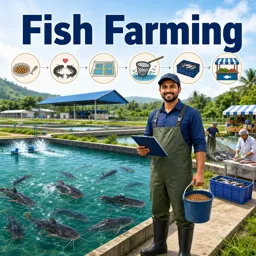


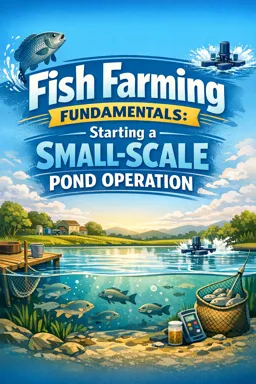
Fish farming, or aquaculture, is the raising of fish in ponds, tanks, cages, or other controlled systems for food, stocking, or sale.

1

1



Getting Started with Fish Farming: Essential Equipment and Infrastructure
Starting fish farming? Learn about essential equipment, site selection, infrastructure, and biosecurity for a profitable and sustainable aquaculture business.

Fish Feeding Techniques for Optimal Growth and Health in Fish Farming
Effective fish feeding strategies, balanced nutrition, and careful monitoring are essential for optimal growth, health, and profitability in fish farming.

Understanding Water Quality in Fish Farming
Effective water quality management in fish farming boosts fish health and productivity. Monitor oxygen, pH, ammonia, and temperature for optimal growth.

Top Fish Species for Profitable Fish Farming
Boost fish farm profits by choosing species like tilapia, catfish, carp, trout, and barramundi. Consider growth rate, market demand, and environmental needs.
Explore free online Fish Farming courses designed for learners who want to develop practical and theoretical knowledge of aquaculture. These educational courses introduce essential concepts for raising fish efficiently, responsibly, and sustainably. Whether you are a beginner, student, rural producer, entrepreneur, or aquaculture professional, you can study useful techniques at your own pace and strengthen your qualifications without paying tuition fees.
Fish farming education covers the planning, production, and management practices required for successful aquaculture. Course content may address fish species selection, pond preparation, water quality monitoring, feeding strategies, breeding, growth assessment, disease prevention, harvesting, and production costs. Learners can build a foundation for understanding how biological, environmental, and economic factors influence fish health and farm productivity.
These free Fish Farming courses include exercises that support learning, revision, and knowledge assessment. Activities allow students to review important topics and apply course concepts to realistic production situations. The courses also offer free certification, providing an accessible way to document your educational development after completing the required learning steps.
The educational materials are suitable for anyone interested in commercial fish production, small-scale aquaculture, sustainable food systems, or agricultural entrepreneurship. They may also help students and workers expand their professional knowledge, prepare for new opportunities, or plan a fish farming project. Online learning offers the flexibility to review lessons from different locations and organize study around your routine.
To access these free online courses, complete the exercises, and obtain free certification, it is necessary to install the Cursa application. Android users can install it through Google Play at Download for Android. iPhone users can install it through the App Store at Download for iOS / iPhone.
Start studying today and gain valuable aquaculture knowledge through accessible Fish Farming training. Choose a course, follow the educational lessons, practice with exercises, and earn free certification while learning skills that can support sustainable fish production and professional growth.
What is fish farming?
Fish farming, or aquaculture, is the raising of fish in ponds, tanks, cages, or other controlled systems for food, stocking, or sale.
Can I start a small-scale fish farm with a pond?
Yes. A small pond operation can begin with suitable pond design, reliable water quality, appropriate fish species, feed, and a basic management plan.
What will I learn in a fish farming course?
You can learn pond preparation, species selection, stocking rates, feeding, water-quality management, fish health, harvesting, and farm planning.
Which fish species are best for pond farming?
Common pond-farming species include tilapia, catfish, carp, and trout, depending on local climate, water temperature, regulations, and market demand.
Do I need experience to take Fish Farming Fundamentals?
No. A fundamentals course is designed to introduce beginners to the core practices needed to start and manage a small-scale pond fish farm.
How important is water quality in fish farming?
Water quality is essential. Oxygen, temperature, pH, ammonia, and cleanliness directly affect fish growth, health, survival, and feed efficiency.
What equipment is needed for a small fish pond operation?
Typical needs include a suitable pond, water supply and drainage, fish feed, nets, testing tools, aeration when needed, and equipment for harvesting and record keeping.

Complete any course and issue your certificate via the app — at no cost.

Download the app! to have access to more than 4,000 Online Courses + Certificate, all free!
Download the app! 100% free courses.


Carry knowledge in your pocket.
Download the Cursa app.
There are hundreds of free courses available, with a free certificate of completion that is saved in your mobile image gallery.
Download the app to access the Course Completion Certificate for Free.


+ 10 million
students

Free and Valid
Certificate

60 thousand free
exercises

4.8/5 rating in
app stores

Free courses in
video and ebooks





What are people saying about free online courses of Fish Farming
Basirat Nasir imam
am enjoying the course
CourseFish Farming