Add か to the end of the polite sentence, such as これは本ですか。


Duration of the online course: 9 hours and 29 minutes
New
Build solid JLPT N5 Japanese grammar fast with a free online course—particles, ます form, て-form requests, comparisons, and more with quick quizzes.
Want to understand beginner Japanese grammar without guessing or memorizing random rules? This free online course helps you build a clear JLPT N5 foundation using the grammar taught in Genki 1, explained in a way that connects the dots between forms, meaning, and real usage.
You will learn how to create accurate polite questions, choose the right particles in common sentences, and confidently form essential verb patterns. By practicing the ます form, casual short forms, negatives, past negatives, and the て-form, you will start recognizing how Japanese sentences are actually built and why small changes completely shift the meaning.
The course also supports everyday communication skills: making polite requests, inviting someone to do something, expressing what you want to do, describing actions in progress, and comparing things naturally. These are exactly the building blocks that make beginner conversations and reading feel less intimidating.
Each lesson includes quick exercises that check understanding right away, so you can spot mistakes early and fix them before they become habits. Instead of overwhelming you with long theory, the course focuses on clarity and repetition through practical examples—ideal if you are self-studying, returning to Japanese after a break, or preparing for the JLPT N5 with a stronger grammar base.
By the end, you should be able to follow common Genki-style sentences with far more confidence, form your own beginner-level statements and questions, and approach new grammar with a method that actually makes it stick.

9 hours and 29 minutes of online video course

Digital certificate of course completion (Free)

Exercises to train your knowledge

100% free, from content to certificate
How do you turn a polite Japanese sentence into a question in Genki 1 grammar?
Add か to the end of the polite sentence, such as これは本ですか。
How do you make a polite request with the Japanese て-form?
Use the て-form followed by ください, as in 見てください (“Please look”).
What does ~すぎる mean in beginner Japanese grammar?
~すぎる means “too much” or “excessively,” as in 食べすぎる (“to eat too much”).
Ready to get started?Download the app and get started today.
Install the app now
to access the course
Over 5,000 free courses
Programming, English, Digital Marketing and much more! Learn whatever you want, for free.

Study plan with AI
Our app's Artificial Intelligence can create a study schedule for the course you choose.

From zero to professional success
Improve your resume with our free Certificate and then use our Artificial Intelligence to find your dream job.
You can also use the QR Code or the links below.




Free CourseJapanese Grammar lessons
5

(1)

19h14m

32 exercises
Free CourseKanji lessons
5
(1)
1h10m
1 exercises
Free CourseKanji reading and writing practice
5
(1)
3h54m
11 exercises
Free CourseJapanese Vocabulary N5
5
(5)
4h29m
4 exercises

Free CourseJapanese Vocabulary and Slang
5
(1)
13h36m
27 exercises
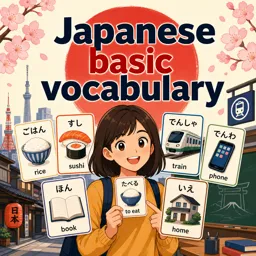
Free CourseJapanese basic vocabulary
4.8
(6)
140h00m
1 exercises
Free CourseJapanese
4.8
(61)
5h15m
45 exercises
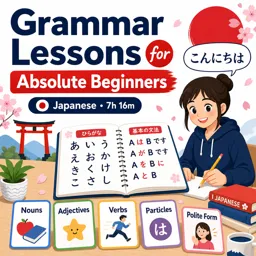
Free CourseGrammar Lessons for Absolute Beginners
4.8

(4)
7h16m
21 exercises

Free CourseJapanese
4.7
(222)
2h36m
6 exercises

Free CourseJapanese From Zero
4.7
(3)
55h38m
46 exercises
Carry knowledge in your pocket.
Download the Cursa app.
There are hundreds of free courses available, with a free certificate of completion that is saved in your mobile image gallery.
Download the app to access the Course Completion Certificate for Free.


+ 10 million
students

Free and Valid
Certificate

60 thousand free
exercises

4.8/5 rating in
app stores

Free courses in
video and ebooks