
They are the vowel, diphthong, and consonant sounds used to describe standard English speech with the International Phonetic Alphabet.

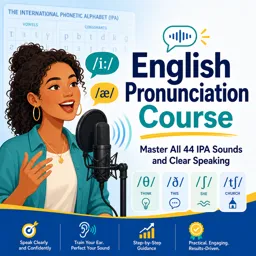
Duration of the online course: 1 hours and 21 minutes
4.7


(3)
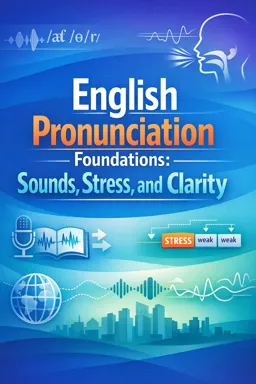
Speak English more clearly with a free pronunciation course mastering IPA sounds, vowels and consonants—boost confidence for work, interviews, and travel.
Clear pronunciation changes how people respond to your English. When your vowels are consistent and your consonants land cleanly, listeners understand you faster, you repeat yourself less, and you feel more confident speaking in meetings, interviews, presentations, and everyday conversations. This free online course is designed to help you build that clarity step by step, using the International Phonetic Alphabet (IPA) as a practical tool rather than a confusing set of symbols.
You will train your ear to notice small sound differences that often cause misunderstandings, such as short versus long vowels and similar consonants that require precise tongue and lip placement. You will also practice essential features of natural speech, including the relaxed schwa sound that appears constantly in common words. By connecting each sound to real examples, your mouth learns new habits while your listening skills improve at the same time.
The learning experience combines focused video explanations with quick practice questions, so you can immediately test what you heard and reinforce it. Instead of guessing why a word feels difficult to say, you will gain a repeatable method: identify the target sound, understand how it is formed, and apply it to words and phrases until it becomes automatic. Over time, this reduces accent-related friction and makes your speaking easier to follow, even when you talk quickly.
This course suits English learners who want practical, measurable improvement, as well as professionals who rely on spoken communication and want to sound more precise and confident. If you have ever felt that your vocabulary and grammar are strong but your speech still does not come out the way you intend, this training helps bridge the gap. Learn at your own pace, revisit any sound whenever you need, and build pronunciation habits you can use for life.

1 hours and 21 minutes of online video course

Digital certificate of course completion (Free)

Exercises to train your knowledge

100% free, from content to certificate
What are the 44 IPA sounds in English pronunciation?
They are the vowel, diphthong, and consonant sounds used to describe standard English speech with the International Phonetic Alphabet.
How do I pronounce the schwa sound /ə/ in words like “the” and “of”?
Use a relaxed, short central vowel sound: /ðə/ for “the” and /əv/ for “of” in unstressed speech.
What is the difference between /ɪ/ in “bid” and /iː/ in “bead”?
The /ɪ/ sound is short and relaxed, while /iː/ is longer and usually made with a tenser, higher tongue position.
Ready to get started?Download the app and get started today.
Install the app now
to access the course
Over 5,000 free courses
Programming, English, Digital Marketing and much more! Learn whatever you want, for free.

Study plan with AI
Our app's Artificial Intelligence can create a study schedule for the course you choose.

From zero to professional success
Improve your resume with our free Certificate and then use our Artificial Intelligence to find your dream job.
You can also use the QR Code or the links below.



Free CourseVocabulary and Expressions in English
5
(13)

4h58m

15 exercises
Free CourseTechnical English for Engineers
5
(7)
20h10m
38 exercises
Free CourseEnglish Grammar Basics to Advanced
5
(23)
12h59m
33 exercises
Free CourseEnglish for Academic Purposes
4.9
(12)
65h01m
32 exercises
Free CourseAccent Reduction and Pronunciation for English Learners
4.9
(10)
5h26m
13 exercises
Free CourseEnglish Grammar
4.9
(9)
5h49m
19 exercises
Free CourseIELTS English Exam Lessons
4.8
(15)
9h34m
33 exercises
Free CourseEnglish listening practice
4.8
(39)
6h52m
26 exercises
Free CourseBusiness english course
4.8
(440)
2h44m
20 exercises
Free CourseEnglish grammar
4.8
(356)
4h20m
18 exercises
Carry knowledge in your pocket.
Download the Cursa app.
There are hundreds of free courses available, with a free certificate of completion that is saved in your mobile image gallery.
Download the app to access the Course Completion Certificate for Free.


+ 10 million
students

Free and Valid
Certificate

60 thousand free
exercises

4.8/5 rating in
app stores

Free courses in
video and ebooks
Course comments: English Pronunciation Course: Master All 44 IPA Sounds and Clear Speaking
Kaung Tun Kyaw
Nice