In this greeting, は is the topic particle, which is pronounced “wa,” so こんにちは uses は by convention.

Duration of the online course: 6 hours and 3 minutes
New
Speak Japanese with confidence: build pronunciation, kana reading and everyday phrases in a free online course with practice, grammar basics and optional certificate.
Learning Japanese feels much easier when you can read what you see, say what you mean, and understand why the language works the way it does. This free online course is designed for true beginners who want practical progress without getting overwhelmed. You will strengthen your foundation step by step, combining clear explanations with focused practice so your listening and speaking improve alongside your reading skills.
You will start by making sense of romaji and the sounds that often confuse new learners, then move into the real writing system with approachable guidance on hiragana, katakana and the role of kanji. Pronunciation gets special attention, helping you handle long vowels, small characters and rhythm so you sound more natural and avoid common misunderstandings. These small details make a big difference when you try to follow conversations, anime, songs, travel announcements, or beginner-friendly podcasts.
From there, you will build everyday communication: polite greetings, multiple ways to say thank you, talking about nationality, money and prices, numbers, days and months, birthdays, time, and asking where something is. You will also get a beginner-friendly introduction to essential grammar patterns used constantly in real life, including connecting noun sentences, making negatives, asking simple questions, using demonstratives like this/that, and understanding how sentence order and politeness change what you say and how it is received.
By the end, you should be able to pronounce key patterns correctly, recognize common writing conventions, and produce basic sentences for daily situations with more confidence. If your goal is travel, study, work opportunities, or simply enjoying Japanese media with less reliance on subtitles, this course offers a structured first step and a solid base you can build on. A certificate may be available, making it a helpful addition to your learning record.

6 hours and 3 minutes of online video course

Digital certificate of course completion (Free)

Exercises to train your knowledge

100% free, from content to certificate
Why is konnichiwa written with は (ha) instead of わ (wa)?
In this greeting, は is the topic particle, which is pronounced “wa,” so こんにちは uses は by convention.
What is the difference between katakana and kanji in Japanese?
Katakana is mainly used for foreign loanwords, names, and emphasis; kanji are character-based words that carry meaning.
How do you ask “Do you play tennis?” in polite Japanese without anata?
Say テニスをしますか (Tenisu o shimasu ka?). Japanese often omits “you” when the context is clear.
Ready to get started?Download the app and get started today.
Install the app now
to access the course
Over 5,000 free courses
Programming, English, Digital Marketing and much more! Learn whatever you want, for free.

Study plan with AI
Our app's Artificial Intelligence can create a study schedule for the course you choose.

From zero to professional success
Improve your resume with our free Certificate and then use our Artificial Intelligence to find your dream job.
You can also use the QR Code or the links below.



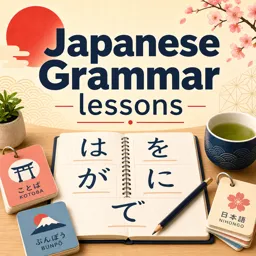
Free CourseJapanese Grammar lessons
5

(1)

19h14m

32 exercises
Free CourseKanji lessons
5
(1)
1h10m
1 exercises
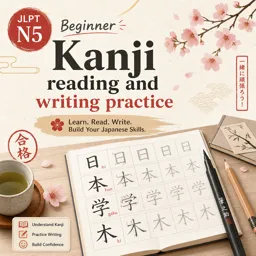
Free CourseKanji reading and writing practice
5
(1)
3h54m
11 exercises
Free CourseJapanese Vocabulary N5
5
(5)
4h29m
4 exercises

Free CourseJapanese Vocabulary and Slang
5
(1)
13h36m
27 exercises
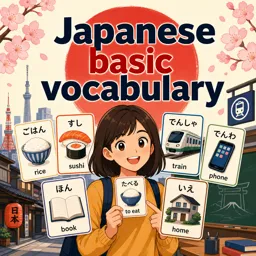
Free CourseJapanese basic vocabulary
4.8
(6)
140h00m
1 exercises
Free CourseJapanese
4.8
(61)
5h15m
45 exercises
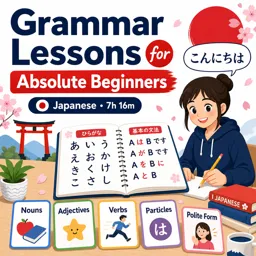
Free CourseGrammar Lessons for Absolute Beginners
4.8

(4)
7h16m
21 exercises

Free CourseJapanese
4.7
(222)
2h36m
6 exercises

Free CourseJapanese From Zero
4.7
(3)
55h38m
46 exercises
Carry knowledge in your pocket.
Download the Cursa app.
There are hundreds of free courses available, with a free certificate of completion that is saved in your mobile image gallery.
Download the app to access the Course Completion Certificate for Free.


+ 10 million
students

Free and Valid
Certificate

60 thousand free
exercises

4.8/5 rating in
app stores

Free courses in
video and ebooks