Use the present simple for routines and facts, and the present continuous for actions happening now or temporary situations.

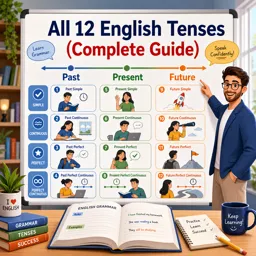
Duration of the online course: 10 hours and 38 minutes
4.6


(7)
Master all 12 English tenses with a free online course—clear rules, real examples, and practice quizzes to speak and write with confidence.
Understanding English tenses is one of the fastest ways to sound clearer and more natural, but it can feel confusing when every rule seems to come with exceptions. This free online course guides you through all 12 English tenses in a structured, practical way so you can choose the right form without second-guessing. You will learn what tenses mainly communicate—time, completion, duration, and intention—and how small changes in verb form can completely change meaning.
Instead of treating tenses as isolated topics, the course organizes them into an overview that helps you see the full system. You will build a strong foundation with the core tenses and then move confidently into the perfect and perfect continuous forms, which many learners find intimidating. Clear explanations and carefully chosen examples help you connect grammar to real situations, such as habits versus actions happening now, background actions interrupted in the past, and different ways to speak about the future.
Along the way, quick practice questions reinforce what you learn immediately. You will train common decision points like present simple vs present continuous, present perfect vs past simple, and will vs going to, so you can communicate accurately in conversation, emails, interviews, and academic writing. By the end, you will be able to review and recognize every tense, understand when to use it, and express yourself with better timing, nuance, and confidence.

10 hours and 38 minutes of online video course

Digital certificate of course completion (Free)

Exercises to train your knowledge

100% free, from content to certificate
What is the difference between the present simple and present continuous tense?
Use the present simple for routines and facts, and the present continuous for actions happening now or temporary situations.
When should I use "will" instead of "going to" for the future?
Use "will" for spontaneous decisions and predictions; use "going to" for prior plans or predictions based on present evidence.
When do I use the past perfect tense?
Use the past perfect for an action that happened before another action or point in the past.
Ready to get started?Download the app and get started today.
Install the app now
to access the course
Over 5,000 free courses
Programming, English, Digital Marketing and much more! Learn whatever you want, for free.

Study plan with AI
Our app's Artificial Intelligence can create a study schedule for the course you choose.

From zero to professional success
Improve your resume with our free Certificate and then use our Artificial Intelligence to find your dream job.
You can also use the QR Code or the links below.



Free CourseVocabulary and Expressions in English
5
(13)

4h58m

15 exercises
Free CourseTechnical English for Engineers
5
(7)
20h10m
38 exercises
Free CourseEnglish Grammar Basics to Advanced
5
(23)
12h59m
33 exercises
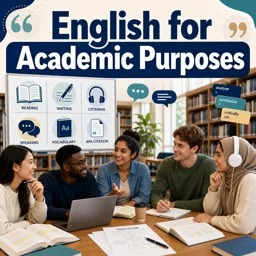
Free CourseEnglish for Academic Purposes
4.9
(12)
65h01m
32 exercises
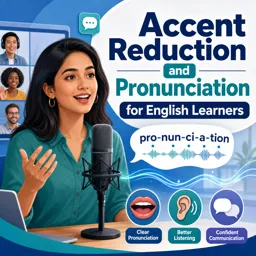
Free CourseAccent Reduction and Pronunciation for English Learners
4.9
(10)
5h26m
13 exercises
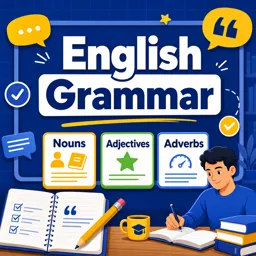
Free CourseEnglish Grammar
4.9
(9)
5h49m
19 exercises
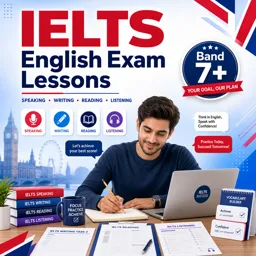
Free CourseIELTS English Exam Lessons
4.8
(15)
9h34m
33 exercises
Free CourseEnglish listening practice
4.8
(39)
6h52m
26 exercises

Free CourseBusiness english course
4.8
(440)
2h44m
20 exercises
Free CourseEnglish grammar
4.8
(356)
4h20m
18 exercises
Carry knowledge in your pocket.
Download the Cursa app.
There are hundreds of free courses available, with a free certificate of completion that is saved in your mobile image gallery.
Download the app to access the Course Completion Certificate for Free.


+ 10 million
students

Free and Valid
Certificate

60 thousand free
exercises

4.8/5 rating in
app stores

Free courses in
video and ebooks
Course comments: All 12 English Tenses (Complete Guide)
Ei Khine Phyo
I have finished this course . Thanks