The open hole allows air to escape, helping the drum resonate freely and produce a fuller sound.

Duration of the online course: 57 minutes
New
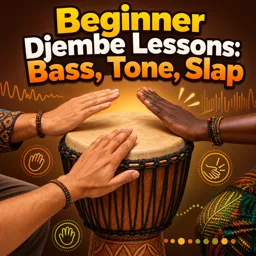
Build solid djembe technique fast with a free online course: learn bass, tone and slap, improve rhythm, stamina and groove confidence, plus practice tips.
Want to play djembe with a strong sound and steady timing, even if you are starting from zero? This free online course helps you build the essential foundations step by step, focusing on the three core strokes that unlock most beginner grooves: bass, tone and slap. You will begin with correct positioning and relaxed posture so your hands move efficiently and your sound projects without strain. Small details matter on djembe, and you will learn habits that make practice feel easier, including why keeping the bottom opening clear affects resonance and volume.
As you progress, the course guides you through clean bass technique and then into tone development, with practical guidance to hit the sweet spot and avoid painful contact points near the edge. You will also work on finger suppleness so your tone speaks clearly and consistently, instead of sounding thin or choked. Rather than rushing ahead, the lessons emphasize repeating short patterns that build muscle memory, endurance and control, so you can keep a groove going without your hands tightening up.
Once bass and tone feel dependable, you will develop slap technique designed to produce a crisp sound without pain. You will practice combining slap, tone and bass in simple training loops that improve coordination and help you switch strokes smoothly while staying in time. The course also moves beyond isolated hits into classic djembe-feel patterns, including widely used grooves and ensemble-friendly parts that train you to lock into a pulse, support other players, and sound confident in a group setting.
By the end, you will be able to play recognizable rhythms, explore a basic 12/8 feel, and approach new patterns with better listening, hand control and rhythmic awareness. Whether your goal is to start drumming as a hobby, join jam sessions, or add percussion to your musical toolkit, these lessons give you a clear path from first strikes to solid, musical grooves you can actually use.

57 minutes of online video course

Digital certificate of course completion (Free)

Exercises to train your knowledge

100% free, from content to certificate
Why should the hole underneath a djembe stay unblocked while playing?
The open hole allows air to escape, helping the drum resonate freely and produce a fuller sound.
How can I play a clear djembe slap without hurting my hand?
Use a relaxed, quick whipping hand motion at the rim area rather than striking forcefully or leaving your hand on the head.
What strokes are used in beginner djembe rhythms such as Kassa and 12/8 grooves?
These rhythms combine the three core sounds—bass, tone, and slap—into repeating patterns and coordinated grooves.
Ready to get started?Download the app and get started today.
Install the app now
to access the course
Over 5,000 free courses
Programming, English, Digital Marketing and much more! Learn whatever you want, for free.

Study plan with AI
Our app's Artificial Intelligence can create a study schedule for the course you choose.

From zero to professional success
Improve your resume with our free Certificate and then use our Artificial Intelligence to find your dream job.
You can also use the QR Code or the links below.



Free CourseBeginner Drum Lessons
5

(2)

3h12m

42 exercises
Free CourseBeginner Drum Lessons
5
(1)
5h33m
36 exercises
Free CourseDrums
4.9
(8)
77h20m
42 exercises
Free CourseDrum lessons for beginners
4.8
(12)
5h34m
22 exercises
Free CourseDrum lessons
New
1h35m
9 exercises
Free CourseLearning Drums
New
5h25m
34 exercises
Free CourseBeginner Drum Lessons
New
1h47m
8 exercises
Free CourseBeginner Drums Lessons
New
2h29m
13 exercises
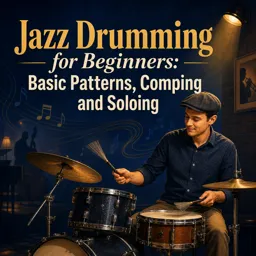
Free CourseJazz Drumming for Beginners: Basic Patterns, Comping and Soloing
New
46m
Carry knowledge in your pocket.
Download the Cursa app.
There are hundreds of free courses available, with a free certificate of completion that is saved in your mobile image gallery.
Download the app to access the Course Completion Certificate for Free.


+ 10 million
students

Free and Valid
Certificate

60 thousand free
exercises

4.8/5 rating in
app stores

Free courses in
video and ebooks