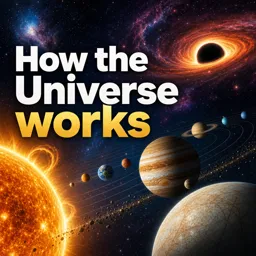


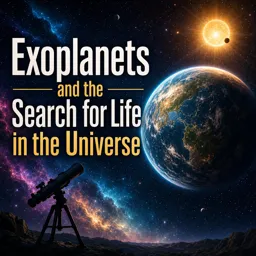
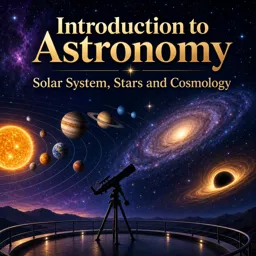
You can learn about planets, stars, galaxies, space missions, exoplanets, and the origins of the universe.

3


A Beginner’s Guide to Space Exploration: Reaching Beyond Our World
Learn the basics of space exploration—its purpose, milestones, and how you can get involved in uncovering the mysteries of the universe.

Innovations in Space Technology: How We Explore the Cosmos Today
Discover how modern space technology—robots, reusable rockets, and global partnerships—is transforming how we explore the cosmos today.

Private Companies and the New Era of Space Exploration
Discover how private companies like SpaceX and Blue Origin are reshaping space exploration, from reusable rockets to Mars colonization plans.

The International Space Station: Humanity’s Outpost in Orbit
Explore the history, research, and future of the International Space Station, humanity’s collaborative outpost in orbit.

What Are Black Holes? Unraveling One of the Universe’s Greatest Mysteries
Black holes are invisible regions with immense gravity, shaping galaxies and testing physics at the universe’s most extreme limits.

The Role of Black Holes in Galaxy Formation and Evolution
Black holes shape galaxies by regulating star formation, driving jets, and merging during collisions, playing a key role in cosmic evolution and galaxy growth.

The Fascinating World of Black Hole Mergers: When Giants Collide
Black hole mergers unleash powerful gravitational waves, revealing key insights into stellar evolution, gravity, and the universe’s deepest mysteries.

Event Horizons: The Astonishing Boundaries of Black Holes
Event horizons are the defining boundaries of black holes, marking the point of no return for matter and light. This article explores their nature, detection, and significance in modern physics.
Discover free online Space Exploration courses designed for learners who want to study astronomy, spacecraft, planetary science, and the future of human exploration beyond Earth. This educational course collection offers accessible learning opportunities for beginners, students, teachers, and science enthusiasts. Study at your own pace, complete exercises to reinforce each lesson, and receive free certification after completing eligible courses.
Build valuable knowledge through structured lessons covering the scientific principles, technologies, and discoveries that make space missions possible. These free Space Exploration courses introduce important educational topics such as the Solar System, stars, galaxies, rockets, satellites, space stations, telescopes, and astronaut training.
The learning materials are suitable for anyone interested in science education. Beginners can develop a clear foundation, while students and educators can expand classroom knowledge with supplementary lessons. Aspiring astronomers, engineers, researchers, and astronauts can also use the courses to explore possible academic and professional pathways in the space sector.
| Learning format | Online and self-paced |
| Course price | Free |
| Activities | Lessons and exercises |
| Certification | Free certification |
By studying Space Exploration online, learners can strengthen scientific literacy, analytical thinking, problem-solving skills, and understanding of modern aerospace research. The flexible educational format makes it easier to study whenever convenient and revisit lessons for continued knowledge development.
To access these free online courses, complete the exercises, and obtain free certification, you must install the Cursa application. Android learners can use Google Play: Download for Android. Apple users can install it through the App Store: Download for iOS / iPhone.
Choose a course, start learning, and expand your understanding of the universe through free educational content. Study major missions, scientific discoveries, and emerging technologies while completing exercises and working toward free certification.
What can I learn in a space exploration course?
You can learn about planets, stars, galaxies, space missions, exoplanets, and the origins of the universe.
Is astronomy included in space exploration courses?
Yes. Astronomy is a core subject, covering the Solar System, stars, cosmology, and how the universe works.
What are exoplanets and why are they important?
Exoplanets are planets orbiting stars beyond our Sun. Studying them helps scientists search for potentially habitable worlds.
Do I need a science background to study space exploration?
No. Introductory courses typically explain key concepts clearly and are suitable for beginners.
What will I learn about the Solar System?
You will explore the Sun, planets, moons, asteroids, comets, and the missions used to study them.
Can space exploration courses teach me about stars and cosmology?
Yes. Courses can explain how stars form and evolve, as well as the history, structure, and expansion of the universe.
How does studying space exploration relate to the search for life?
It helps you understand planetary environments, exoplanet detection, and the conditions that may support life beyond Earth.

Complete any course and issue your certificate via the app — at no cost.

Download the app! to have access to more than 4,000 Online Courses + Certificate, all free!
Download the app! 100% free courses.


Carry knowledge in your pocket.
Download the Cursa app.
There are hundreds of free courses available, with a free certificate of completion that is saved in your mobile image gallery.
Download the app to access the Course Completion Certificate for Free.


+ 10 million
students

Free and Valid
Certificate

60 thousand free
exercises

4.8/5 rating in
app stores

Free courses in
video and ebooks