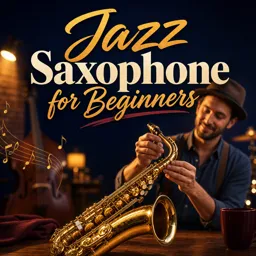


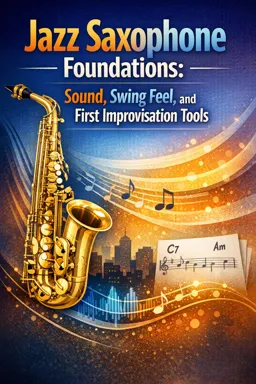
You will learn basic saxophone technique, jazz rhythms, simple melodies, swing feel, and introductory improvisation.

1

1


Essential Jazz Saxophone Repertoire: Iconic Songs Every Player Should Know
Discover essential jazz saxophone songs and tips for mastering iconic standards to enhance technique, improvisation, and musical fluency.

Exploring the Art of Jazz Saxophone: Techniques, Improvisation, and Legends
Discover jazz saxophone techniques, improvisation tips, and legendary players to inspire aspiring musicians and enhance your jazz journey.

Jazz Saxophone Practice Routines: Building Technique and Musicality
Discover effective jazz saxophone practice routines to build technique, musicality, improvisation skills, and mastery of jazz standards for aspiring players.

The Role of the Saxophone in Jazz Ensembles: Sound, Styles, and Influence
Discover the jazz saxophone’s role in ensembles, its expressive sound, and influence across swing, bebop, and modern jazz styles.
Explore free online Jazz Saxophone courses designed for learners who want to develop musical technique, improvisation skills, rhythmic awareness, and a deeper understanding of jazz. Whether you are beginning your saxophone education or expanding an established practice routine, these courses offer accessible lessons that support progressive learning. Study from home, review each lesson at your own pace, and build practical knowledge through structured educational content.
The courses introduce important concepts used by jazz saxophonists, combining music theory with practical performance training. Lessons may address tone production, breath control, articulation, embouchure, scales, chord progressions, phrasing, ear training, repertoire, and jazz improvisation. The content helps students understand how theoretical ideas can be applied when practicing melodies, interpreting standards, or creating solos.
All listed Jazz Saxophone courses are free and include exercises that encourage active study and consistent practice. These educational activities can help reinforce technical movements, theoretical knowledge, aural perception, and improvisational vocabulary. The courses also offer free certification, allowing learners to document course completion and add evidence of continuing music education to a résumé, portfolio, or personal learning record.
These free Jazz Saxophone classes are suitable for students, self-taught musicians, music educators, ensemble performers, and saxophonists seeking flexible online training. Beginners can establish a reliable foundation, while intermediate players can strengthen technique, expand jazz language, and organize their daily practice more effectively.
To access the free courses, exercises, and free certification, you must install the Cursa application. Android users can get it through Google Play at Download for Android. iPhone users can install it from the App Store at Download for iOS / iPhone. Install the app, choose a Jazz Saxophone course, and begin your online musical education today.
What will I learn in a jazz saxophone course for beginners?
You will learn basic saxophone technique, jazz rhythms, simple melodies, swing feel, and introductory improvisation.
Do I need prior saxophone experience to start jazz saxophone lessons?
No. Beginner jazz saxophone courses can introduce core playing skills alongside essential jazz concepts.
Which saxophone is best for learning jazz?
Alto and tenor saxophones are both popular for jazz. Alto is often easier for beginners, while tenor has a deeper classic jazz sound.
How do I develop a jazz saxophone sound?
Build a relaxed embouchure, steady air support, accurate intonation, and listen closely to professional jazz saxophonists.
What is swing feel in jazz saxophone?
Swing feel is a rhythmic style where paired notes are played with a long-short pulse, creating a flowing jazz groove.
Can beginners learn jazz saxophone improvisation?
Yes. Beginners can start improvising with simple scales, chord tones, rhythmic patterns, and call-and-response phrases.
What are the first improvisation tools for jazz saxophone?
Useful first tools include major and blues scales, chord tones, short motifs, rhythmic variation, and listening-based imitation.

Complete any course and issue your certificate via the app — at no cost.

Download the app! to have access to more than 4,000 Online Courses + Certificate, all free!
Download the app! 100% free courses.


Carry knowledge in your pocket.
Download the Cursa app.
There are hundreds of free courses available, with a free certificate of completion that is saved in your mobile image gallery.
Download the app to access the Course Completion Certificate for Free.


+ 10 million
students

Free and Valid
Certificate

60 thousand free
exercises

4.8/5 rating in
app stores

Free courses in
video and ebooks