

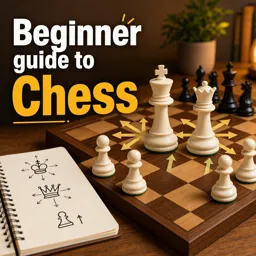
A beginner chess course should cover the board, piece movement, basic rules, checkmate patterns, and simple strategy. Beginner guide to Chess is designed for this foundation.

3


The Enduring Appeal of Chess: A Game of Infinite Possibilities
Discover why chess remains a timeless game—enhancing skills, building community, and offering endless strategic possibilities.

Mastering Chess Endgames: Key Concepts Every Player Should Know
Master key endgame concepts like king activity, basic checkmates, and pawn strategy to boost your chess skills and secure more wins.

Chess Tactics Explained: Forks, Pins, and Skewers
Master chess tactics like forks, pins, and skewers to gain material and win games. Recognizing and combining these moves will enhance your gameplay.

How to Improve Your Chess Opening Strategy: Tips for Beginners
Master chess openings by controlling the center, developing pieces early, avoiding premature attacks, and studying common opening systems for success.
Discover a practical selection of free online chess courses designed to support structured learning at every skill level. Study essential rules, strategic concepts, tactical patterns, opening principles, middlegame planning, and endgame techniques through accessible educational content. Each course is free, includes exercises for knowledge reinforcement, and offers free certification after completion, helping you document your learning progress.
Whether you are learning how the pieces move or seeking advanced chess training, these online courses provide clear lessons for progressive skill development. Beginners can study board notation, legal moves, check, checkmate, castling, and basic tactics. Intermediate and advanced learners can deepen their understanding of positional play, calculation, pawn structures, combinations, opening preparation, and competitive decision-making.
Active practice is an important part of chess education. The courses include exercises that allow learners to review positions, recognize tactical opportunities, calculate variations, and apply strategic principles. By completing each lesson and its activities, students can strengthen concentration, logical reasoning, memory, problem-solving, pattern recognition, and analytical thinking.
All listed chess courses can be studied free of charge. They also provide free certification, offering a convenient way to demonstrate course completion and add an educational achievement to your personal records, academic portfolio, or professional profile. Learn at your own pace and revisit lessons and exercises whenever you need additional review.
To access the free online chess courses, exercises, and certificates, it is necessary to install the Cursa application. Android users can get the app through Google Play at Download for Android. iPhone users can install it through the App Store at Download for iOS / iPhone.
Choose a course that matches your current knowledge and begin building stronger chess skills through guided instruction and regular practice. These free chess classes provide a flexible learning path for students, hobby players, teachers, club members, and anyone interested in mastering chess strategy while earning a free certificate.
What is the best online chess course for beginners?
A beginner chess course should cover the board, piece movement, basic rules, checkmate patterns, and simple strategy. Beginner guide to Chess is designed for this foundation.
Can I learn chess rules online?
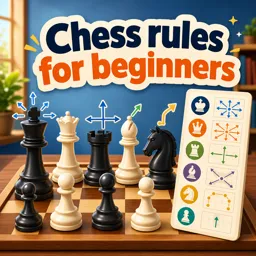
Yes. Chess rules for beginners teaches legal moves, captures, check, checkmate, castling, en passant, and pawn promotion.
How do I start learning chess as a complete beginner?
Start by learning how each piece moves, then practice the rules, opening principles, basic tactics, and simple checkmates.
What are the most important chess rules to know?
Key rules include piece movement, check and checkmate, stalemate, castling, en passant, pawn promotion, and draws.
What is checkmate in chess?
Checkmate occurs when a king is in check and has no legal move, no way to capture the attacking piece, and no way to block the attack.
How can I build better chess habits?
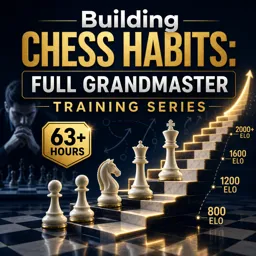
Practice consistently, check for threats before every move, review your games, solve tactics, and follow a structured training plan such as Building Chess Habits: Full Grandmaster Training Series.
Do chess courses help improve strategy and tactics?
Yes. Structured chess courses can teach tactical patterns, positional ideas, opening principles, endgames, and practical thinking habits.

Complete any course and issue your certificate via the app — at no cost.

Download the app! to have access to more than 4,000 Online Courses + Certificate, all free!
Download the app! 100% free courses.


Carry knowledge in your pocket.
Download the Cursa app.
There are hundreds of free courses available, with a free certificate of completion that is saved in your mobile image gallery.
Download the app to access the Course Completion Certificate for Free.


+ 10 million
students

Free and Valid
Certificate

60 thousand free
exercises

4.8/5 rating in
app stores

Free courses in
video and ebooks