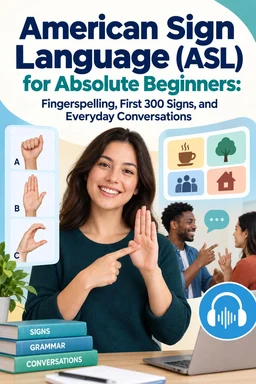
The course teaches foundational ASL vocabulary, fingerpelling, handshapes, facial expressions, sign movement, and everyday concepts such as emotions, directions, school, travel, and safety.

Duration of the online course: 1 hours and 11 minutes
New
Build real-world ASL skills with a free online course for beginners—learn fingerpelling, key vocabulary, and clear signing habits to communicate confidently.
Want to communicate more inclusively, connect with the Deaf community, or add a valuable language skill to your personal and professional toolkit? This beginner-friendly American Sign Language course guides you from your first signs to smoother, clearer conversations. It is designed for true beginners who want structure, repetition, and practical progress without feeling overwhelmed.
Through guided lessons and quick check-in questions, you will develop strong foundations in handshapes, movement, placement, and facial expressions—essential parts of ASL meaning, not just add-ons. You will practice everyday vocabulary and common concepts while learning how small changes can shift meaning, such as when a sign differs depending on whether it refers to a full stomach versus a full glass. Along the way, you will also build confidence with fingerpelling using memorable associations that help letters stick.
The course emphasizes habits that improve clarity and understanding, helping you sign in a way that is easier for others to read. You will learn strategies for continuing communication even when you do not know a specific sign, so you can keep the interaction flowing instead of getting stuck. Regular practice prompts reinforce what you learn, encourage better signing rhythm, and help you notice the difference between similar signs, opposites, and vocabulary that changes form depending on whether you are expressing an action or a thing.
Whether your goal is to support a friend or family member, prepare for customer-facing roles, explore interpreting pathways, or simply learn something meaningful, this course gives you a complete starting point. By the end, you will have a usable base of ASL knowledge and the practice approach needed to keep improving beyond the first lessons.

1 hours and 11 minutes of online video course

Digital certificate of course completion (Free)

Exercises to train your knowledge

100% free, from content to certificate
What ASL skills are covered in this beginner course?
The course teaches foundational ASL vocabulary, fingerpelling, handshapes, facial expressions, sign movement, and everyday concepts such as emotions, directions, school, travel, and safety.
Why are facial expressions important when signing “angry” in ASL?
Facial expressions communicate the emotion and intensity of the sign, helping distinguish an angry meaning from a neutral gesture.
What should I do in ASL when I do not know the sign for a word like “internet”?
Fingerpell the word clearly, then continue using context and any signs you know.
Ready to get started?Download the app and get started today.
Install the app now
to access the course
Over 5,000 free courses
Programming, English, Digital Marketing and much more! Learn whatever you want, for free.

Study plan with AI
Our app's Artificial Intelligence can create a study schedule for the course you choose.

From zero to professional success
Improve your resume with our free Certificate and then use our Artificial Intelligence to find your dream job.
You can also use the QR Code or the links below.



Free CourseWorld Sign Languages
5

(1)

4h51m

35 exercises
Free CourseAmerican Sign Language ASL
5
(11)
30h07m
46 exercises
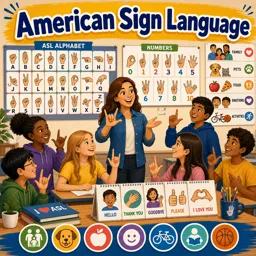
Free CourseAmerican Sign Language
5
(3)
4h25m
32 exercises
Free CourseAuslan Australian Sign Language
5
(3)
58m
Free CourseAmerican Sign Language (ASL)
5
(1)
48h13m
1 exercises
Free CourseInternational sign language
4.7

(115)
48m
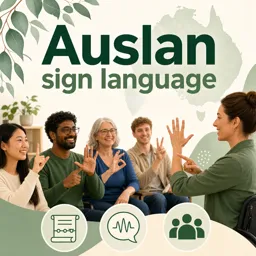
Free CourseAuslan sign language
4.5
(2)
12m
1 exercises
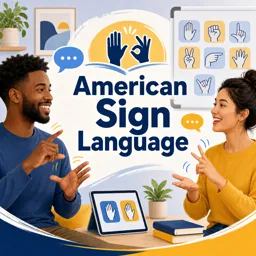
Free CourseAmerican sign language
4
(18)
5h51m
22 exercises
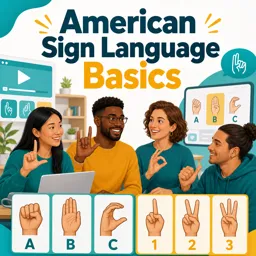
Free CourseAmerican Sign Language Basics
4
(1)
31h55m
46 exercises
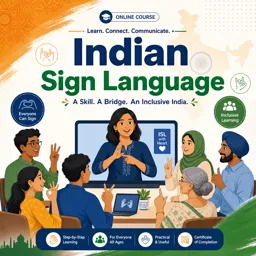
Free CourseIndian sign language
3.8
(5)
14m
Carry knowledge in your pocket.
Download the Cursa app.
There are hundreds of free courses available, with a free certificate of completion that is saved in your mobile image gallery.
Download the app to access the Course Completion Certificate for Free.


+ 10 million
students

Free and Valid
Certificate

60 thousand free
exercises

4.8/5 rating in
app stores

Free courses in
video and ebooks