Intermediate guitar courses develop chord vocabulary, scales, rhythm, lead playing, phrasing, improvisation, and song-building skills.

6


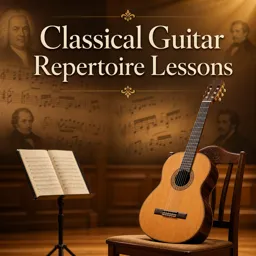
Free CourseClassical Guitar Repertoire Lessons
New

6h19m

15 exercises
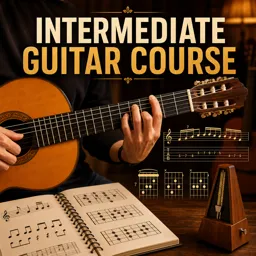
Free CourseIntermediate Guitar Course
New
6h30m
43 exercises

Free CourseSlide Guitar Masterclass
New
2h03m
6 exercises
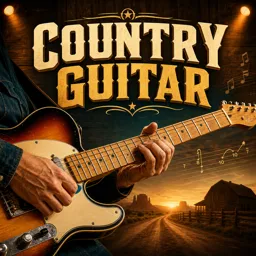
Free CourseCountry Guitar
New
2h39m
12 exercises
Free CourseCountry Guitar Lessons
New
1h44m
15 exercises
Free CourseHow to play fingerstyle or fingerpicking Guitar Course
New
20h32m
30 exercises
Exercises
Test your understanding of guitar music theory, including chords, scales, intervals, standard tuning, fretboard octaves, and blues progressions.
Start exercisesTest your blues guitar knowledge with questions on 12-bar progressions, blues scales, blue notes, bends, slide guitar, and legendary artists.
Start exercisesTest your guitar barre chord skills with questions on technique, transitions, hand position, chord shapes, keys, and songwriting.
Start exercisesTest your fingerstyle guitar knowledge: techniques, Travis picking, alternating bass, thumb independence, arpeggios, tunings and more.
Start exercisesTest your intermediate guitar knowledge with questions on capos, tuning, blues scales, harmonics, tabs, arpeggios, intonation, and technique.
Start exercisesAdvance your musical education with our collection of free online Intermediate Guitar courses. Designed for learners who already understand basic chords, rhythm, tuning, and simple songs, these courses help you develop stronger technique, musical fluency, and confidence. Study at your own pace through structured lessons that include practical explanations, demonstrations, and guitar exercises for active learning.
Explore essential topics such as barre chords, chord inversions, scales, arpeggios, fingerstyle patterns, alternate picking, improvisation, music theory, and lead guitar phrasing. You can also improve timing, coordination, fretboard knowledge, melodic interpretation, and rhythmic accuracy. The educational content supports independent practice and gives students a clear path from basic performance to more expressive playing.
Every course includes exercises that reinforce the concepts presented in the lessons. Practice chord transitions, scale sequences, picking patterns, ear training, rhythm studies, and song-based applications. These activities can help build finger strength, speed, precision, and musical memory while encouraging consistent study habits.
All Intermediate Guitar courses listed on this page are free. After completing an eligible course, students can also receive free certification to document their learning. A certificate can support a personal development portfolio, demonstrate commitment to music education, or provide evidence of additional training for teaching and creative projects.
To access these free online courses, complete the exercises, and obtain free certification, it is necessary to install the Cursa application. Android users can install it from Google Play: Download for Android. iPhone users can install it from the App Store: Download for iOS / iPhone.
Choose an Intermediate Guitar course, organize a regular practice schedule, and apply each lesson through focused exercises. With free access, progressive educational content, and free certification, you can expand your repertoire, understand the fretboard more deeply, and become a more versatile and expressive guitarist.
What skills are covered in an intermediate guitar course?
Intermediate guitar courses develop chord vocabulary, scales, rhythm, lead playing, phrasing, improvisation, and song-building skills.
Do I need to know music theory for intermediate guitar lessons?
Basic theory is helpful, but courses usually explain the scales, keys, intervals, and chord progressions needed as you play.
Can I learn fingerstyle guitar at an intermediate level?
Yes. Fingerstyle courses teach alternating bass patterns, finger independence, melody-and-bass arrangements, and more advanced picking techniques.
What will I learn in a slide guitar masterclass?
You can learn slide control, open tunings, vibrato, muting, intonation, blues phrasing, and expressive solo techniques.
Are country guitar lessons suitable for intermediate players?
Yes. Intermediate country guitar lessons often cover chicken picking, hybrid picking, double-stops, bends, country rhythm, and lead licks.
How can classical guitar repertoire lessons improve my playing?
Classical repertoire develops reading, finger control, tone, dynamics, phrasing, and coordination through structured pieces.
What should I be able to play before starting intermediate guitar lessons?
You should be comfortable with open and barre chords, basic scales, steady rhythm, simple lead lines, and changing between common chord shapes.

Complete any course and issue your certificate via the app — at no cost.

Download the app! to have access to more than 4,000 Online Courses + Certificate, all free!
Download the app! 100% free courses.


Carry knowledge in your pocket.
Download the Cursa app.
There are hundreds of free courses available, with a free certificate of completion that is saved in your mobile image gallery.
Download the app to access the Course Completion Certificate for Free.


+ 10 million
students

Free and Valid
Certificate

60 thousand free
exercises

4.8/5 rating in
app stores

Free courses in
video and ebooks