By the end of this chapter you will be able to name about forty foods, drinks and meals in American Sign Language, ask someone what they like, offer and politely refuse food, and handle simple prices. You already have LIKE, DON'T-LIKE, WANT, DON'T-WANT, HOW-MANY and the number system, so this chapter mostly gives you things to put into those sentences.
The two signs everything grows from
Food vocabulary is built around the mouth, which makes it easy to remember. Start with the two base signs.
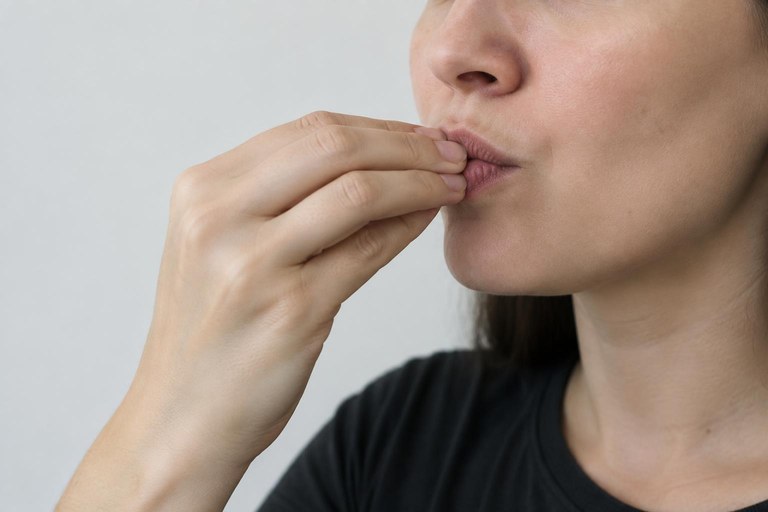
- EAT, also glossed FOOD. Flat O hand, palm facing in, at the lips. Tap the fingertips to the lips once for EAT and twice for FOOD, though many signers use a single tap for both and let the sentence show which one they mean. Neutral face.
- DRINK. C hand, palm facing to the side, at the mouth. Tip the hand up as if raising a glass. Neutral face.
Notice that both signs are shaped like the thing you do. Many food signs work that way, so when you forget one, ask yourself what your hands would actually be doing with that food.
Drinks
- WATER. W hand, palm facing to the side, at the mouth. Tap the index finger against the chin twice.
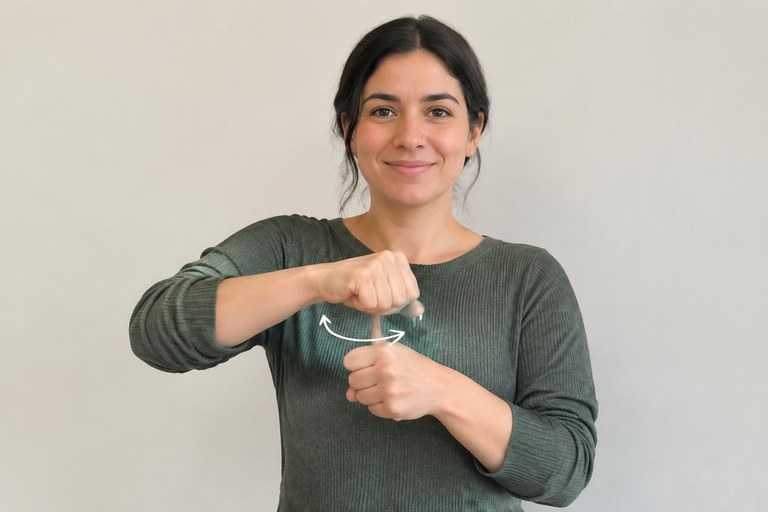
- COFFEE. Two S hands stacked in neutral space, palms facing in. The top hand circles over the stationary bottom hand, like grinding beans.
- TEA. Non-dominant hand in an O, palm up, as the cup. Dominant F hand dips into the opening and makes small circles, like dunking a tea bag.
- MILK. S hand in neutral space, palm facing to the side. Squeeze the fist open and closed twice, like milking.
- JUICE. I hand at the corner of the mouth. Draw the letter J down and hook it to the side. Many signers simply sign DRINK and fingerspell the flavour.
Foods
- BREAD. Non-dominant flat B hand, palm in, as the loaf. Dominant flat B hand slices down the back of it three or four times.
- MEAT. Dominant thumb and index finger pinch the fleshy web between the thumb and index of the non-dominant flat hand, with a small shake.
- CHICKEN. Thumb and index finger at the mouth, palm to the side, open and close like a beak. Add a peck down into the non-dominant flat palm.
- FISH. Flat B hand, palm to the side, fingers pointing forward at chest height. Wave the hand forward like a fish swimming.
- EGG. Two H hands crossing at the fingers, palms angled in. Pull them apart and down, like cracking a shell.
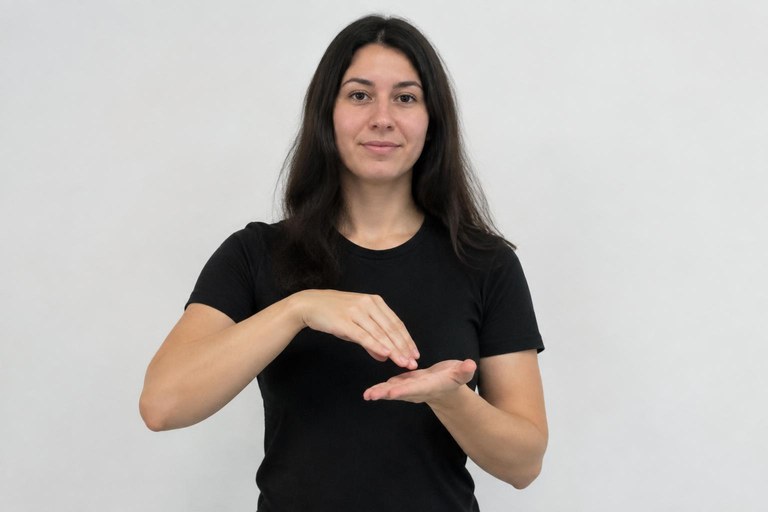
- CHEESE. Heels of both flat hands pressed together in neutral space, palms facing each other at an angle. Grind the top hand in small twists.
- FRUIT. F hand at the cheek, palm facing to the side. Twist the wrist so the F turns in place.
- APPLE. X hand, knuckle of the bent index against the cheek. Twist twice. Remember the minimal pair with CANDY, which uses a straight index finger.
- BANANA. Non-dominant index finger pointing up as the banana. Dominant flat O hand peels down one side, then the other.
- VEGETABLE. V hand at the corner of the mouth, palm out. Touch the index finger, then twist to touch the middle finger.
- RICE. Non-dominant curved hand, palm up, as a bowl. Dominant flat hand scoops from the bowl toward the mouth twice.
- PIZZA. Bent V hand, palm out, in neutral space. Draw a small letter Z in the air. Regional variants are common, and fingerspelling the word is always acceptable.
- SOUP. Non-dominant flat hand, palm up, as the bowl. Dominant H hand scoops from the palm up to the mouth twice.
- SALAD. Two claw 5 hands, palms up, in neutral space. Toss upward and inward twice, like tossing greens.
- SANDWICH. Both flat hands pressed palm to palm, fingers forward. Bring them to the mouth with a small bite movement.
- DESSERT. Two D hands in neutral space, palms facing each other. Tap the fingertips together twice.
Meals, hunger and compliments
The three meal names are compounds of EAT plus a time sign you already know.
- BREAKFAST. EAT, then MORNING.
- LUNCH. EAT, then NOON.
- DINNER. EAT, then NIGHT.
- HUNGRY. C hand, palm facing in, at the top of the chest. Slide straight down the centre of the chest once. Slightly pinched face.
- THIRSTY. Index finger, palm in, at the chin. Trace down the throat once. Slightly open mouth.
- FULL, meaning satisfied. Flat B hand, palm down, brushes back across the top of the chest just under the chin once.
- DELICIOUS. Middle finger extended from an open hand, touching the chin, then twist the hand out and away. The face carries this sign, so let your eyes close a little and look pleased.
Restaurants, kitchens and quantity
- RESTAURANT. R hand, palm in, touches one corner of the chin, then the other.
- KITCHEN. Non-dominant flat hand, palm up. Dominant K hand rests on it, flips palm up, then flips back down.
- COOK. Non-dominant flat hand, palm up. Dominant flat hand lies on it, flips over, then flips back, like turning a pancake.
- ORDER, as in ordering food. Dominant index finger at the chin, palm in. Move it forward and down to land on the non-dominant flat palm.
- MORE. Two flat O hands in neutral space, palms facing each other. Tap the fingertips together twice.
- ENOUGH. Non-dominant S hand, palm in. Dominant flat B hand, palm down, brushes forward across the top of the fist once.
Money and prices
- MONEY. Non-dominant flat hand, palm up. Back of the dominant flat O hand taps into it twice.
- HOW-MUCH. Sign MONEY, then HOW-MANY from the questions chapter, with furrowed WH brows. Some signers use a single flick, opening one closed hand upward to a 5, palm up.
- PAY. Non-dominant flat hand, palm up. Dominant index finger flicks off the palm forward, toward the person being paid.
- DOLLAR. Non-dominant flat hand, fingers pointing forward. Dominant hand grasps the fingertips and slides off, like pulling a bill from a stack.
- CENTS. Index finger touches the forehead, then flicks forward and out.
For amounts from one to nine dollars, form the number in neutral space and twist the wrist outward once. Two dollars is a 2 hand with a twist. For larger amounts, sign the number and then DOLLAR. Cents can follow CENT, so seventy-five cents is CENT then seventy-five, but many signers put the number first and sign seventy-five then CENT; both orders are widely used and understood. Three dollars and fifty cents is THREE-DOLLAR, FIFTY.
- Listen to the audio with the screen off.
- Earn a certificate upon completion.
- Over 5000 courses for you to explore!

Download the app
Offering, accepting and refusing
A preference question is just the food sign inside a yes/no question. Raise your eyebrows, tilt your head slightly forward, and hold the last sign: YOU LIKE COFFEE? To offer, sign YOU WANT MORE? or COFFEE, YOU WANT? with the topic marker on COFFEE.
To accept, nod and sign YES, or YES THANK-YOU; PLEASE is used for requesting something rather than for accepting it, and it appears far less often in Deaf conversation than the English word does. To refuse politely, use the negation headshake you learned with feelings: shake your head gently across NO THANK YOU, or sign ENOUGH, THANK YOU, or I FULL. Never let the headshake arrive only at the end; it should run across the whole refusal so it reads as warm rather than abrupt.
If you cannot eat something, the clearest beginner phrasing uses CAN'T: fingerspell the food, then sign I CAN'T EAT with a headshake. If the issue is a genuine food allergy rather than a preference, do not rely on beginner signing alone: write the allergy down or show it on your phone, and ask the server to confirm back to you, because one missed sign can send you to hospital. The specific signs for allergies and medical needs come in the health chapter.
Dialogue: at the café counter
Server: HELLO. YOU WANT WHAT?
Hello. What would you like?Customer: COFFEE, MILK HAVE?
A coffee, with milk?Server: YES. FOOD YOU WANT?
Yes. Would you like any food?Customer: I HUNGRY. SANDWICH, CHEESE HAVE?
I'm hungry. Do you have a cheese sandwich?Server: HAVE. SOUP TOO, DELICIOUS.
We do. We also have soup, and it's delicious.Customer: ENOUGH, THANK YOU. HOW-MUCH?
That's enough, thank you. How much is it?Server: SEVEN-DOLLAR FIFTY.
Seven fifty.Customer: FINE. I PAY NOW.
Fine. I'll pay now.
Read the gloss again and check the grammar you already know. HAVE questions carry raised brows. WHAT sits at the end of the sentence with furrowed brows. There is no sign for is, no article before a coffee, and no plural ending on SANDWICH.
Practice drills
- Fridge tour. Open your kitchen cupboard and sign every item you have a sign for, fingerspelling the rest.
- Preference sort. Run through all the food signs in this chapter, signing either I LIKE or I DON'T-LIKE after each one, with the matching face.
- Price round. Invent ten prices between one dollar and ninety-nine dollars and sign each one twice, checking your palm orientation on the numbers six through nine.
- Record the dialogue. Film yourself as both the server and the customer. Watch it back and confirm your eyebrows rise on every yes/no question.
- Meal report. Every evening for a week, sign what you ate that day, starting with the time sign: TODAY MORNING I EAT EGG, BREAD.
Review checklist
- I can sign EAT and FOOD and explain how they differ.
- I can sign five drinks and at least twelve foods with correct handshape and location.
- I can build BREAKFAST, LUNCH and DINNER from EAT plus a time sign.
- I can sign HUNGRY, THIRSTY, FULL and DELICIOUS with a matching face.
- I can sign RESTAURANT, KITCHEN, COOK, ORDER, MORE and ENOUGH.
- I can ask HOW-MUCH with WH brows and sign prices using DOLLAR, CENTS and the dollar twist.
- I can offer food, accept with PLEASE, and refuse with a headshake spread across the whole phrase.
- I can perform the café dialogue from memory with correct question faces.
To recap: food signs cluster at the mouth and usually mime the action, drinks and foods plug straight into the LIKE, DON'T-LIKE, WANT and HAVE sentences you already own, meal names are compounds of EAT plus a time sign, prices use DOLLAR with a wrist twist for small amounts and CENT before the number for coins, and a polite refusal needs the headshake running across the entire phrase rather than tacked onto the end.