Why Follow-Through Is Part of the Negotiation
In non-sales roles, the value of a negotiation is realized after the agreement: when work ships, service levels are met, budgets are honored, and stakeholders feel treated fairly. Post-agreement follow-through is the set of actions that turns a signed-off decision into consistent execution. It includes documenting commitments, coordinating handoffs, monitoring progress, managing changes, and resolving conflicts before they damage delivery or relationships.
Conflict resolution is inseparable from follow-through because most agreements encounter friction: ambiguous responsibilities, shifting priorities, unexpected constraints, or different interpretations of “good enough.” Your job is not to prevent all conflict; it is to detect it early, address it constructively, and keep the agreement’s intent intact while adapting to reality.
Common post-agreement failure modes
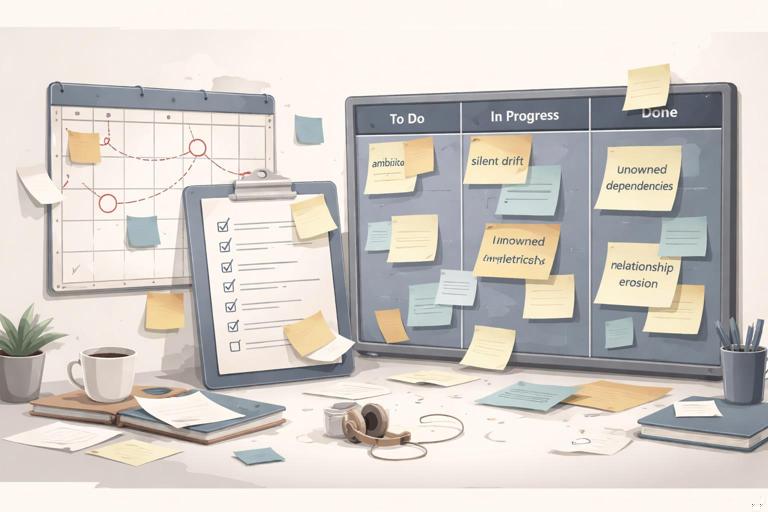
- Ambiguity debt: the agreement sounded clear in the room, but details were never operationalized (who does what by when, acceptance criteria, escalation paths).
- Silent drift: priorities change, but no one updates the agreement; people quietly stop doing parts of it.
- Unowned dependencies: a deliverable depends on another team or vendor, but no one is accountable for securing that dependency.
- Mismatch of success metrics: one side measures success by speed, the other by quality, cost, or risk reduction.
- Relationship erosion: small misses accumulate, communication becomes defensive, and people start “papering” each other instead of collaborating.
Operationalizing the Agreement: From Words to Work
Follow-through starts immediately after the agreement, while memory is fresh and momentum is high. The goal is to convert the agreement into an executable plan that survives handoffs and time.
Step-by-step: The 24–48 hour post-agreement checklist
- 1) Send a confirmation summary: a short written recap of commitments, timelines, and any conditional items. Keep it structured so it can be referenced later.
- 2) Translate outcomes into deliverables: list concrete outputs (documents, features, approvals, reports, training sessions) rather than abstract intentions.
- 3) Assign owners and due dates: every deliverable has one accountable owner (even if multiple contributors). Include due dates and intermediate milestones.
- 4) Define acceptance criteria: specify what “done” means. Include quality thresholds, sign-off authority, and any required evidence (test results, screenshots, audit logs).
- 5) Map dependencies and prerequisites: identify what must happen first (access, data, purchase orders, legal review, environment setup). Assign owners to dependencies too.
- 6) Establish a cadence: decide how progress will be tracked (weekly check-in, dashboard, shared tracker) and who attends.
- 7) Set an escalation path: clarify what happens if deadlines slip or scope changes. Name the first escalation step and the decision-maker for trade-offs.
- 8) Capture assumptions and risks: list the assumptions that must remain true and the top risks. This makes later changes easier to discuss without blame.
A practical template: “Agreement-to-Execution” memo
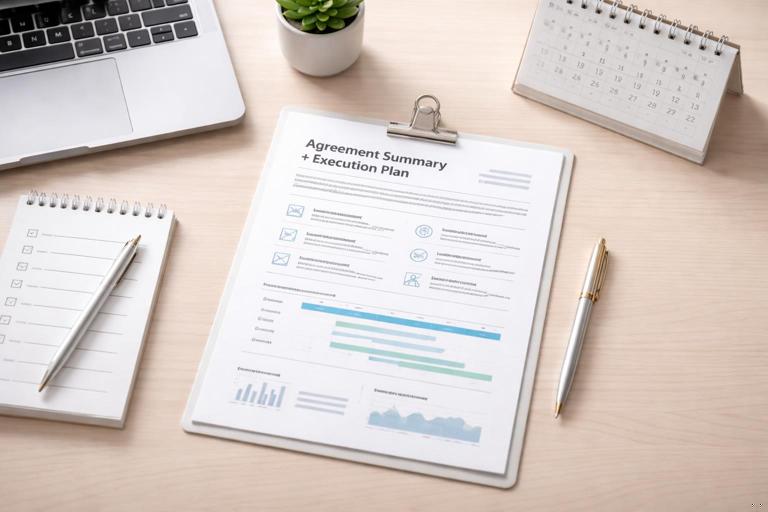
Subject: Agreement Summary + Execution Plan (Project/Topic, Date) 1) Purpose / intended outcome: 2) Deliverables (with acceptance criteria): - Deliverable A: owner, due date, acceptance criteria - Deliverable B: owner, due date, acceptance criteria 3) Timeline & milestones: 4) Roles & responsibilities (RACI-style if helpful): 5) Dependencies / prerequisites: 6) Communication cadence: 7) Escalation path & decision rights: 8) Assumptions, risks, and open questions: 9) Next actions (who does what by when):This memo is not bureaucracy; it is a conflict-prevention tool. It reduces “I thought you meant…” disputes and makes it easier to manage changes without relitigating the entire negotiation.
Governance Without Overhead: Tracking and Accountability
Many non-sales agreements fail because they rely on goodwill alone. Goodwill matters, but it needs a lightweight system that makes progress visible and issues discussable.
- Listen to the audio with the screen off.
- Earn a certificate upon completion.
- Over 5000 courses for you to explore!

Download the app
Choose the lightest mechanism that still creates clarity
- For small agreements (1–3 deliverables): a shared email thread plus a simple checklist with dates.
- For cross-functional work: a shared tracker (spreadsheet or project board) with owners, status, and blockers.
- For vendor/partner commitments: a service review cadence (monthly/quarterly) with metrics, incidents, and improvement actions.
What to track (and what not to)
Track the minimum set of indicators that reveal whether the agreement is on track:
- Commitments: deliverables and due dates.
- Quality/acceptance: pass/fail against criteria, defect counts, rework rate.
- Responsiveness: turnaround times for approvals, support tickets, or change requests.
- Risks and blockers: what is stuck, why, and what decision is needed.
Avoid tracking everything. Excessive metrics create noise and can trigger defensiveness. The purpose is early detection and fast resolution, not surveillance.
Managing Change Requests Without Reopening the Entire Deal
Most agreements face change: new requirements, budget shifts, staffing changes, or external events. The key skill is to treat change as a structured conversation rather than a personal conflict. You want a repeatable method that protects the original intent while allowing adaptation.
Step-by-step: A change-control conversation for non-sales roles
- 1) Name the change neutrally: “We have a new compliance requirement that affects the timeline.”
- 2) Re-anchor on the shared intent: “We both want a launch that meets security standards and avoids rework.”
- 3) Clarify the impact: specify what the change affects: scope, timeline, cost, risk, or quality.
- 4) Offer options, not demands: present 2–3 feasible paths with trade-offs (for example: keep scope and move date; keep date and reduce scope; add resources and keep both).
- 5) Confirm decision rights: who can approve the change? If multiple stakeholders are involved, identify who consolidates input.
- 6) Update the execution memo: revise deliverables, acceptance criteria, and dates. Record what changed and why.
- 7) Close the loop with affected parties: communicate the updated plan to everyone whose work is impacted.
Example: Internal project scope change
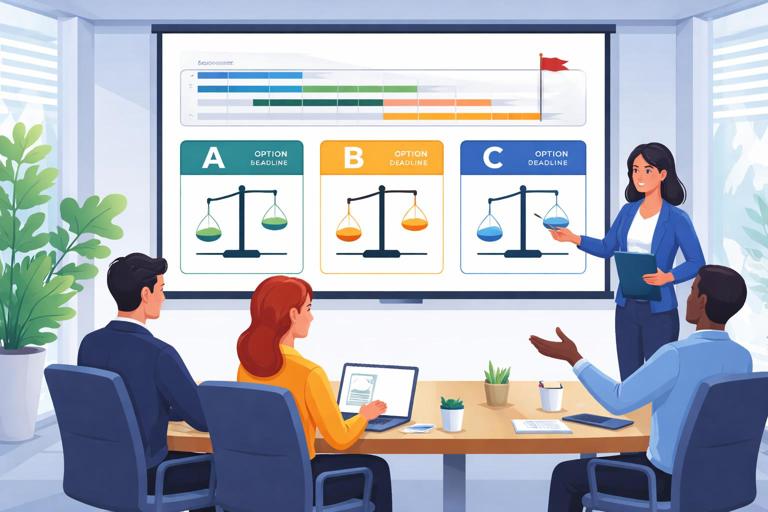
Scenario: You agreed with a product team to deliver an analytics dashboard by the end of the month. Midway, they request two additional metrics and a new filter.
Follow-through response: “I can add the metrics and filter, but it changes the plan. Option A: keep the end-of-month date by delivering the original dashboard and adding the new items in a second release two weeks later. Option B: include everything in one release, but the date moves by two weeks. Option C: if you can provide a data analyst for two days to validate definitions, we can likely keep the date with moderate risk. Which option fits your priorities?”
This approach prevents resentment and avoids the trap of silently absorbing extra work.
Conflict Resolution: A Practical Framework for Real Workplace Disputes
Conflict after an agreement usually comes from one of four sources: different interpretations, unmet expectations, resource constraints, or perceived unfairness. Effective resolution focuses on observable facts, impact, and forward-looking solutions.
Principles that keep conflict productive
- Separate impact from intent: you can address harm without accusing someone of bad motives.
- Use specific examples: vague complaints invite defensiveness; concrete instances invite problem-solving.
- Focus on the next decision: conflict often persists because no one is clear on what must be decided now.
- Protect dignity: people cooperate more when they can change course without humiliation.
Step-by-step: The “Facts–Impact–Request–Options” script
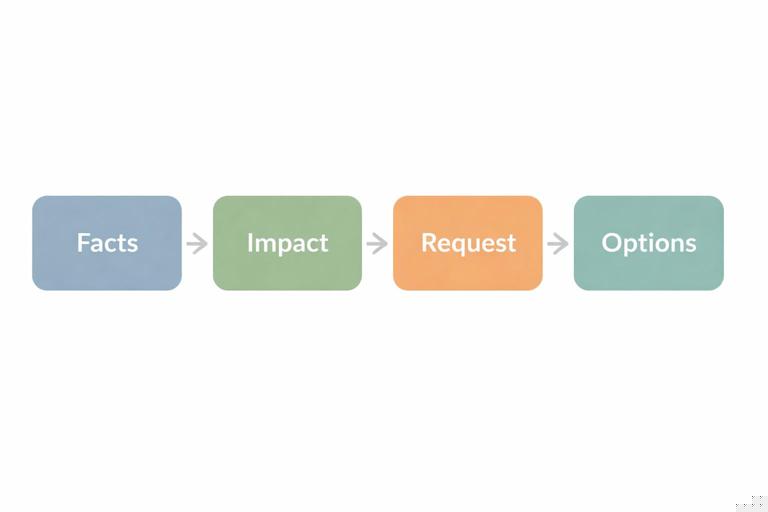
This script is useful in meetings, 1:1s, and vendor calls.
- 1) Facts: “We agreed the weekly report would be delivered by Tuesday noon. The last three weeks it arrived Thursday.”
- 2) Impact: “That delay pushes our compliance review and creates last-minute work for the team.”
- 3) Request: “I need the report by Tuesday noon going forward, or we need to adjust the process.”
- 4) Options: “We can simplify the report, shift the deadline with leadership approval, or add an automated data pull. Which is realistic on your side?”
Notice what is missing: blame, labels, and speculation. The structure makes it easier for the other party to engage without losing face.
Diagnosing the Conflict Type (So You Don’t Use the Wrong Tool)
Different conflicts require different interventions. Misdiagnosis leads to wasted time and escalating frustration.
1) Interpretation conflicts (meaning and definitions)
Symptoms: “That’s not what we agreed,” “I thought you owned that,” “Done means…”
Tools:
- Return to the written summary and highlight the exact language.
- Clarify definitions and acceptance criteria.
- Update the memo with explicit examples of what counts as in/out.
2) Capacity conflicts (time, staffing, workload)
Symptoms: repeated delays, partial delivery, avoidance, vague commitments.
Tools:
- Ask for a realistic plan: “What can you commit to with current capacity?”
- Re-sequence work: prioritize the highest-impact deliverables first.
- Negotiate a resource adjustment or reduce scope with explicit approval.
3) Priority conflicts (competing goals)
Symptoms: work is constantly deprioritized, stakeholders give conflicting directions.
Tools:
- Make priorities visible: list competing commitments and their consequences.
- Request a single prioritization decision-maker.
- Use a decision meeting with clear options and trade-offs.
4) Relationship conflicts (trust, respect, perceived fairness)
Symptoms: sarcasm, defensiveness, “paper trails,” refusal to collaborate, personal attacks.
Tools:
- Move to a private conversation to reduce audience pressure.
- Acknowledge emotions without agreeing to accusations: “I can see this has been frustrating.”
- Reset norms: response times, meeting behavior, escalation rules.
- If needed, involve a neutral third party (manager, program lead, HR, vendor manager).
Handling Breaches: When Commitments Are Not Met
A breach can be a missed deadline, quality failure, confidentiality issue, or non-delivery. Your response should be firm, structured, and proportionate. Overreacting damages relationships; underreacting trains others that commitments are optional.
Step-by-step: Breach response protocol
- 1) Verify the breach: confirm facts and gather evidence (dates, artifacts, logs, emails). Avoid relying on hearsay.
- 2) Contain the impact: identify immediate mitigation actions (workaround, rollback, temporary staffing, customer communication).
- 3) Notify the right stakeholders: share a concise status update: what happened, impact, immediate actions, and when the next update will occur.
- 4) Hold a corrective conversation: use the Facts–Impact–Request–Options script. Ask for root cause and a corrective plan.
- 5) Agree on corrective actions with owners: include deadlines and verification steps.
- 6) Decide on consequences if needed: adjust scope, revise timelines, change approval gates, or escalate. For vendors, consider service credits or contract remedies if applicable.
- 7) Document the resolution: update the execution memo and tracker so the new commitments are explicit.
Example: Vendor misses a service level
Scenario: A vendor committed to a 24-hour response time for critical issues but repeatedly responds after 72 hours.
Response: “In the last month, three critical tickets exceeded the 24-hour response time: Ticket 1842 (72h), 1911 (60h), 1930 (80h). This creates downtime risk for our internal users. We need a corrective plan by Friday: either staffing changes on your side, a revised on-call process, or a revised SLA with appropriate credits. Which option can you commit to, and how will we verify improvement over the next 30 days?”
This keeps the conversation measurable and action-oriented.
Repairing Misalignment: When the Agreement No Longer Fits Reality
Sometimes the issue is not a breach; it is that the original agreement is no longer optimal due to new information. In these cases, the goal is to renegotiate narrowly and transparently, without triggering a full reset of trust.
Step-by-step: Narrow renegotiation
- 1) State what changed: “Our legal team introduced a new review step for all external data transfers.”
- 2) Identify which clause/commitment is affected: “This affects the timeline and the data fields we can share.”
- 3) Propose a revised commitment: “We can deliver the integration in two phases: metadata first, then full data after approval.”
- 4) Offer a fairness gesture if appropriate: “To offset the delay, we can provide weekly progress demos and earlier access to the metadata endpoint.”
- 5) Confirm and document: update the memo and any formal documents required by your organization.
The fairness gesture is not always necessary, but it can reduce friction when the other party experiences the change as a loss.
De-escalation Techniques for Heated Moments
Post-agreement conflicts can become emotional because people feel trapped by commitments, judged on performance, or pressured by deadlines. De-escalation is a skill that protects the working relationship while keeping standards intact.
Practical de-escalation moves you can use immediately
- Lower the temperature with process: “Let’s pause and list the open items, then decide the next step.”
- Use timeouts strategically: “I want to respond thoughtfully. Can we take 15 minutes and reconvene?”
- Switch channels: move from a group meeting to a 1:1 if someone is posturing in front of others.
- Reflect and validate without conceding: “I hear that this feels like extra work on your team. Let’s look at options.”
- Ask a grounding question: “What would a workable solution look like by end of week?”
- Stop unproductive loops: “We may see the past differently. Let’s focus on what we can commit to next.”
Escalation as a Tool, Not a Threat
Escalation is often necessary in non-sales environments because authority and resources are distributed. Used poorly, escalation feels like punishment. Used well, it is a mechanism to resolve priority conflicts and unblock decisions.
Step-by-step: Clean escalation
- 1) Attempt direct resolution first: document that you tried to solve it at the working level.
- 2) Escalate the decision, not the person: “We need a decision on scope vs. timeline,” not “They are failing.”
- 3) Provide a one-page brief: facts, impact, options, recommendation, and the decision needed.
- 4) Include the other party’s perspective: show constraints and what they can realistically deliver.
- 5) Confirm the outcome in writing: update the execution memo and tracker immediately after the decision.
Example escalation brief (structure)
Decision needed: Choose Option A/B/C by (date) Context: What we agreed and why Current status: What is on track/off track (facts) Impact: Business/user impact if unchanged Options: A) ... trade-offs B) ... trade-offs C) ... trade-offs Recommendation: (your recommended option and rationale) Owners: Who will execute once decidedPreventing Recurring Conflicts: After-Action Improvements
When a conflict is resolved, capture the learning so the same issue does not repeat. This is not a retrospective for its own sake; it is targeted process repair.
What to capture after a conflict (lightweight)
- Trigger: what event started the conflict (missed dependency, unclear definition, late change).
- Early signals: what you could have noticed sooner (slipping milestones, unanswered messages, vague status).
- Root cause category: interpretation, capacity, priority, or relationship.
- Fix: one change to prevent recurrence (clearer acceptance criteria, earlier dependency check, new escalation rule, improved cadence).
- Owner: who will implement the fix and by when.
Over time, these small improvements reduce the frequency and intensity of post-agreement conflicts and make your negotiations more durable.
Practical Scenarios and How to Respond
Scenario 1: “We never agreed to that” (interpretation conflict)
Response approach:
- Pull up the written summary and read the relevant line.
- Ask a clarifying question: “What did you understand this to mean operationally?”
- Propose a precise definition and an example: “For us, ‘support’ means responding within 1 business day and providing a workaround within 3.”
- Update the memo with the clarified definition and acceptance criteria.
Scenario 2: A stakeholder keeps adding “small” requests (scope creep)
Response approach:
- List requests in a visible backlog with estimated effort.
- Ask for prioritization: “Which two are most important for this release?”
- Offer a release plan: “We can do top two now, the rest next sprint.”
- Document the decision and remove deprioritized items from the current commitment.
Scenario 3: Your team is blamed for a delay caused by another dependency
Response approach:
- State facts and timeline: “We completed our part on Tuesday; we’ve been waiting for access approval since Wednesday.”
- Shift to solution: “The fastest path is to get approval today; if not, we can use a temporary dataset with reduced coverage.”
- Ask for a decision-maker to resolve the dependency.
Scenario 4: Communication becomes hostile after repeated misses
Response approach:
- Move to a private reset conversation.
- Use impact language: “When messages include accusations, it slows resolution and makes coordination harder.”
- Propose norms: response times, meeting etiquette, and escalation steps.
- If hostility continues, involve a neutral third party and keep communication factual and structured.