Mount as a High-Control Position: What the Bottom Must Protect
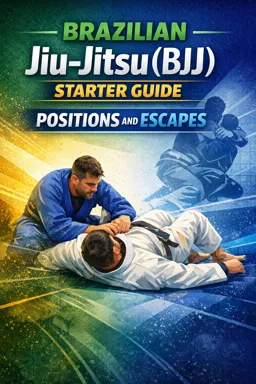
Mount is one of the highest-control positions because the top player sits on your hips and can climb toward your chest, limiting your ability to move your spine and hips together. From bottom mount, your priorities are to protect: (1) your arms from being isolated (armbar, Americana, gift-wraps), (2) your neck from crossfaces and collar grips (chokes), and (3) your ability to bridge effectively (hip extension and rotation) without being flattened or having your hips pinned.
A useful mental model: if your elbows drift away from your ribs, your neck is exposed and your hips become easier to pin. If your hips are pinned and your head is turned, your bridge becomes weak and you start giving up high mount or back exposure.
(1) Mount Types (Low Mount vs High Mount) and Why They Matter
Low Mount (Hip/Thigh Mount)
What it looks like: the top player’s knees are near your hips, weight centered over your belt line, often with feet tucked (“grapevines”) or knees wide for base.
Why it matters for bottom: low mount mainly threatens your hips and your ability to turn. It’s harder to sit up or shrimp because your hips are pinned. However, the top player is farther from your head, so immediate choking pressure may be lower than in high mount.
- Bottom focus: keep elbows tight, deny underhooks, and prevent the top from climbing their knees up your torso.
- Red flag: if your knees flare wide and your hips are flat, you’ll feel “stuck to the mat” and your bridge becomes a push instead of a lift.
High Mount (Chest/Armpit Mount)
What it looks like: the top player’s knees slide up toward your armpits, hips higher on your torso, often with their weight heavy through your chest. Their knees may pinch inward, and their feet may be tucked tight near your hips or posted wider depending on balance.
- Listen to the audio with the screen off.
- Earn a certificate upon completion.
- Over 5000 courses for you to explore!

Download the app
Why it matters for bottom: high mount increases choking and arm-isolation threats because your elbows are forced above your ribs and your head/shoulders are pinned. Your bridge becomes less effective because your hips are no longer directly under their center of gravity.
- Bottom focus: protect your neck and keep your elbows from being walked up. If you feel their knees creeping to your armpits, treat it as an emergency: your defensive posture must become even tighter and more patient.
- Red flag: if your elbows are above your ribs (near your chest/shoulders), you’re entering the “armbar zone.”
(2) Bottom Survival Posture and Breathing Under Pressure
Survival Posture: “Small, Safe, and Hard to Separate”
Your goal is not to win immediately; it’s to deny the top player clean access to your arms and neck while keeping your hips ready to bridge when the top’s balance is compromised. Use this posture as your default:
- Elbows tight: keep your elbows glued to your ribs, not floating on your chest. Think “elbows in your pockets.”
- Hands safe: keep your hands connected to your own body (collarbone line, biceps, or clasped together low). Avoid reaching above your head or pushing on their chest with straight arms.
- Head position: keep your head neutral (not turned hard to one side). If your head is forced to look away, your spine twists and your bridge loses power.
- Hips ready: knees bent, feet close enough to your hips to bridge. If your feet are too far away, your bridge becomes weak.
Step-by-Step: Building the Defensive Shell (Bottom Mount)
- Reset your elbows: slide both elbows down until they touch your ribs. If one elbow is drifting, fix it first.
- Hide your hands: bring your hands to a safe “home base” (e.g., one hand on your own collarbone, the other hand on your own biceps; or hands clasped low near your sternum). The key is that your hands are not extended and not separated.
- Neutral head: tuck your chin slightly and look straight up. If they crossface, fight to return your head to center by inching your shoulders and head back to neutral rather than turning belly-down.
- Feet set: place your feet flat with knees bent. If they are grapevining your legs, focus on keeping your knees bent and feet active; don’t straighten your legs and “accept” the pin.
- Micro-bridges: do small bridges to test their balance and make them post. You are looking for moments when their hands leave your upper body or their knees widen.
Breathing Under Pressure (Practical)
Mount pressure often makes beginners panic and hold their breath, which quickly drains energy and causes frantic reaching. Instead:
- Breathe low: inhale through your nose into your belly (not your shoulders). Even if your chest feels compressed, you can still expand your diaphragm.
- Exhale longer than you inhale: a longer exhale reduces panic and helps you stay patient while you wait for balance mistakes.
- Use breath to time effort: bridge on the exhale. It naturally engages your core and prevents you from “spiking” your energy.
Pressure cue for yourself: if you notice you’re holding your breath, immediately return to elbows-tight and hands-safe before you do anything else.
(3) Top Pressure Cues (What You’re Resisting)
Understanding what the top player wants helps you recognize danger early. From mount, the top player typically tries to: (a) climb to high mount, (b) isolate an arm, (c) turn your head and shoulders, and (d) force you to expose your back when you turn.
Common Top Pressure Patterns
- Knee-walk to high mount: they inch their knees up your torso, often using their hands on the mat or on your chest to stabilize. Your cue: you feel your elbows being “pushed up” and your breathing getting tighter.
- Crossface + underhook (head-and-arm control): they turn your face away and trap one arm, making you weak on that side. Your cue: your head is forced to look sideways and one elbow is no longer connected to your ribs.
- Gift-wrap / arm pin: they trap one of your arms across your body, then climb higher. Your cue: your wrist is being pulled across your centerline and your shoulder feels pinned.
- Base widening to kill bridges: they spread knees wide or post a hand/foot to prevent you from tipping them. Your cue: your bridges feel like they do nothing, and you feel their weight “floating” just enough to stay balanced.
- Transition threat to back take: when you turn onto your side or belly-down, they follow and insert hooks. Your cue: you feel them sliding up and around your shoulders as you rotate, rather than being pushed off.
Practical Defensive Response: “Detect, Deny, Delay”
This is not an escape sequence; it’s a survival protocol to stop the top from upgrading position.
- Detect: notice the first sign of climbing (knees creeping up, head turning, elbow separating).
- Deny: immediately reconnect elbow-to-rib and bring your hands back to safe home base.
- Delay: use small bridges and hip movement to force posts and slow their climb, buying time to recompose your posture.
(4) Common Beginner Mistakes (Reaching, Turning Belly-Down)
Mistake 1: Reaching Up to Push the Top Player
What happens: you extend your arms to push their chest or shoulders. This separates your elbows from your ribs and gives the top player an easy arm isolation.
Why it’s dangerous: extended arms are easier to attack and harder to retract under pressure. Even if you “feel strong,” the top player can climb to high mount and attack your arm as your elbow line rises.
Fix: keep your hands connected to your own body. If you must make contact, do it with compact arms (elbows still tight) and return immediately to your defensive shell.
Mistake 2: Turning Belly-Down to “Escape”
What happens: you rotate to your stomach because you feel crushed. This often exposes your back and lets the top player follow to a back take.
Why it’s dangerous: mount is bad, but giving your back is often worse because your neck becomes the primary target and your ability to face your opponent disappears.
Fix: if you turn at all, turn only enough to get on your side while keeping your elbows tight and your head protected. Avoid rolling all the way to your stomach unless you have a clear, practiced reason and timing.
Mistake 3: Big, Desperate Bridges Without Setup
What happens: you explode upward repeatedly. The top player simply posts and rides the motion, and you gas out.
Fix: use micro-bridges to create reactions. Your bridge should be a tool to force a post or shift, not a repeated max-effort lift.
Mistake 4: Letting the Elbow Line Creep Up
What happens: under pressure, your elbows drift from ribs to chest to shoulders. This is often subtle and happens while you focus on breathing or pushing.
Fix: do periodic “elbow checks.” Every few seconds, confirm both elbows are touching your ribs. If not, reset before you attempt any movement.
Mistake 5: Looking Away and Accepting the Crossface
What happens: your head is turned and you stop fighting for neutral alignment. Your bridge becomes weaker and your near-side arm becomes easier to trap.
Fix: prioritize returning your head toward center. Even small improvements matter: a neutral head makes your hips and shoulders work together, which is essential for effective defensive movement.