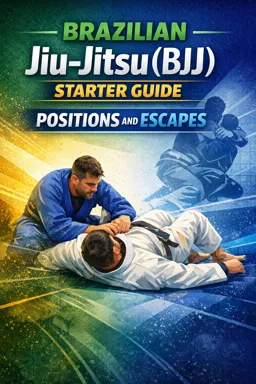
1) Choosing the Right Escape: Upa vs. Elbow-Knee
Both escapes solve the same problem—someone sitting on your hips and isolating your upper body—but they work off different reactions and different types of mount pressure.
Choose the bridge-and-roll (upa) when:
- Their weight is high (chest over your chest) and they are actively attacking with their hands.
- You can trap a side: you can reliably catch an arm and the same-side foot (or at least prevent them from posting).
- They are not grapevining your legs (or their hooks are loose enough that you can still bridge hard).
Choose the elbow-knee escape when:
- Their weight is low (hips heavy, head lower, “smother” mount) and bridging doesn’t move them.
- They are posting wide with hands or knees, making it hard to trap an arm/foot.
- You can create a wedge to insert your knee and start rebuilding guard.
Simple decision rule
Try to trap and bridge. If they post or your bridge doesn’t tilt them, switch immediately to elbow-knee while their hands are busy posting and their weight shifts.
| Opponent’s mount feel | Best first choice | What you’re hunting |
|---|---|---|
| High mount, hands attacking | Upa | Trap arm + same-side foot |
| Low mount, hips heavy | Elbow-knee | Knee insertion to half guard |
| They post to stop your bridge | Elbow-knee (off the post) | Space to shrimp + knee through |
2) Bridge-and-Roll (Upa): Trap Arm + Foot, Bridge Direction, Land in Closed Guard
Prerequisites (quick checklist)
- Elbows tight so they can’t isolate an arm while you set the trap.
- Head stays on the mat (don’t look sideways and give up your neck alignment).
- Trap the posting tools: you need to stop them from catching themselves with a hand or foot.
Step-by-step: trapping and rolling
Example: escaping to your right.
- Pick a side and commit. Don’t bridge straight up “to see what happens.” Choose right or left based on which arm/foot you can trap.
- Trap the arm on that side. If you’re going right, you want their right arm trapped. Common method: bring your right elbow tight to your ribs, then clamp their right wrist/forearm to your chest. Your left hand can reinforce by grabbing your own wrist (a simple “two-on-one clamp”).
- Trap the foot on that same side. With your right foot, step over and hook their right ankle/foot so it can’t step out to base. Keep your heel close to your butt so your hook is strong.
- Load them onto your hip. Small hip shift toward the trapped side (right) so your bridge will tilt them, not just lift them.
- Bridge diagonally over your shoulder. Drive your hips up and slightly toward your right shoulder. Think: hips to the ceiling, then to the corner. Your trapped-side shoulder becomes the “ramp” they roll over.
- Follow through and come up. As they tip, keep the arm trap tight so they can’t post mid-roll. Turn onto your knees briefly if needed to keep top position from slipping away.
- Land in closed guard (preferred finish). As you complete the roll, immediately bring your legs around their waist and close your guard (ankles crossed behind their back). Pull them in with your arm clamp so they don’t posture away.
Key details that make the upa work
- Bridge direction matters: diagonal bridge creates a tilt; straight up often just makes them heavier when they settle back down.
- Trap quality beats strength: if their foot can step out or their hand can post, your bridge becomes a workout.
- Timing window: the best moment is when they are reaching to attack (their arm is already away from their base).
Troubleshooting the upa
- Problem: “They post with their hand.” Fix: your arm trap is loose. Clamp their wrist/forearm to your chest and keep your elbow glued to your ribs. If they still post, switch to elbow-knee immediately (their post creates space at their hip).
- Problem: “They base with their foot.” Fix: your foot trap is too low or too far. Hook their ankle/instep tight and keep your knee bent so you can pin their foot to the mat.
- Problem: “I bridge but they don’t tip.” Fix: you’re bridging straight up or from flat hips. First shift your hips slightly toward the trapped side, then bridge diagonally toward that shoulder.
- Problem: “I roll them but don’t end in guard.” Fix: as you come on top, immediately connect your knees to their ribs and wrap your legs. Don’t pause to admire the roll—your legs must close the distance.
3) Elbow-Knee Escape: Shrimp, Knee Insertion, Half Guard to Full Guard
Prerequisites (quick checklist)
- Build a stable frame line first (forearms/elbows inside, elbows tight) before moving your hips.
- Turn slightly to a side so your hip can slide out; staying perfectly flat makes the shrimp weak.
- Know your target: you’re trying to insert your knee between their knee and your hip, not “push them off.”
Step-by-step: elbow-knee to half guard
Example: escaping to your left.
- Choose the side where you can make space. Often it’s the side where their knee is lighter or where their hands are busy.
- Connect elbow to knee (the “wall”). Bring your left elbow tight to your left ribs/hip line, aiming to connect it to your left knee line. This blocks them from climbing higher and limits crossface pressure.
- Shrimp your hips away. Push off your feet and slide your hips out to the right (away from the side you’re escaping to). Your upper body stays relatively stable while your hips move.
- Insert your near-side knee. As your hips slide out, bring your left knee inside, aiming to wedge it between their left knee and your hip. Your shin becomes a barrier.
- Capture half guard. Once your knee is in, use your legs to trap one of their legs (typically their left leg if you escaped left). Lock your half guard by pinching your knees and controlling their trapped leg.
Step-by-step: half guard to full guard
- Re-shrimp to create a second window. With half guard established, shrimp again to make room for your bottom knee to slide through.
- Thread the bottom knee inside. Bring your free knee across their belt line and inside their hips.
- Close your guard. Once both knees are inside, connect your ankles behind their back and pull them in so they can’t immediately posture out.
Key details that make elbow-knee work
- Elbow-knee connection is the “door frame”: if your elbow flares, they fill the space and your knee can’t enter.
- Hips move first, knee enters second: if you try to shove the knee in without shrimping, you’ll feel stuck under their weight.
- Small wins count: even a shallow knee shield that becomes half guard is progress—don’t insist on full guard immediately.
Troubleshooting elbow-knee
- Problem: “My knee won’t come in.” Fix: you’re trying to insert the knee before your hips have moved. Shrimp bigger, then bring the knee in on the return.
- Problem: “They follow my hips and stay glued.” Fix: your upper body is drifting. Keep your elbows tight and your frames stable so your hips can slide independently.
- Problem: “They climb to high mount while I shrimp.” Fix: re-establish elbow-to-knee connection first, then shrimp. If your elbow is above their knee line, they’ll walk up.
- Problem: “I get half guard but they smash it.” Fix: don’t relax after you catch the leg. Pinch your knees, keep your bottom knee pointed inward, and immediately re-shrimp to recover full guard before they settle.
4) Combining the Two Escapes When the Opponent Posts
The two escapes reinforce each other because the opponent’s best defense to one often creates the opening for the other.
- Listen to the audio with the screen off.
- Earn a certificate upon completion.
- Over 5000 courses for you to explore!

Download the app
Upa attempt → they post → elbow-knee escape
- Start the upa setup (trap attempt and diagonal bridge).
- Feel the post. If their hand shoots to the mat or their foot steps wide to stop the roll, don’t keep bridging.
- Use the moment of posting to make space. When they post, their weight shifts and one hip often becomes lighter.
- Switch to elbow-knee on the lighter hip side. Reconnect elbow-to-knee, shrimp, and insert your knee. The post often delays their ability to follow your hips.
Elbow-knee attempt → they drive forward/high → upa opportunity
- Begin elbow-knee. You frame and shrimp, trying to insert the knee.
- They react by driving higher or reaching to attack. This can expose an arm and bring their chest higher.
- Switch to upa on the exposed side. Trap the reaching arm and same-side foot and bridge diagonally.
Training goal: don’t treat these as separate techniques. Treat them as a two-option system: tilt them (upa) or wedge them (elbow-knee), switching based on their base.
5) Drilling Ladder: From Cooperative Reps to Progressive Resistance
Phase A: Cooperative reps (technique quality)
- Round 1 (Upa only): 10 reps each side. Partner gives realistic mount pressure but does not post. Focus on clean arm-and-foot trap and diagonal bridge.
- Round 2 (Elbow-knee only): 10 reps each side. Partner stays heavy but allows space after your shrimp. Focus on elbow-to-knee connection and knee insertion timing.
Phase B: Reaction reps (choose the right escape)
- Round 3 (Decision drill): Partner alternates between high mount (hands attacking) and low mount (hips heavy). Bottom chooses upa vs elbow-knee. 8 reps each scenario.
- Round 4 (Posting drill): Bottom starts upa; top’s job is to post correctly. Bottom must switch to elbow-knee within 2 seconds of the post. 10 reps each side.
Phase C: Progressive resistance with time limits
Set a timer and define success clearly: success = recover closed guard or half guard. Reset immediately after success or after time expires.
- 30-second rounds: top gives 30–40% resistance, focusing on maintaining mount while posting intelligently.
- 20-second rounds: top increases to 50–60% resistance. Bottom must prioritize tight elbows and building frames before moving hips.
- 10-second “sprint” rounds: bottom commits to one escape attempt, then switches if blocked. This builds decisiveness and prevents stalling.
Coaching cues to repeat during every round
- “Elbows tight first.” If your elbows flare, you’ll be defending attacks instead of escaping.
- “Frames before hips.” Build structure, then move your hips; don’t wiggle under pressure without a plan.
- “Bridge to the corner.” Diagonal bridge creates the roll; straight up creates fatigue.
- “Knee enters after the shrimp.” Make space, then fill it.