1) Inside Space: The Survival Concept That Stops Pressure
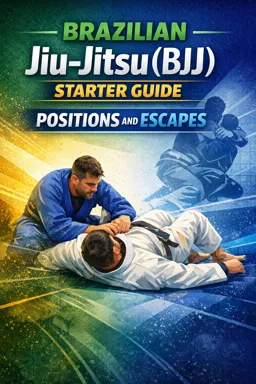
Inside space means your limbs (forearms, elbows, knees, shins) occupy the line between your opponent’s chest/hips and your torso. When you own that space, their weight and head/shoulder pressure can’t connect cleanly to you, which makes it harder for them to flatten you, isolate your arms, or climb to submissions.
Think of pressure as a “connection chain”:
- Their head/shoulder connects to your jaw/neck (crossface/head control)
- Their chest connects to your ribs (pin)
- Their hips connect to your hips (mobility shutdown)
Frames interrupt that chain by creating a rigid barrier. Your goal is not to push them away forever; it’s to keep a wedge so you can breathe, move your hips, and reinsert knees/elbows.
Inside-space checklist (quick self-test)
- Can you feel their chest directly on your ribs? If yes, you’re losing inside space.
- Are your elbows drifting away from your ribs? If yes, your frames are collapsing.
- Is your head turned away by their shoulder? If yes, crossface is winning.
- Do you have at least one forearm and one knee/shin between you and them? That’s the minimum “survival structure.”
2) Frame Types and What Makes a Frame Strong
Frame type A: Forearm-to-neck/collarbone (anti-crossface frame)
Purpose: blocks head/shoulder pressure and keeps your face pointed toward them (so you can track and recover).
- Place your forearm across their upper chest line: wrist near their collarbone/shoulder line, forearm across the base of their neck (not on the throat).
- Your elbow stays tight to your ribs (no “chicken wing”).
- Your hand can be relaxed (open palm) or lightly cupped on their shoulder.
Frame type B: Elbow-to-knee wedge (the “doorstop”)
Purpose: prevents them from closing the gap and stops them from walking your hips flat.
- Listen to the audio with the screen off.
- Earn a certificate upon completion.
- Over 5000 courses for you to explore!

Download the app
- Bring your near-side knee toward your elbow.
- Connect elbow to the inside of your knee (or just above it) to form a wedge.
- Keep the wedge compact; if your knee flares wide, they can staple it.
Frame type C: Shin/knee shield (distance manager)
Purpose: creates a longer barrier when they’re trying to crush in, especially from side control transitions or when you’re turning in.
- Insert your shin across their hip line or belly line (depending on space).
- Your knee points slightly outward; your foot stays active (not limp).
- Pair it with an upper-body frame so they can’t simply swim inside your shield.
What makes a frame strong (non-negotiables)
| Quality | What it feels like | Common beginner mistake |
|---|---|---|
| Bone alignment | Forearm and shin act like “posts,” not muscles | Bent wrist, collapsed elbow, pushing with biceps |
| Elbow tight | Elbow stays close to ribs; no gap for underhooks | Elbow flares, giving them an underhook or arm isolation |
| Shoulder packed | Shoulder feels stable; frame doesn’t fold backward | Reaching with the arm and letting shoulder roll forward |
Rule of thumb: if your frame requires you to “bench press” them, it’s not a frame—it’s a push. A good frame is a wedge that holds shape while your hips and knees do the work.
3) Frame Placement Templates (Side Control and Mount)
Side control: two-template system
In side control, you’re usually dealing with crossface + underhook attempts. Use one of these templates immediately, then adjust based on what they’re doing.
Template 1: “Neck frame + hip frame” (classic inside-space rebuild)
Goal: stop head control and stop hip connection at the same time.
- Near-side arm: forearm-to-neck/collarbone frame. Elbow tight to ribs.
- Far-side arm: hand/forearm frames on their near hip (or belt line). Keep your wrist straight and elbow close.
- Hips: small hip scoot away (just enough to make your knee light).
- Knee insertion: bring your near-side knee inside toward your elbow to build the elbow-to-knee wedge.
Coaching cue: “Face them, frame the head, frame the hip, then build the knee.” If you try to insert the knee before stopping the crossface, your head gets turned and your hips get pinned.
Template 2: “Elbow-to-knee wedge first” (when they’re not crossfacing yet)
Use when: they’re still settling, or their head isn’t controlling yours yet.
- Bring your near-side knee up toward your elbow immediately.
- Connect elbow to knee (doorstop wedge).
- Add the forearm-to-collarbone frame as they try to drop shoulder pressure.
- Keep your far hand ready to block their hip or peel an underhook grip.
Common failure point: letting the knee drift away from the elbow. If the wedge opens, they can windshield-wiper their hip through and flatten you.
Mount: survive by building “high frame + low frame”
In mount, the danger is your elbows drifting away and your head being controlled, which lets them climb higher or isolate an arm. Your inside-space goal is to keep your elbows inside and create a structure that prevents chest-to-chest smothering.
Template: “Forearms inside + elbow-to-knee connection”
- Hands/forearms: keep both forearms inside their thighs/hips line (no reaching around their back).
- Elbows: glue elbows to your ribs. Imagine you’re holding two books under your armpits.
- Knees: bring knees up slightly so your elbows can connect to your knees (even briefly) to create wedges.
- Head position: keep your chin neutral and eyes forward; don’t let them fold your head sideways with a collar tie or head wrap.
Important: if you extend your arms to push their chest, you give them arm isolation. Your “push” should be a frame shape, not a straight-arm shove.
4) Preventing Common Control Grips (Crossface, Underhook, Head Control)
Crossface prevention (before it locks)
Problem: their shoulder turns your face away, flattening your spine and killing hip movement.
Solution: win the space at your jawline and collarbone early.
- As soon as their arm reaches for your head, bring your near forearm up to your collarbone line.
- Make contact with your forearm across their upper chest/neck line (not the throat).
- Keep your elbow tight; if your elbow flares, they swim inside and connect shoulder-to-jaw.
Underhook prevention (the “elbow seal”)
Problem: their underhook lifts your near shoulder and lets them climb, take your back, or isolate your far arm.
Solution: keep your elbow sealed to your ribs and use a two-on-one when needed.
- Feel for their arm threading under your near-side arm.
- Drop your elbow to your ribs immediately (seal the gap).
- If they already have it, switch to two-on-one on that arm (details below) and peel it off your torso line.
Head control prevention (collar tie/head wrap)
Problem: if they control your head, they control your spine angle and can collapse your frames.
- Keep your forearm frame between their shoulder/head and your jawline.
- Don’t chase their head with your hands; keep structure and let them run into your frame.
- If they connect a head wrap, immediately address the grip with two hands (peel), not one hand (pulling usually loses).
5) Grip-Fighting Basics for Beginners (Two-on-One, Peel vs. Pull)
Principle: remove grips in the direction they are weakest
Most strong control grips are strong because they’re connected to their body weight and posture. Beginners often try to pull straight back and lose. Instead, learn to peel—strip the grip by opening the “hook” of their hand/wrist.
Two-on-one (2-on-1) control: your safest beginner tool
When to use: whenever one of their arms is controlling your head, underhooking, or grabbing your far arm.
Steps (generic 2-on-1):
- Put both hands on one of their arms: one hand at the wrist, the other at the forearm (or triceps).
- Pin their wrist to your chest line (so it can’t freely re-grip).
- Peel the wrist/hand away by rotating it off your body line, then immediately re-frame (don’t admire the strip).
Peel vs. pull (simple rule set)
| Situation | Do | Avoid |
|---|---|---|
| They have a collar tie/head grip | Peel their wrist/hand with two hands, then reinsert forearm frame | Pulling their arm straight down with one hand |
| They have a crossface starting | Block with forearm-to-collarbone early; if late, 2-on-1 and peel | Trying to turn your head back without addressing the arm |
| They have an underhook | 2-on-1 the underhooking arm and peel it off your torso line | Reaching over their back (opens your elbow and worsens control) |
Beginner habit to build: every time you strip a grip, immediately replace it with a frame. Grip removal without re-framing usually results in them re-gripping stronger.
6) Progressive Drills: From Static Frames to Timed Survival Rounds
Drill 1: Static framing (no movement, perfect structure)
Goal: learn frame shapes and elbow discipline without panic.
- Round length: 60–90 seconds each position
- Positions: bottom side control and bottom mount
- Top partner: stays balanced, no submissions, no sudden jumps
Bottom person tasks:
- Build the correct frames (neck/collarbone + hip, or elbow-to-knee wedge).
- Keep elbows tight and shoulders packed.
- Breathe steadily and keep your face oriented toward the top person (don’t let the head turn).
Drill 2: Partner pressure at 30–50% (frames under realistic load)
Goal: keep inside space while the top partner tries to connect pressure and grips.
- Intensity: top partner uses 30–50% pressure, focusing on crossface, underhook, and head control attempts
- Bottom partner: does not escape yet; only maintains frames and strips grips
Constraints (to keep it beginner-friendly):
- Top partner may attempt to win crossface/underhook but must pause once achieved for 2 seconds (so bottom can recognize the problem).
- Bottom partner must respond with the correct tool: forearm-to-collarbone frame for crossface, elbow seal for underhook, 2-on-1 peel for head grips.
Drill 3: Timed “hold frames for 20 seconds” rounds
Goal: develop survival confidence and measurable progress.
Format:
- Start in bottom side control for 20 seconds: bottom must maintain inside space (at least one upper frame + one lower wedge/shield).
- Reset and repeat from bottom mount for 20 seconds.
- Do 6–10 rounds total, switching top/bottom roles halfway.
Scoring (simple and objective):
- Bottom “wins” if frames remain in place and head is not turned away for more than 2 seconds.
- Top “wins” if they establish a stable crossface + underhook (side control) or isolate an arm away from the ribs (mount) for 3 seconds.
Coaching cues during the 20 seconds:
- “Elbows in.”
- “Frame the head before the hip if you’re getting turned.”
- “Peel, then re-frame.”
- “Wedge first, then breathe.”