3.6 Types of Asset Security: Access Control and Monitoring Procedures
Asset security is a fundamental area for the protection of property and people in a given space. There are different types of asset security, the most common being access control and monitoring. Each one has its specific characteristics and procedures that guarantee effectiveness in preventing and combating incidents.
Access Control
Access control is one of the main forms of property security. It consists of managing and controlling who can or cannot enter a specific location. This process can be carried out in several ways, such as through access cards, biometrics, passwords, among others.
Access control procedures are developed with the aim of preventing the entry of unauthorized persons, thus ensuring the safety of the place and everyone who is there. It is an effective method to prevent robberies, thefts and other types of incidents.
For access control to be effective, there needs to be a detailed record of all people entering and leaving the premises. This record must include information such as the name of the person, the time of entry and exit, the reason for the visit, among others. Thus, in case of any incident, it is possible to quickly track and identify those involved.
Monitoring
Monitoring is another type of property security that aims to observe and monitor all activities that occur in a given location. This process is usually carried out through surveillance cameras, which allow real-time viewing of everything that is happening.
- Listen to the audio with the screen off.
- Earn a certificate upon completion.
- Over 5000 courses for you to explore!

Download the app
The monitoring procedures involve not only the installation of cameras at strategic points, but also the constant analysis of the captured images. This work is carried out by trained professionals, who know how to identify suspicious situations and act quickly to prevent or combat incidents.
Monitoring also includes recording images, which can be used later for investigations or as evidence in case of incidents. In addition, surveillance cameras also have a deterrent effect, as their presence can deter criminals.
In conclusion, access control and monitoring are two types of asset security that are essential for protecting property and people. Both require specific procedures and qualified professionals to ensure their effectiveness. Therefore, it is essential that companies invest in training and technology to ensure asset security.
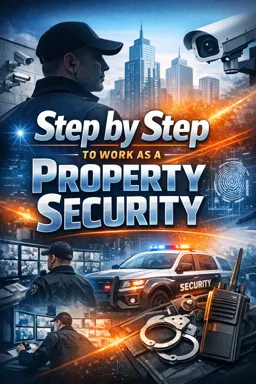
This e-book course will provide a detailed step-by-step guide to working as a security guard, including information on access control and monitoring procedures. With it, you will be able to better understand these areas and develop the necessary skills to act efficiently and safely.