Why termination planning is part of scaling (not a pessimistic afterthought)
Termination planning is the set of decisions, documents, and operational steps that allow a partnership to end, pause, or change form without damaging customers, revenue, compliance posture, or brand trust. It includes how you unwind obligations, how you transition work to another party (or in-house), and how you preserve continuity for users and internal teams. In practice, termination planning is a “design for reversibility” discipline: you assume that some partnerships will end due to strategy shifts, performance issues, acquisitions, regulatory changes, or simple misalignment over time, and you build a controlled off-ramp from day one.
Transition playbooks are the repeatable, step-by-step procedures used when a partnership changes state: termination, non-renewal, suspension, scope reduction, or handoff to a new partner. Continuity safeguards are the technical, operational, and contractual mechanisms that keep critical services running during and after the transition (for example: escrow, data export rights, dual-running periods, and customer communication protocols).
For entrepreneurs, the goal is not to “win” a breakup; it is to protect the business while minimizing disruption. A well-designed termination plan reduces hidden costs (support load, churn, emergency engineering), prevents disputes (who owns what, who can contact which customers), and preserves optionality (you can replace a partner quickly). It also improves negotiation leverage because you are not trapped by dependency.
Common termination triggers and what they imply operationally
Termination triggers are the events that cause you to activate a transition playbook. They should be defined in operational terms, not just legal terms, because each trigger implies a different response timeline and different stakeholders.
Performance-based triggers
Examples include missed service levels, failure to deliver committed leads, quality issues, or repeated operational breaches. Operational implication: you need evidence logs, a cure period workflow, and a “degrade gracefully” plan that reduces reliance while you evaluate alternatives.
- Listen to the audio with the screen off.
- Earn a certificate upon completion.
- Over 5000 courses for you to explore!

Download the app
Strategic triggers
Examples include a shift in product roadmap, a new market focus, pricing model changes, or a decision to build in-house. Operational implication: you need a planned migration path, resource allocation, and customer messaging that frames the change as an improvement.
Risk and compliance triggers
Examples include security incidents, regulatory changes, or audit failures. Operational implication: you need immediate access controls, incident response coordination, and a fast path to data retrieval and deletion confirmation.
Corporate events
Examples include acquisition of either party, insolvency, or leadership changes. Operational implication: you need continuity clauses, escrow or step-in rights (where appropriate), and a plan for re-approval of contacts, permissions, and systems access.
Design principles for termination-ready partnerships
Termination planning works best when you treat it as a product requirement: “the partnership must be safely stoppable.” The following principles guide how you structure operations and artifacts so that transitions are predictable.
- Minimize single points of failure: avoid having one partner hold the only copy of critical data, credentials, or customer context.
- Make dependencies explicit: document which systems, processes, and people are required to deliver the partnership outcomes.
- Separate customer experience from partner mechanics: customers should experience continuity even if the underlying partner changes.
- Keep reversibility affordable: design exit steps that do not require a “big bang” engineering effort.
- Practice the exit: run tabletop exercises (lightweight simulations) so teams know what to do under time pressure.
Termination planning checklist (what to decide and document upfront)
Use this checklist to build a termination plan that is operationally actionable. You can store it as a one-page “Exit Appendix” attached to your partnership operating docs.
1) Define partnership states and allowed transitions
List the states your partnership can be in (Active, Limited, Suspended, Terminating, Terminated, Transitioning to New Partner). For each state, define what is allowed: marketing activities, data sharing, customer communications, and system access. This prevents confusion when you need to throttle down quickly.
2) Map obligations that survive termination
Some obligations continue after termination: confidentiality, IP restrictions, customer support for a period, warranty obligations, data retention, and payment reconciliation. Operationally, assign an owner for each surviving obligation and define how it is tracked (ticketing system, finance checklist, legal tracker).
3) Inventory shared assets and access
Create an asset register: shared documents, integration endpoints, API keys, shared Slack channels, shared analytics dashboards, co-branded landing pages, and customer lists. For each asset, specify who owns it, where it lives, and how it is revoked or transferred. This inventory becomes your “shutdown map.”
4) Define data handling on exit
Specify what data must be returned, exported, deleted, or anonymized, and in what format. Include verification steps (deletion certificates, audit logs, screenshots of access revocation). Decide what happens to derived data (aggregates, models, insights) and whether it can be retained.
5) Set transition service levels
During a transition, support demand often spikes. Define temporary transition SLAs: response times, escalation paths, and who pays for extra support. If you do not define this, you risk a “silent failure” where both parties assume the other is handling customer issues.
6) Establish customer communication rules
Decide who communicates what, when, and through which channels. Define approval workflows for customer-facing messages, co-branded statements, and FAQs. Include rules for contacting shared customers after termination (for example: permitted notices vs. marketing outreach).
7) Build a replacement plan (even if it’s rough)
Document at least two fallback options: an interim internal workaround and a shortlist of alternative providers/partners. You do not need to repeat partner discovery methods here; the key is to pre-commit to a “Plan B” path and the criteria for switching.
Transition playbooks: the core structure
A transition playbook is a runbook with roles, steps, timelines, and artifacts. It should be short enough to use under stress, but complete enough to prevent missed steps. A practical format is: Overview, Triggers, Roles, Timeline, Technical Steps, Customer Steps, Financial Steps, Legal/Compliance Steps, and Post-Transition Verification.
Roles to assign (minimum viable)
- Transition Lead: owns the timeline and cross-functional coordination.
- Customer Comms Owner: drafts and schedules customer messaging and support macros.
- Technical Owner: handles integrations, access revocation, data export/import, and monitoring.
- Finance Owner: reconciles invoices, credits, rev share true-ups, and final payments.
- Compliance/Security Owner: verifies data deletion, access logs, and incident risks.
- Partner Liaison: the single point of contact to the partner to avoid conflicting messages.
Step-by-step: Non-renewal (planned exit) transition playbook
This playbook applies when you have time to plan (for example, 30–90 days). The objective is to migrate customers and operations with minimal disruption.
Step 1: Confirm decision and lock the timeline
Set the end date, the last date for new business under the partnership, and the “freeze date” when you stop making non-essential changes to shared systems. Create a shared transition calendar with weekly milestones.
Step 2: Create the dependency map
List every workflow that depends on the partner: lead routing, fulfillment, support escalation, billing, reporting, and any technical integration. For each workflow, define the replacement mechanism (internal, new vendor, manual process) and the owner.
Step 3: Prepare customer segmentation and messaging
Segment customers into: (A) high-risk if disrupted, (B) moderate-risk, (C) low-risk. Draft tailored messages and FAQs. Example: for high-risk customers, offer scheduled migration calls; for low-risk, provide self-serve instructions and a clear deadline.
Step 4: Execute data export/import and parallel run
Export required data in agreed formats, validate completeness, and import into the new system or internal process. Run in parallel for a defined period (for example, two billing cycles) so you can compare outputs and catch discrepancies. Track issues in a shared ticket board with severity levels.
Step 5: Access revocation plan (staged)
Do not revoke everything at once unless required. Use staged revocation: remove admin privileges first, then write access, then read access, then disable accounts. Log each change and confirm with security. This reduces the chance of accidental lockouts during the transition.
Step 6: Financial reconciliation and customer billing continuity
Reconcile outstanding invoices, credits, and revenue shares. Decide how to handle in-flight deals and renewals. Ensure customers receive uninterrupted billing and receipts. If pricing changes, communicate early and provide a clear rationale and effective date.
Step 7: Cutover and verification
Choose a cutover window, define rollback criteria, and monitor key indicators (support tickets, error rates, churn signals). Verify that data deletion/return obligations are completed and documented. Archive partnership artifacts and update internal documentation so teams stop referencing the old process.
Step-by-step: Emergency termination (rapid exit) transition playbook
This playbook applies when you must exit quickly due to security, compliance, or severe operational failure. The objective is to reduce exposure immediately while maintaining customer safety and basic service continuity.
Step 1: Activate the incident-style command structure
Open a dedicated channel, assign a single decision-maker, and set update intervals (for example, every 2 hours). Document decisions as you go. Treat it like an incident response even if the trigger is not purely technical.
Step 2: Contain risk (access and data)
Revoke or rotate credentials, disable integration tokens, and restrict data flows to the minimum needed for continuity. If you must keep some connectivity temporarily, implement compensating controls such as IP allowlists, reduced scopes, and enhanced logging.
Step 3: Stabilize customer-facing operations
Implement a temporary workaround: manual processing, a simplified service tier, or an alternate provider. Update support scripts so frontline teams give consistent answers. If service degradation is unavoidable, publish clear status updates and expected timelines.
Step 4: Secure evidence and documentation
Preserve logs, communications, and relevant artifacts. This is critical for disputes, audits, or insurance claims. Assign one owner to maintain an evidence folder with timestamps and access controls.
Step 5: Execute data return/deletion and confirm
Request immediate data return if needed for continuity, and initiate deletion requests where required. Obtain written confirmation and, when possible, technical proof (audit logs, deletion reports). Track completion in a checklist that compliance signs off.
Continuity safeguards: mechanisms that prevent “partner lock-in”
Continuity safeguards are the practical tools that make transitions feasible. They are not only legal clauses; they must be implementable by your teams.
Data portability and export routines
Build scheduled exports (weekly or monthly) of critical datasets so you are not scrambling at exit time. Store exports securely with access controls. Define a “minimum viable dataset” needed to continue operations (customer identifiers, entitlements, transaction history, support history).
Credential and access hygiene
Use least-privilege access, short-lived tokens where possible, and a centralized access management process. Maintain an up-to-date list of partner accounts and service principals. This makes staged revocation realistic and reduces security exposure.
Dual-run capability
Where feasible, design workflows so you can run two providers or two paths temporarily (old partner and new solution). Even a partial dual-run (for reporting or billing validation) reduces cutover risk.
Escrow and step-in arrangements (when appropriate)
If the partnership involves critical software or operational capability you cannot quickly replace, consider escrow for source code or critical configuration, and step-in rights for continuity. Operationally, define how escrow is accessed, who can trigger it, and how quickly you can deploy the escrowed assets.
Customer experience continuity kit
Create reusable assets: migration emails, in-app banners, support macros, a transition FAQ template, and a checklist for account managers. The kit should include “what changes” and “what stays the same” language to reduce churn.

Transition communications: internal, partner, and customer layers
Most partnership exits fail in communication, not in mechanics. You need three synchronized communication tracks.
Internal communications
Publish a single internal brief: why the change is happening (in neutral terms), what teams must do, and where to ask questions. Provide a decision log and a customer escalation path. Update sales and support enablement materials immediately to prevent contradictory statements.
Partner communications
Use a single liaison and a written agenda for transition calls. Confirm decisions in writing after each meeting: dates, responsibilities, and deliverables. Avoid informal side agreements that create ambiguity later.
Customer communications
Communicate early, clearly, and with a plan. Customers want to know: impact, timeline, actions required, and support options. Provide a migration path that is as self-serve as possible, with high-touch support reserved for high-risk accounts. If the partnership was visible (co-branded), align on how branding is removed from assets and how inbound questions are handled.
Operational artifacts to prepare before you need them
These artifacts make termination planning real because they turn intent into executable steps.
1) Exit appendix (one page)
A concise summary: triggers, notice periods, data handling rules, key contacts, and a link to the full playbook. This is what operators will actually open first.
2) Asset and access register
A living spreadsheet or system record listing every shared asset, owner, access method, and revocation steps. Include “last verified” dates so you know it is current.
3) Migration runbook
A technical and operational checklist for data export/import, integration changes, and monitoring. Include rollback steps and validation queries.
4) Customer FAQ and support macros
Pre-approved language for common questions: billing changes, data privacy, service continuity, and timelines. This reduces support variability and legal risk.
Practical example: Ending a co-sold implementation partnership without customer churn
Imagine a B2B SaaS company that co-sold implementations with a services partner. The partnership is ending at renewal because the SaaS company is building an internal professional services team. The risk is that customers fear disruption to ongoing projects and future support.
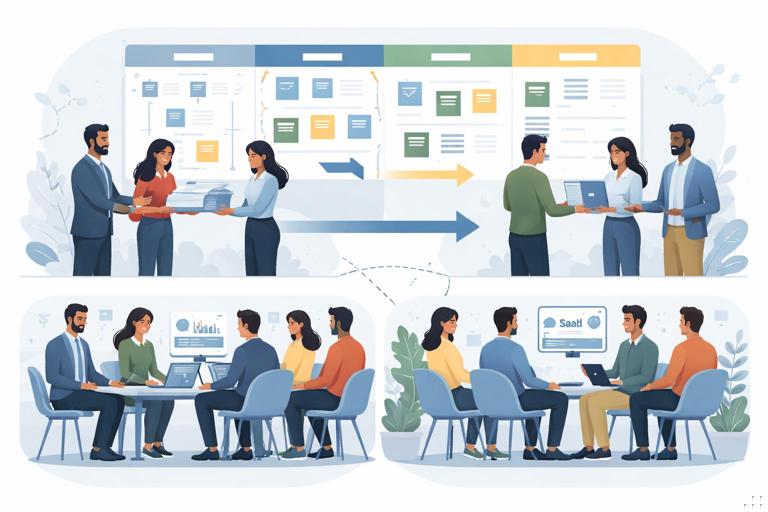
Termination planning starts by mapping active projects and categorizing them: projects near completion can be finished under the current partner with a defined end date; long-running projects are transitioned in phases. The transition playbook sets a 60-day parallel period where the internal team shadows the partner on calls, gains access to project documentation, and validates deliverables against a checklist. Customers receive a message that introduces the internal team as an “expanded service offering,” includes a named transition manager, and provides a calendar link for migration sessions. Continuity safeguards include a standardized project repository owned by the SaaS company (not the partner), weekly exports of project status, and staged access revocation after each customer is fully transitioned.
Practical example: Emergency exit from a data-processing partner
Consider an e-commerce brand using a third-party partner for customer segmentation and email triggers. A security concern arises, and the brand must stop data sharing immediately. The emergency playbook activates: tokens are rotated, data flows are paused, and a minimal internal segmentation is deployed using last known safe exports. Customer-facing email campaigns are temporarily simplified to reduce reliance on the partner’s triggers. The compliance owner preserves logs and requests deletion confirmation. The continuity safeguard that makes this survivable is the existence of weekly encrypted exports of customer segments and campaign rules, plus a documented fallback campaign set that can run from the brand’s own tools.

Verification: how you know the transition is truly complete
Transitions often “feel done” before they are actually safe. Build a verification checklist that must be signed off by owners.
- Customer continuity: no unresolved critical tickets attributable to the transition; key accounts confirmed stable.
- Technical: integrations disabled or replaced; monitoring shows expected behavior; no unexpected data egress.
- Security: all partner accounts removed; credentials rotated; access logs reviewed for anomalies.
- Data: exports validated; deletion/return confirmations stored; retention rules applied.
- Financial: final invoices settled; credits issued; rev share true-ups completed; revenue recognition impacts reviewed.
- Brand and assets: co-branded pages updated; partner references removed where required; redirects and tracking cleaned up.
Templates you can copy into your operating docs
Exit appendix template (fill-in)
Partnership Name: [ ] Version: [ ] Date: [ ] Owner: [ ] Triggers: [Performance / Compliance / Strategic / Corporate] Notice Period: [ ] Cure Period: [ ] Key Dates: Last New Business: [ ] Freeze Date: [ ] End Date: [ ] Data Handling: Export Format: [ ] Return By: [ ] Deletion Verification: [ ] Access Revocation: Stage 1 (Admin): [Date] Stage 2 (Write): [Date] Stage 3 (Read): [Date] Stage 4 (Disable): [Date] Customer Comms: Primary Channel: [ ] FAQ Link: [ ] Approval Owner: [ ] Transition SLAs: Support Response: [ ] Escalation: [ ] Replacement Plan: Interim Workaround: [ ] New Provider/Path: [ ] Sign-offs: Tech [ ] Finance [ ] Security [ ] Customer [ ]Cutover readiness checklist (quick)
[ ] Data export completed and validated [ ] New system/process tested with sample accounts [ ] Parallel run completed for [time period] [ ] Customer comms scheduled and support macros updated [ ] Rollback criteria defined and owners on-call [ ] Access revocation steps scheduled and approved [ ] Monitoring dashboards prepared (errors, latency, ticket volume) [ ] Final reconciliation plan agreed (in-flight items, credits)