What This Chapter Covers (and What It Assumes)
Purpose: This chapter focuses on the “front door” of partnerships: how you message potential partners, how you run the first meeting, and how you qualify (or disqualify) the opportunity quickly and respectfully.
Assumptions: You already have a shortlist of potential partners and a clear partner value proposition. We will not revisit how you chose them or how you designed the value proposition; we will focus on execution: outreach, agendas, and first-call qualification.
Outreach Messaging: The Job Is to Earn a Reply, Not to Close a Deal
Core concept: Partnership outreach is not sales outreach. Your first message should not try to negotiate terms or “pitch a program.” It should earn a response and a short meeting by making it easy for the other person to see relevance, credibility, and a low-risk next step.
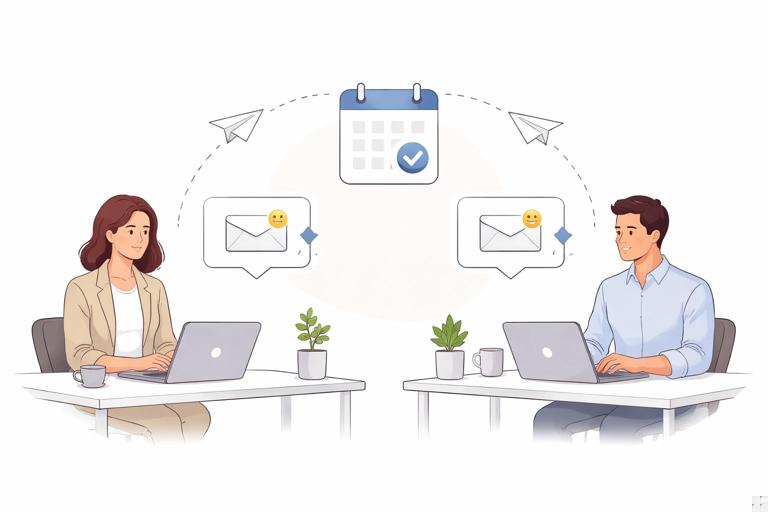
What makes partnership outreach different: Unlike a typical sales email, you are contacting someone who likely has competing priorities, internal politics, and brand risk. They are evaluating: “Is this worth my time?” and “Will this create work or reduce work?” Your message must reduce perceived risk and effort.
The Outreach Message Framework (5 Parts)
1) Context hook (why them): Show you did minimal homework and you’re not blasting a list. Mention a specific initiative, audience, product line, or public signal (a webinar series, a partner page, a new integration, a job post for partnerships, a recent feature release).
- Listen to the audio with the screen off.
- Earn a certificate upon completion.
- Over 5000 courses for you to explore!

Download the app
2) Mutual outcome (what’s in it for them): State the partner-facing benefit in one sentence. Keep it outcome-based (pipeline, activation, retention, expansion, reduced support burden, higher attach rate), not feature-based.
3) Proof (why you): Add one credibility marker: a relevant customer segment, a metric, a recognizable logo (if allowed), or a short “we’ve done this with X type of partner.” Avoid long case studies in the first message.
4) Low-friction ask: Ask for a short call with a clear purpose, or ask a single qualifying question if a call is premature. Offer two time windows or ask for the right owner.
5) Safety valve: Give them an easy “no” or redirect option. This increases replies and reduces ghosting.
Subject Lines and Openers That Work
Subject lines: Keep them specific and neutral. Examples: “Co-marketing idea for [Partner Company] + [Your Company]”, “Quick question about [their product/audience]”, “Potential integration + joint GTM (2 questions)”, “Intro: [your company] x [their company]”. Avoid hype (“game-changing,” “revolutionary”) and avoid “Partnership opportunity” as a generic subject.
Openers: Use a single sentence that proves relevance. Example: “Saw you’re investing in onboarding for agencies (your recent webinar on X) and thought we could help you increase activation in the first 14 days.”
Practical Step-by-Step: Writing a First Outreach Email
Step 1 — Choose one partner motion: Pick the most plausible first collaboration type for that partner (e.g., webinar, integration, referral, marketplace listing, bundled offer, content swap). Your message should imply one motion, not five.
Step 2 — Write the partner outcome in 12 words: Example: “Increase trial-to-paid conversion for your SMB users with guided setup.” If you can’t do this, your message will drift into vague language.
Step 3 — Add one proof point: Example: “We support 200+ teams in [their vertical]” or “Typical partners see 15–25% lift in activation.” Use ranges and avoid overpromising.
Step 4 — Ask for a 15–20 minute call with a defined agenda: Example: “Open to a 20-min chat to see if a joint webinar or integration makes sense? I can share 2–3 concrete angles and we can sanity-check fit.”
Step 5 — Include a safety valve: Example: “If you’re not the right person, who owns partnerships for [area]?” or “If now isn’t a priority, happy to circle back next quarter.”
Example Outreach Email (Cold)
Subject: Co-marketing idea for [Partner] + [Your Company]
Body: “Hi [Name] — I noticed [Partner] has been focusing on [specific initiative/audience], especially [specific proof]. We work with [shared audience] to achieve [partner-facing outcome]. In similar partnerships, we’ve seen [one metric/proof] without adding heavy lift for the partner team. Would you be open to a 20-minute call next week to explore one simple test (e.g., a joint webinar or a lightweight integration)? If you’re not the right owner, who’s best to speak with?”
Example Outreach Message (LinkedIn)
Connection note (300 characters): “Hi [Name] — I work on partnerships at [Company]. Saw your post about [topic]. We help [audience] with [outcome]. Would love to compare notes on a low-lift co-marketing test if relevant.”
Follow-up after acceptance: “Thanks for connecting. Quick question: are you currently prioritizing partner-led acquisition for [segment], or is your focus more on retention/expansion? If it’s on the roadmap, I can share a 2-step co-marketing test we’ve used with similar teams.”
Follow-Up Cadence (Without Becoming Noise)
Principle: Each follow-up must add new value or reduce friction. “Bumping this” is rarely effective in partnerships because the recipient is evaluating opportunity cost.
- Follow-up 1 (2–3 business days): Add a second angle or a specific idea. “One concrete idea: a 30-min webinar on [topic] with a shared checklist; we handle landing page + email copy.”
- Follow-up 2 (5–7 business days): Add proof or a micro-asset. “Here’s a 1-page outline of the test and what we’d own.”
- Follow-up 3 (10–14 business days): Use the safety valve. “Should I close the loop, or is there someone else who owns this?”
Avoid These Common Outreach Mistakes
- Overloading options: Listing five partnership types signals you haven’t chosen a clear first test.
- Making them do the work: “Let me know what you’d like to do” pushes planning onto them.
- Premature negotiation: Mentioning rev share, contracts, or complex terms before relevance is established.
- Vague value: “Drive synergies” and “unlock growth” are not outcomes.
- Too long: If your message needs scrolling, you’ve likely lost them.
Meeting Agendas: Turn a “Chat” Into a Decision-Making Session
Core concept: A first partnership meeting is not a brainstorming session. It is a structured discovery call designed to answer: “Is there a realistic, testable collaboration we can run in the next 30–45 days?” A good agenda protects both sides from wasting time.

Why agendas matter more in partnerships: Partnership decisions often require cross-functional support (marketing, product, legal, finance). If you don’t leave the first call with a clear hypothesis and next steps, momentum dies in internal handoffs.
The 30-Min First Meeting Agenda (Default)
- 0–3 min: Framing — Confirm time, purpose, and desired outcome. Example: “Goal is to see if there’s one low-lift test worth scoping; if not, we’ll part as friends.”
- 3–8 min: Quick intros — Each side: who you serve, where you win, and what you’re measured on (pipeline, activation, retention).
- 8–18 min: Discovery — Ask targeted questions (see qualification section). Focus on audience overlap, current priorities, constraints, and partner motion feasibility.
- 18–25 min: Propose 1–2 testable plays — Present two options max, each with a simple success metric and who does what.
- 25–30 min: Decide next step — Either schedule a working session, agree on a one-pager, or disqualify politely.
The 45-Min First Meeting Agenda (When It’s More Complex)
Use 45 minutes when an integration, marketplace listing, or co-selling motion is likely. Add a short section for technical/operational feasibility.
- 0–5 min: Framing + outcomes
- 5–12 min: Intros + current GTM motions
- 12–25 min: Discovery (audience, funnel, constraints)
- 25–33 min: Operational feasibility (systems, data sharing, lead routing, support)
- 33–40 min: 1–2 proposed tests + success metrics
- 40–45 min: Next steps + owners + timeline
How to Send the Agenda (Email Template)
Send the agenda 24 hours before the call. This increases attendance and reduces “So, what did you want to talk about?”
Subject: Agenda for [Date] — [Company] x [Partner] (20 min) Hi [Name] — looking forward to our chat. Proposed agenda: 1) Quick context + what success looks like (3 min) 2) Learn your priorities for [segment/motion] (10 min) 3) Share 1–2 low-lift partnership tests we can run in 30 days (5 min) 4) Decide next step + owners (2 min) If there’s anyone else who should join (marketing/product/alliances), happy to include them.Run the Meeting Like a Facilitator, Not a Pitcher
Facilitation behaviors: confirm the goal, keep time, summarize often, and ask for agreement. Partnerships stall when both sides leave with different interpretations of what was decided.
Use “decision language”: “Are we aligned that option A is the best first test?” “Is there any blocker that would prevent us from running this in the next 30 days?” “Who needs to approve this internally?”
Practical Step-by-Step: Turning Discussion Into a One-Page Test Plan
Step 1 — Name the test: “Joint webinar for [audience]” or “Referral swap for [segment]” or “Integration pilot for [use case].”
Step 2 — Define the hypothesis: “If we co-host a webinar on [topic], we will generate [X] qualified leads for each side because [reason].”
Step 3 — Define success metrics: Choose 1 primary metric and 2 supporting metrics. Example: primary = partner-sourced SQLs; supporting = registrations, attendance rate, meeting booked rate.
Step 4 — Assign owners: One owner per company. Avoid “we” ownership.
Step 5 — List deliverables and dates: Landing page, email copy, speaker prep, lead routing, follow-up sequence.
Step 6 — Define the decision checkpoint: “We will review results 7 days after the event and decide whether to repeat, expand, or stop.”
First-Call Qualification: Decide Fast, Protect Focus
Core concept: First-call qualification is the discipline of determining whether a partnership is worth pursuing now, later, or never. The goal is not to “win” the partner; it is to allocate your limited partnership execution capacity to the highest-probability tests.
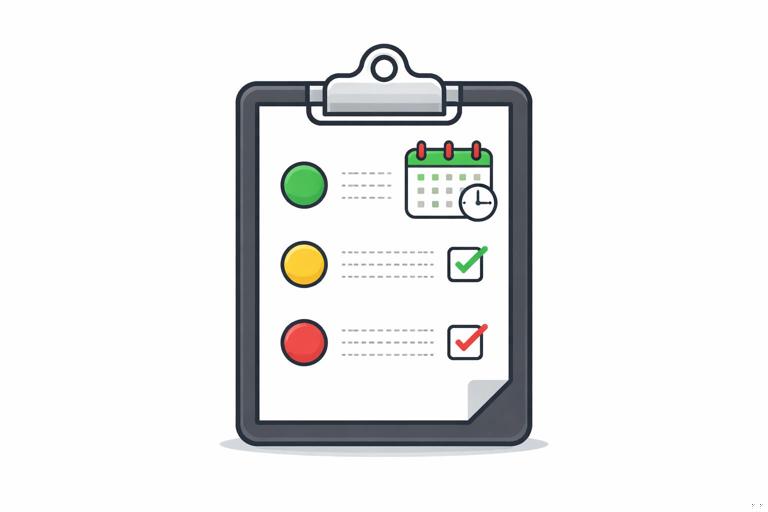
Qualification outputs: Every first call should end in one of four states: (1) proceed to a scoped pilot, (2) proceed but after a prerequisite (e.g., product capability, audience asset), (3) nurture for later with a clear trigger, or (4) disqualify.
The Qualification Dimensions (What You Must Learn)
- Priority: Is this motion important to them this quarter?
- Audience overlap: Do you share a reachable segment with enough volume?
- Distribution capability: Can they actually promote (email list, community, sales team, in-app placements)?
- Execution capacity: Do they have bandwidth and an owner?
- Decision path: Who approves, and how long does it take?
- Risk and constraints: Brand guidelines, compliance, legal review, data sharing limits.
- Economics (light touch): Not detailed negotiation, but whether the model is even plausible (e.g., “We don’t do rev share,” “We only partner with certified vendors”).
First-Call Qualification Questions (Use as a Menu)
Priority and goals:
- “What are your top 1–2 growth priorities this quarter?”
- “How are you measured—pipeline, activation, retention, something else?”
- “Where do partnerships fit in your plan right now?”
Audience and overlap:
- “Who is your best-fit customer segment today?”
- “Which segment are you trying to grow next?”
- “What percentage of your customers also use [category you’re in]?”
Distribution and channels:
- “What channels can you realistically activate for a partner test—email, webinars, in-app, sales, community?”
- “What’s a typical send size / attendance for your webinars?”
- “Do you have a partner newsletter or marketplace placement?”
Execution and ownership:
- “If we ran a pilot, who would own it on your side?”
- “What internal teams would need to be involved?”
- “What’s your realistic timeline to launch something small?”
Decision and process:
- “What does approval look like for a co-marketing test?”
- “Do you require legal review for a webinar or referral agreement?”
- “Are there brand/compliance constraints we should know early?”
Economics and fit (light touch):
- “Do you have a standard approach to partner attribution or lead sharing?”
- “Are you open to reciprocal promotion, or do you only do paid placements?”
- “Any partnership types you’ve tried that you won’t repeat?”
Qualification Signals: Green, Yellow, Red
Green signals (proceed): They can name a priority that matches your motion, they have a reachable audience asset, they can assign an owner, and they can commit to a small test with a timeline.
Yellow signals (nurture with trigger): They like the idea but lack bandwidth, need a product capability, or are between quarters. Capture a specific trigger: “after your Q2 launch,” “once your partner manager is hired,” “when your webinar calendar opens.”
Red signals (disqualify): No clear priority, no distribution, no owner, or a process so heavy that a “small test” becomes a 3-month project. Also red: misaligned customer segment or a requirement that undermines your economics (e.g., only paid sponsorships when you need reciprocal value).
Practical Step-by-Step: A Simple Qualification Scorecard for the First Call
Use a lightweight scorecard during or immediately after the call. Keep it simple so it actually gets used.
- Strategic priority (0–2): 0 = not a priority, 1 = nice-to-have, 2 = active priority
- Audience overlap + volume (0–2): 0 = unclear, 1 = some overlap, 2 = clear overlap with volume
- Distribution asset (0–2): 0 = none, 1 = limited, 2 = strong (email list, webinars, sales motion)
- Execution owner + capacity (0–2): 0 = none, 1 = partial, 2 = clear owner and bandwidth
- Speed to pilot (0–2): 0 = 60+ days, 1 = 30–60 days, 2 = <30 days
Interpretation: 8–10 = scope a pilot now; 5–7 = nurture or require a prerequisite; 0–4 = disqualify or park.
How to Disqualify Without Burning the Relationship
Principle: Disqualification is a service. It saves both teams time and keeps the door open for a better-timed collaboration.
Disqualify scripts:
- “Based on what you shared, it sounds like this isn’t a priority this quarter. Rather than force it, can we reconnect in [month] when [trigger] happens?”
- “I don’t think we have enough audience overlap to run a meaningful test right now. If that changes—say you expand into [segment]—I’d love to revisit.”
- “It seems your process requires a heavier lift than we can justify for a first test. If we can start with a smaller experiment later, we’re open.”
Putting It Together: From Outreach to Qualified Pilot in 10 Working Days
Goal: Create a repeatable mini-process that moves from first message to a clear yes/no on a pilot quickly.
Day-by-Day Playbook
- Day 1: Send outreach message (email or LinkedIn) with one motion and a 20-min ask.
- Day 3: Follow-up with a concrete test idea and what you will own.
- Day 5: Follow-up with a 1-page outline (hypothesis, audience, deliverables, metrics).
- Day 6–8: Hold the first call using the 30-min agenda and qualification questions.
- Day 8–10: Send recap + proposed pilot plan + owners + dates, or send a nurture/disqualify note with a trigger.
First-Call Recap Email Template (Decision-Oriented)
Subject: Recap + next steps — [Company] x [Partner] Hi [Name] — thanks for the conversation. Here’s my recap and a proposed next step. What we aligned on: - Target audience: [segment] - Partner goal this quarter: [goal] - Best first motion: [webinar/referral/integration pilot] Proposed pilot (30 days): - Hypothesis: [one sentence] - What [Your Company] owns: [3 bullets] - What [Partner] owns: [3 bullets] - Success metric: [primary metric] (supporting: [2 metrics]) - Timeline: [dates] Open questions / blockers: - [legal/brand/ops question] If this looks right, can we schedule a 30-min working session with [names/roles] to finalize scope and dates?Operational Detail That Prevents Early Failure
Lead handling: If the pilot involves leads (webinar, referral, co-selling), clarify on the first call or immediately after: how leads are shared, what counts as qualified, and who follows up. Many “failed” partnership tests are actually “unclear follow-up ownership” problems.
Attribution expectations: Keep it simple at first: agree on a tagging method (UTMs, referral codes, form field) and a reporting cadence. Avoid building complex attribution models before you’ve proven the motion works.
Asset readiness: If the test requires content, speakers, landing pages, or demo environments, confirm you can deliver within the timeline. A partner will judge you on operational reliability as much as on strategic fit.
Common First-Call Scenarios and How to Handle Them
Scenario 1: “We love it, but we’re slammed”
Response: Offer a smaller test with you doing most of the work, or set a nurture trigger. Example: “If bandwidth is the constraint, we can draft the landing page and email copy and ask only for approval + one speaker. If even that’s too much, let’s book a 15-min check-in the first week of next month.”
Scenario 2: “Send me more info”
Response: Clarify what “info” means and propose a decision artifact. Example: “Happy to—what would be most useful: a one-page pilot outline, a sample webinar plan, or a short case example? If I send a one-pager, can we tentatively hold 20 minutes to decide yes/no?”
Scenario 3: “We only do paid partnerships”
Response: Don’t argue. Qualify whether paid placement can still be a test with acceptable economics, or disqualify. Example: “Good to know. We typically start with reciprocal tests, but if you have a paid placement that reliably produces [metric], we can evaluate it. What performance benchmarks do you see?”
Scenario 4: “We need an integration first”
Response: Validate and scope a minimal integration or an interim co-marketing test. Example: “If integration is the unlock, what’s the smallest integration that creates value for your users? In parallel, we could run a content test to validate demand while product teams scope the work.”
Scenario 5: “This sounds interesting, but I’m not the owner”
Response: Use the safety valve and ask for a warm handoff. Example: “Who owns partnerships for this motion? If you can intro us, I’ll send a 3-bullet summary to make it easy.”