What “Operational Readiness” Means in Partnerships
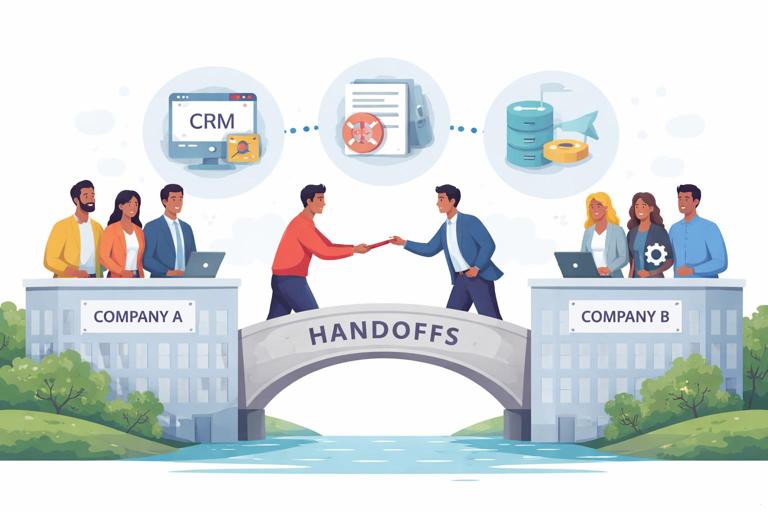
Operational readiness is the set of people, processes, tools, and agreements that make a signed partnership executable in the real world. It answers a simple question: if leads, customers, data, or deliverables start flowing tomorrow, can both organizations fulfill their promises consistently and safely? In practice, operational readiness covers onboarding (how the partnership is launched), enablement (how teams learn to sell, deliver, and support the joint motion), and service-level agreements or SLAs (how performance is defined, measured, and enforced). It is not strategy and it is not negotiation; it is the operational system that prevents “paper partnerships” where a deal exists but results do not.
Operational readiness is especially important because partnerships create cross-company dependencies. A single missed handoff can break customer trust, and a single unclear responsibility can cause internal friction (“we thought you owned that”). The goal is to reduce ambiguity, shorten time-to-first-value, and create predictable execution even when staff changes, volume spikes, or edge cases appear.
Operational Readiness Outcomes and Non-Negotiables
Before building artifacts, define the outcomes you want from readiness work. Typical outcomes include: a repeatable onboarding path, a trained internal team, a shared understanding of customer journey and handoffs, a working referral or delivery workflow, and measurable service levels. “Non-negotiables” are the minimum conditions required to go live, such as secure data transfer, named owners, a tested escalation path, and a documented process for exceptions.
Use a “go-live gate” mindset: the partnership does not launch to the field until the gate criteria are met. This prevents the common failure mode where sales teams start pitching before operations can deliver, creating early churn and reputational damage.
Step-by-Step: Partnership Onboarding Plan (Day 0 to Day 30)
Onboarding is the structured launch of the partnership after signature. The fastest way to onboard is to run a time-boxed plan with clear deliverables, owners, and dates. Below is a practical 30-day onboarding sequence you can adapt.
- Listen to the audio with the screen off.
- Earn a certificate upon completion.
- Over 5000 courses for you to explore!

Download the app
Step 1: Kickoff Meeting With a Single Source of Truth
Hold a kickoff with decision makers and day-to-day operators. The output is a single source of truth document (often called a “Partner Launch Brief”) that includes: partnership scope, target customer, what is being offered, what is out of scope, key contacts, and the first 90-day priorities. Keep it short enough that people will actually use it.
- Deliverable: Partner Launch Brief (1–3 pages)
- Owners: Partner manager + ops lead from each side
- Timing: Day 0–3
Step 2: Define the End-to-End Workflow and Handoffs
Map the end-to-end workflow from the first trigger (a referral, a co-sell opportunity, a customer request) to the final outcome (closed-won, delivered service, renewal). For each step, define who owns it, what tool is used, what data is required, and what “done” means. This is where most partnerships fail, because teams assume the other side will “just handle it.”
- Deliverable: Swimlane workflow diagram or checklist
- Owners: RevOps/CS Ops + partner leads
- Timing: Day 3–7
Step 3: Set Up Systems, Access, and Tracking
Operational readiness requires that people can actually execute in the tools they use daily. Set up CRM fields, partner source tracking, shared deal registration (if applicable), and a secure method for sharing required customer data. If you use ticketing or project management tools, create a standard intake template so requests are consistent.
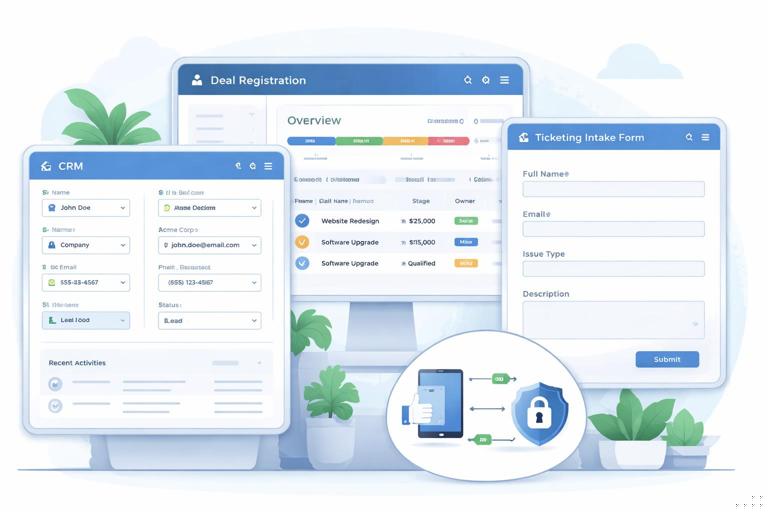
- Deliverable: Tooling checklist completed (CRM, ticketing, shared folders, integrations)
- Owners: RevOps + IT/security as needed
- Timing: Day 5–12
Step 4: Create the “How We Work Together” Operating Cadence
Define recurring meetings and communication channels. A simple cadence might include: weekly pipeline/work-in-progress review, monthly performance review, and quarterly planning. Also define where day-to-day questions go (shared Slack/Teams channel, email alias) and what qualifies as an escalation.
- Deliverable: Operating cadence calendar + escalation contacts
- Owners: Partner managers
- Timing: Day 7–14
Step 5: Run a Controlled Soft Launch
Instead of opening the partnership to the entire sales org immediately, run a soft launch with a small group (for example, 3–5 reps or a single region). The purpose is to validate the workflow, uncover edge cases, and measure time-to-first-value. Capture issues in a shared log and fix them quickly.
- Deliverable: Soft launch report (issues, fixes, early results)
- Owners: Partner manager + pilot team lead
- Timing: Day 14–24
Step 6: Full Launch With Enablement and Internal Announcements
Once the workflow is stable, launch to the broader team with enablement materials, a clear “how to engage the partner” process, and a simple call to action. Make it easy for a rep or CSM to take the next step without guessing.
- Deliverable: Launch kit + internal announcement
- Owners: Partner manager + enablement lead
- Timing: Day 24–30
Enablement: Turning a Partnership Into Repeatable Behavior
Enablement is the training and tooling that helps internal teams create and deliver value through the partnership. The goal is not to make everyone a partnership expert; the goal is to make the “right behavior” the easiest behavior. Enablement should be role-specific: sales needs talk tracks and qualification cues, customer success needs delivery and escalation guidance, and support needs routing rules.
A useful way to think about enablement is: knowledge (what it is), confidence (how to talk about it), and mechanics (how to execute it in systems). Many partnerships fail because they only deliver knowledge (“here’s our partner”) but not mechanics (“here’s the exact form and what happens next”).
Step-by-Step: Build a Partner Enablement Kit
Step 1: Create a One-Page Partner Overview
This is the fastest asset to produce and the most frequently used. It should include: who the partner is, which customers it fits, the joint value in plain language, top use cases, and a simple engagement process. Include “red flags” that indicate the partner is not a fit, so teams avoid wasting cycles.
- Format: one page, scannable bullets
- Audience: sales, CS, solutions, support
Step 2: Write Role-Based Talk Tracks and Discovery Prompts
Provide short scripts and prompts that match real conversations. For sales, include positioning and objection handling. For CS, include renewal and expansion angles. For solutions/implementation, include scoping boundaries. Keep it grounded in customer language, not internal jargon.
- Sales talk track example: “When a prospect needs X, we bring in Partner Y to deliver Z in two weeks, while we handle A and B.”
- CS prompt example: “Are you currently using a tool for X? If not, we can introduce Partner Y to reduce manual work.”
Step 3: Provide a Qualification Checklist and Routing Rules
Define what qualifies as a good partner-sourced or partner-influenced opportunity. Include minimum criteria (industry, size, tech stack, urgency) and routing rules (who to notify, how to register, what to attach). This reduces internal debate and ensures consistent handling.
Example qualification checklist (referral to partner) 1) Customer has problem X and timeline < 60 days 2) Customer uses tool A or is willing to adopt it 3) Budget owner identified 4) Data access requirements confirmed 5) Customer agrees to joint intro callStep 4: Build a Simple “How to Engage” Workflow in Your Tools
Enablement must live where work happens. In CRM, create a partner field, a partner stage, and a task template. In ticketing, create an intake form with required fields. In your knowledge base, publish a short page with links to assets and contacts. The goal is that a rep can execute in under five minutes.
Step 5: Train, Certify, and Reinforce
Run a short live training (30–45 minutes) and record it. Use a lightweight certification: a short quiz or a role-play checklist. Reinforce with periodic reminders and by highlighting wins. Certification is not bureaucracy; it is a way to ensure the first customer experiences are handled by people who know the process.
Operational Roles and RACI: Preventing Ownership Gaps
Partnership execution often breaks when responsibilities are implied rather than assigned. Use a RACI (Responsible, Accountable, Consulted, Informed) to clarify ownership across both companies. Keep it focused on the workflow steps that matter: lead intake, qualification, customer communications, delivery, billing, support, and escalations.
Example: in a co-delivered implementation, your company might be Responsible for project management and customer communication, while the partner is Responsible for a specific technical component. Accountability should be singular for each outcome, even if multiple teams contribute. If two people are “Accountable,” no one is.
SLAs: Making Performance Measurable and Enforceable
An SLA (service-level agreement) defines measurable service expectations between parties. In partnerships, SLAs can apply to customer-facing delivery (response time, uptime, issue resolution) and to partnership operations (lead response time, meeting scheduling, deal registration approval). SLAs reduce conflict by turning “you’re slow” into “we agreed to respond within 24 hours, and we missed it.”
SLAs should be specific, measurable, and tied to a workflow. Avoid vanity SLAs that cannot be tracked. Also avoid overly punitive SLAs that create gaming behavior. The best SLAs align incentives: they protect customer experience and make it easy to spot process bottlenecks.
Step-by-Step: Design Partnership SLAs That Work
Step 1: Identify SLA Domains
List the domains where service levels matter. Common domains include: referral handling, co-sell deal support, implementation delivery, customer support, and escalations. Choose only the domains that are truly critical for customer outcomes and partner trust.
- Referral SLA: time to acknowledge and accept/reject a referral
- Co-sell SLA: time to provide solution input or pricing support
- Delivery SLA: project kickoff window, milestone adherence
- Support SLA: first response time, resolution targets
Step 2: Define Metrics, Targets, and Measurement Method
For each domain, define the metric, the target, and how it will be measured (system of record). If you cannot measure it, you cannot manage it. Use realistic targets based on current operational capacity, then tighten over time.
Example SLA table (simplified) Domain: Referral handling Metric: Time to first response Target: < 1 business day Measurement: CRM timestamp (lead created to first activity) Domain: Escalations Metric: Time to engage escalation owner Target: < 2 hours Measurement: Ticketing system priority P1 timestampsStep 3: Define Severity Levels and Exceptions
Not all issues are equal. Create severity levels (for example, P1/P2/P3) with different targets. Define exceptions such as holidays, customer-caused delays, or missing required information. Exceptions should be explicit to prevent debates later.
Step 4: Create an Escalation Path and Communication Templates
SLAs fail when there is no clear escalation path. Define who is contacted at each stage and how quickly. Provide templates for escalation emails or tickets so the receiving team gets the context needed to act fast: customer impact, timeline, requested action, and owner contact.
Step 5: Operationalize SLAs With Dashboards and Reviews
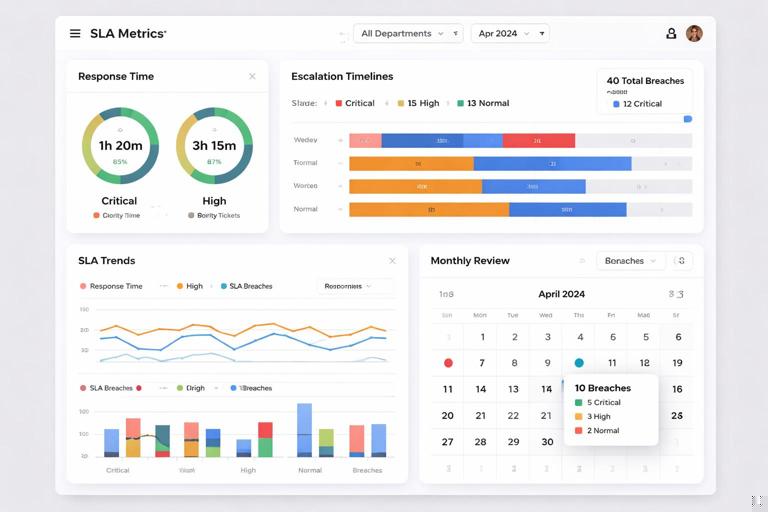
Put SLA tracking into dashboards reviewed on a recurring cadence. The point is not to punish; it is to identify bottlenecks and fix them. If SLA misses are frequent, treat it as a process or capacity problem, not a moral failing. Use a simple rule: if an SLA is missed twice in a month, it triggers a root-cause review and a corrective action.
Customer Journey Alignment: Avoiding Broken Experiences
Partnerships often span multiple customer touchpoints: marketing, sales, onboarding, implementation, support, and renewal. Operational readiness requires aligning the customer journey so the customer does not feel “handed off into a void.” Define what the customer will see: who sends which emails, who runs which meetings, and who owns the relationship at each stage.
Practical example: if your company sells the core product and the partner delivers an add-on service, decide whether the customer hears about the partner during sales or after purchase. If introduced after purchase, define the exact trigger (closed-won, onboarding complete) and the introduction email template. If introduced during sales, define who explains scope and pricing to avoid surprises.
Documentation That Actually Gets Used
Operational readiness produces documentation, but most documentation fails because it is too long or too scattered. Focus on a small set of living documents: Partner Launch Brief, workflow map, enablement kit, SLA sheet, and escalation contacts. Store them in a single location and link them from your CRM or internal wiki. Assign an owner to keep them current.
Use “minimum viable documentation”: enough to execute consistently, not enough to impress. When a new edge case appears, update the workflow and templates immediately so the next person benefits.
Common Failure Modes and How to Prevent Them
Operational readiness is about preventing predictable breakdowns. Watch for these common patterns.
- Sales launches before operations: prevent with go-live gates and a soft launch.
- Unclear ownership: prevent with RACI and named escalation owners.
- Partner leads go stale: prevent with referral SLAs and automated reminders.
- Inconsistent messaging: prevent with talk tracks and a one-page overview.
- Support confusion: prevent with routing rules and a shared escalation process.
- Tooling gaps: prevent with a tooling checklist and system-of-record decisions.
Practical Example: Onboarding a Services Partner for Implementation Capacity
Imagine a SaaS company partners with an implementation agency to handle overflow onboarding projects. Operational readiness would include: a workflow where sales flags “agency-eligible” deals in CRM, a handoff checklist that includes customer goals and data access, a kickoff scheduling SLA (for example, kickoff within 5 business days of closed-won), and a support boundary (what the agency handles vs what goes to the SaaS support team). Enablement would include a scoping guide so sales does not oversell, a customer-facing introduction email, and an escalation path for projects at risk.
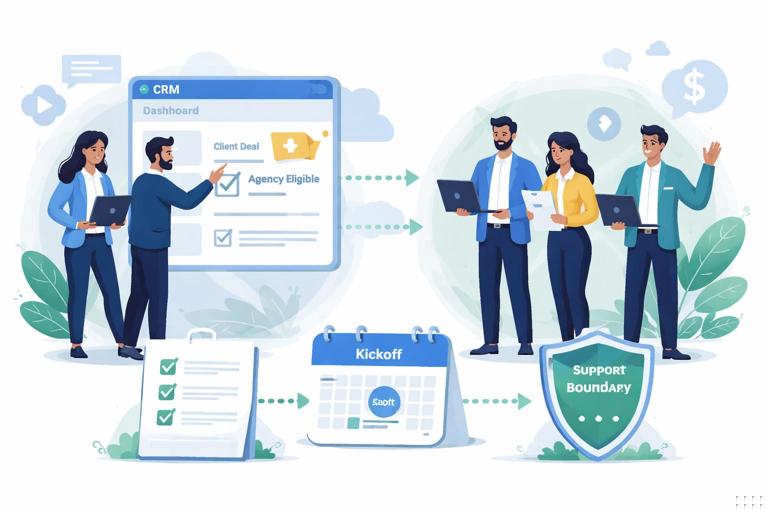
In the first soft launch, the company might route only small customers to the agency. After two weeks, they review SLA adherence and customer satisfaction notes, then adjust the intake form to include missing fields (for example, required integrations). Only after the workflow is stable do they open the motion to the full sales team.
Practical Example: Onboarding a Referral Partner With High Volume
Consider a partner that can send dozens of referrals per month. Readiness work focuses on speed and consistency: a standardized referral form, automated CRM creation, a “first response within one business day” SLA, and a weekly review of referral status. Enablement includes a short “what good looks like” guide so the partner sends qualified referrals, plus internal routing rules so referrals go to the right segment team. Without this, high volume becomes a liability: leads pile up, response times slip, and the partner loses confidence.