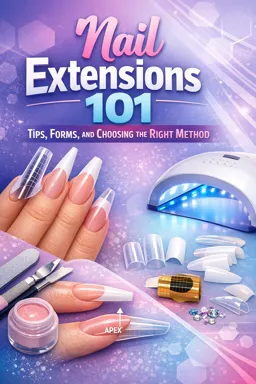
This chapter focuses on what you need (and why) to safely apply three main nail extension categories: (1) tip overlays (a partial tip blended into the natural nail and reinforced), (2) sculpted extensions with forms (built from scratch on a form), and (3) soft gel full-cover tips (a pre-shaped full nail adhered and cured). The goal is to match each method to a minimum, reliable kit and a workspace setup that supports consistent adhesion and safe sanitation.
1) Tool Kit Checklist (Minimum + Optional Upgrades)
A. Files, grits, and buffers (core for all methods)
- 180 grit file: shaping product and refining sidewalls. (Avoid coarse grits on natural nails.)
- 240 grit file: refining shape and smoothing transitions.
- 100/180 grit file (optional): faster bulk removal on product only (use 100 grit only on enhancements, not natural nails).
- Buffer 180/240 or 220/280: lightly refine before top coat; do not over-buff the natural nail plate.
- Dust brush (dedicated): remove dust between steps (do not use makeup brushes).
B. Prep liquids and adhesion helpers (core for most systems)
- Cleanser / 70%+ isopropyl alcohol: remove dust and inhibition layer (for gels) as directed by the brand.
- Dehydrator (often alcohol/acetone-based): removes surface moisture/oils to improve adhesion.
- Primer:
- Acid-free primer (common for gel systems): improves bonding without aggressive etching.
- Acid primer (used cautiously): stronger bonding aid; avoid skin contact and follow brand guidance.
- Lint-free wipes: reduce fibers that can cause lifting.
C. Extension category 1: Tip overlays (partial tips + overlay)
Concept: A partial tip extends length; an overlay (gel, acrylic, or hybrid) reinforces and creates structure. This method is beginner-friendly because the tip provides a guide for length and shape.
Minimum products/tools:
- Partial tips (assorted sizes) + tip cutter (optional but helpful).
- Tip adhesive: cyanoacrylate nail glue (air-drying).
- Tip blending tool (optional): file or blending bit to soften the seam.
- Overlay system: choose one:
- Builder gel (requires lamp)
- Acrylic (air-drying; requires monomer + polymer)
- Polygel / hybrid (requires lamp)
- Brushes:
- Gel: oval/round gel brush (size 4–8)
- Acrylic: kolinsky-style acrylic brush (size 8–12)
- Polygel: spatula + dual-ended brush
- Lamp if using gel/hybrid overlay (see lamp section below).
D. Extension category 2: Sculpted extensions with forms
Concept: A form is placed under the free edge to create a temporary “platform.” You build the extension directly with product, then remove the form after curing/setting. This gives the most control over shape and apex placement, but demands clean form fitting.
Minimum products/tools:
- Listen to the audio with the screen off.
- Earn a certificate upon completion.
- Over 5000 courses for you to explore!

Download the app
- Sculpting forms: paper forms (single-use) or reusable forms (must be disinfected).
- Building system:
- Builder gel (lamp-cured)
- Acrylic (air-drying)
- Polygel (lamp-cured)
- Pinching tool/tweezers (optional): for refining C-curve after initial set (only if system and timing allow).
- Brushes matched to system (as above).
- Lamp for gel/polygel systems.
E. Extension category 3: Soft gel full-cover tips
Concept: A pre-shaped full-cover tip is adhered to the entire nail plate using a gel adhesive (or “extend gel”), then cured. This is fast and consistent when sizing and cuticle fit are correct.
Minimum products/tools:
- Soft gel full-cover tips (multiple sizes and shapes).
- Gel tip adhesive (extend gel / gel glue) + optional tip primer if required by brand.
- LED/UV lamp with adequate output for the adhesive and tip thickness.
- Flash-cure light (mini LED) (optional but very helpful) to hold the tip in place before full cure.
- Tip prep:
- Optional tip etcher or fine sanding band to lightly roughen the inside contact area (only if tips are not pre-etched).
F. Lamp (for any gel/hybrid system)
- LED/UV lamp that matches your gel brand’s curing requirements (wavelength and time). A common baseline is a reputable 48W LED lamp, but output quality matters more than watt number.
- Timer settings: 30/60/90 seconds options are practical for base/build/top and thicker layers.
- Reflective interior helps reduce shadow curing.
G. E-file (optional) and bits (if used)
Note: An e-file is optional for beginners. If you use one, prioritize safety and low RPM control.
- E-file machine with adjustable RPM and forward/reverse.
- Bits (starter set):
- Fine grit diamond flame/needle: cuticle area refinement (light pressure).
- Safety barrel (fine/medium): surface refinement on product.
- Mandrel + sanding bands (180/240): shaping product (avoid natural nail).
- Dust extractor (strongly recommended): reduces airborne dust exposure.
2) Chemistry Overview (Practical Level)
A. What “gel,” “acrylic,” and “hybrid” mean in practice
- Gel systems (base gel, builder gel, gel color, top coat): liquid/viscous oligomers and monomers that polymerize when exposed to UV/LED light. They stay workable until cured.
- Acrylic systems: polymer powder + monomer liquid that polymerize in air (no lamp). Working time depends on temperature, humidity, and monomer speed.
- Hybrid systems (e.g., polygel): a pre-mixed gel-acrylic hybrid that requires curing but has a putty-like control and reduced flow.
B. What requires curing vs air-drying
| Material | Sets by | What you control | Common beginner issue |
|---|---|---|---|
| Builder gel / gel adhesive | UV/LED curing | Layer thickness, cure time, lamp placement | Under-curing from thick layers or weak lamp |
| Gel top coat | UV/LED curing | Even coverage, cap free edge | Wrinkling from applying too thick |
| Acrylic | Air polymerization | Liquid-to-powder ratio, speed, environment | Runny or grainy beads; weak structure |
| Cyanoacrylate tip glue | Air-drying (moisture-activated) | Amount, contact pressure, alignment | Air pockets causing pop-offs |
C. What creates adhesion (and what breaks it)
Adhesion is a combination of:
- Mechanical adhesion: micro-scratches from gentle surface prep allow product to “grip.” Over-filing the natural nail weakens it and can still lift later.
- Chemical adhesion: primers/base gels form bonds with the keratin surface and the product layer above.
- Clean contact: oils, dust, and moisture are the most common adhesion killers.
Practical rule: If you can see dust, shine, or skin oils near the cuticle line, you should assume adhesion will be compromised.
D. Step-by-step: choosing the right adhesive system for each category
1) Tip overlays (partial tip + overlay)
- Select tip size: sidewall-to-sidewall without forcing. If between sizes, choose larger and file to fit.
- Apply cyanoacrylate glue to the tip well (or contact area) sparingly.
- Attach at a 45° angle, then press down to avoid trapping air.
- Blend seam lightly (optional) and remove dust.
- Apply overlay system (builder gel/acrylic/polygel) to create structure and apex; cure if gel/hybrid.
2) Sculpted extensions with forms
- Fit the form: it must sit flush under the free edge with no gaps; align straight with the finger.
- Create a thin base layer (slip layer for gel or a thin acrylic base) to anchor.
- Build the extension to desired length; keep sidewalls parallel and apex placed for strength.
- Cure or set fully before removing the form.
- Refine shape with file/e-file; finish with top coat (cure if gel).
3) Soft gel full-cover tips
- Size every tip before prep; label in order to avoid confusion mid-service.
- Prep the inside contact area if needed (etch lightly), then dust off.
- Apply gel adhesive to the tip (or nail) in a controlled bead to prevent flooding.
- Place from cuticle to free edge slowly, pushing air out as you go.
- Flash cure while holding steady, then full cure according to brand time.
3) Hygiene and Cross-Contamination Controls
A. Hand hygiene and gloves
- Wash hands before and after service (you and the client/model).
- Wear nitrile gloves when handling chemicals, filing, and cleaning. Change gloves if you touch your phone, hair, face, or non-sanitized surfaces.
- Cover cuts on your hands with appropriate protection; avoid services if there are open lesions on either party.
B. Single-use vs reusable items
- Single-use (discard after each client): paper forms, lint-free wipes, wooden sticks, sanding bands, buffers (unless your local rules allow single-client re-use with labeling), disposable dust masks.
- Reusable (must be cleaned and disinfected): metal tools (nippers, pushers), e-file bits (metal/diamond), tip cutters, dappen dishes (if used), brushes (cleaned per system).
C. Cleaning vs disinfection (practical workflow)
Cleaning removes visible debris; disinfection kills many microbes. You need both for reusable tools.
- Pre-clean: wash tools with soap/water or detergent to remove dust/product.
- Disinfect: fully immerse or apply an approved disinfectant following label contact time.
- Dry and store: keep in a clean, closed container.
Important: Never “dip” dirty tools straight into disinfectant; debris reduces effectiveness.
D. Product contamination controls
- No double-dipping: do not touch brush to skin, then back into the pot/bottle.
- Dispense smart: pour cleanser/alcohol into a small dish for the service; don’t contaminate the main bottle.
- Keep caps closed: reduces evaporation and dust contamination.
4) Environmental Factors That Affect Results
A. Lamp output and curing reliability
- Bulb aging/output drop: lamps can lose curing efficiency over time even if they still light up.
- Hand placement: thumbs and sidewalls are common shadow zones; cure thumbs separately if needed.
- Layer thickness: thick gel layers can cure on top but remain soft underneath; build in controlled layers.
B. Temperature and humidity
- Acrylic: heat speeds setting; cold slows it. High humidity can affect consistency and set.
- Gel: cold gel becomes thicker and may trap air; warm gel levels more but can flood cuticles if overloaded.
- Practical target: a stable, comfortable room temperature with minimal drafts.
C. Dust control and air quality
- Use a dust extractor or at minimum a tabletop vacuum; position it close to the filing zone.
- Wear a fitted mask when filing enhancements, especially with e-file use.
- Wipe surfaces with appropriate cleaner after each service; avoid dry sweeping which re-aerosolizes dust.
D. Lighting and ergonomics (prevents mistakes)
- Bright, neutral task light helps you see cuticle flooding, lifting edges, and uneven thickness.
- Stable arm support reduces shaking during tip placement and gel application.
- Organize by sequence: prep items on one side, building products centered, finishing items on the other to reduce cross-contact.
Comparison Table: Methods, Required Items, Timing, and Beginner Mistakes
| Extension method | Minimum required items | Typical timing (beginner) | Common beginner mistakes |
|---|---|---|---|
| Tip overlays (partial tip + overlay) | Partial tips, nail glue (cyanoacrylate), 180/240 files, buffer, cleanser/alcohol, dehydrator/primer (as needed), overlay system (builder gel or acrylic or polygel), brush, lamp if gel/hybrid | 60–120 min full set | Wrong tip size (too small), air pockets under tip, heavy glue, over-filing natural nail to blend, weak apex/structure |
| Sculpted with forms | Forms, 180/240 files, cleanser/alcohol, dehydrator/primer, builder gel or acrylic or polygel, brush, lamp if gel/hybrid | 90–150 min full set | Form gaps (product leaks), misalignment (crooked nails), building too flat (breakage), removing form before fully set/cured |
| Soft gel full-cover tips | Full-cover tips, gel tip adhesive, lamp, optional flash-cure light, 180/240 files, buffer, cleanser/alcohol, dehydrator/primer (brand-dependent), tip etch/prep if needed | 45–90 min full set | Flooding cuticles with adhesive, trapped air bubbles, under-curing through thick tip/adhesive, incorrect sizing causing sidewall lift |