What “High-Leverage” Means in Partner Identification
Definition and goal: High-leverage partner identification is the process of finding organizations where a partnership creates outsized impact relative to the effort, cost, and risk you invest. “Leverage” comes from compounding effects: access to a large or highly targeted audience, distribution you cannot easily buy, trust you cannot quickly build, or operational capabilities that remove major bottlenecks.
Leverage is not the same as size: A small partner can be high-leverage if they own a critical channel (e.g., a niche community with high conversion), a key workflow integration point, or a trusted certification role. Conversely, a large brand can be low-leverage if they move slowly, require heavy customization, or have misaligned incentives.

Practical framing: Think of leverage as “incremental value created by the partnership ÷ incremental resources required.” Your job is to systematically estimate both sides before you invest months of business development time.
Partner Fit: The Four-Layer Model
Why fit scoring matters: Most partnership pipelines fail because teams chase “interesting” logos instead of partners that match their product, customer, and operating model. Fit scoring turns subjective excitement into a repeatable decision process.
Layer 1: Customer and Use-Case Fit
Core question: Do we serve the same buyer or user, and does the partner’s product naturally appear before, during, or after ours in the customer journey?
- Listen to the audio with the screen off.
- Earn a certificate upon completion.
- Over 5000 courses for you to explore!

Download the app
- Same ICP, different job-to-be-done: Example: You sell expense management to mid-market finance teams; a travel booking platform serves the same teams but solves a different problem. This is strong adjacency.
- Different ICP, shared workflow: Example: You sell a developer tool; a security vendor sells to CISOs. If your tool is mandated by security policy, you may still have fit, but the motion is more complex.
- Use-case alignment test: Can you describe a joint customer story in one sentence without forcing it? If not, fit is likely weak.
Layer 2: Value Exchange Fit (Incentives)
Core question: Why would they partner with you, and why now?
- Revenue incentive: They can earn referral fees, resale margin, services revenue, or expansion revenue.
- Retention incentive: Your product reduces churn for their customers (e.g., analytics that proves ROI).
- Product incentive: Your integration increases stickiness or fills a roadmap gap.
- Strategic incentive: They need credibility in a segment you already serve.
Red flag: “They’ll partner because it’s a good idea.” If you cannot articulate a concrete incentive tied to their KPIs, you will struggle to get internal buy-in on their side.
Layer 3: Go-to-Market Fit (Motion and Channels)
Core question: Can both sides actually execute a repeatable motion together?
- Sales-led vs product-led mismatch: A product-led company may not have account executives to co-sell; a sales-led partner may not prioritize lightweight referrals.
- Channel overlap: If both sides rely on the same agencies, marketplaces, or communities, co-marketing can be efficient.
- Deal cycle compatibility: If your sales cycle is 14 days and theirs is 9 months, co-selling may stall unless you design a specific “attach” point.
Layer 4: Operational and Risk Fit
Core question: Can we work together without creating hidden costs or unacceptable risk?
- Integration complexity: API maturity, documentation quality, sandbox availability, and support responsiveness.
- Legal and compliance: Data sharing constraints, security reviews, and procurement requirements.
- Support burden: Who handles tier-1 issues? How do you route tickets? What happens when the integration breaks?
Rule of thumb: If operational fit is poor, the partnership becomes a custom project. High-leverage partnerships are repeatable, not heroic.
Building a Partner Universe: A Structured Sourcing Process
Objective: Create a comprehensive list of potential partners (your “partner universe”) before you start prioritizing. This prevents you from over-optimizing for the first few names you discover.
Step 1: Define Partner Categories (5–8 buckets)
Start with categories that match how customers buy and use your product:
- Workflow adjacency: Tools used immediately before/after yours (e.g., CRM ↔ customer support ↔ billing).
- Data adjacency: Systems that produce or consume the data you need (e.g., warehouse, ETL, identity).
- Channel partners: Agencies, consultants, MSPs, VARs, and implementation partners.
- Platform ecosystems: Marketplaces where customers discover add-ons.
- Communities and associations: Trusted groups with concentrated ICP access.
- Content and education brands: Publishers or training providers that influence your buyer.
Step 2: Generate Candidates Using “Signal Sources”
Use multiple signal sources to avoid bias:
- Customer interviews: Ask “What tools do you use right before/after us?” and “Who do you trust for advice?”
- CRM data: Look for recurring “competitor/alternative” fields and integration requests.
- Support tickets: Identify frequent “How do I connect X?” questions.
- Job postings: Partners hiring for roles tied to your domain can indicate strategic focus.
- Integration directories: See who integrates with your adjacent platforms.
- Conference agendas: Sponsors and speakers often map to your ecosystem.
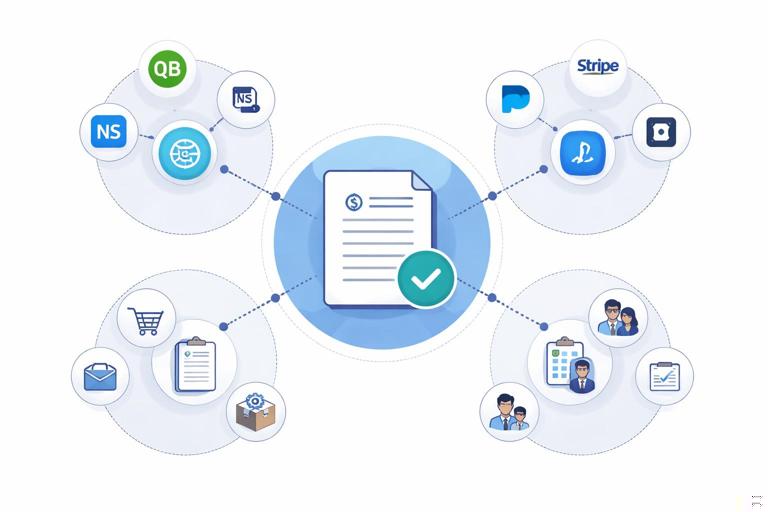
Practical example: If you sell B2B invoicing software, your signal sources might reveal recurring mentions of QuickBooks, NetSuite, Stripe, procurement tools, and fractional CFO firms. Those become distinct partner categories: accounting platforms, payment processors, procurement suites, and service providers.
Step 3: Normalize the List Into Comparable “Partner Profiles”
Create a one-page profile per candidate: target segment, primary buyer, distribution channels, integration capability, partnership programs (if any), and known constraints (e.g., exclusivity, geographic limits). Standardization makes scoring faster and more consistent.
High-Leverage Fit Scoring: A Practical Scorecard
Purpose: A scorecard helps you rank partners by expected impact and feasibility. It also creates alignment across founders, sales, product, and legal by making trade-offs explicit.
Design Principle: Separate “Impact” From “Effort/Risk”
Why: Teams often mix these in conversation (“Big brand, but hard to work with”). A good model scores them separately so you can see whether a partner is high-impact but high-effort, or moderate-impact and low-effort.
Step-by-Step: Build a 100-Point Score
Step 1 — Choose 8–12 criteria: Use criteria that you can reasonably estimate with available data. Below is a practical template you can adapt.
Step 2 — Weight criteria based on your current constraints: If engineering bandwidth is limited, weight integration complexity more heavily. If pipeline is the priority, weight distribution reach and conversion potential.
Step 3 — Define scoring anchors (1, 3, 5): For each criterion, define what “low,” “medium,” and “high” mean so different people score consistently.
Step 4 — Calculate two totals: Impact Score (0–60) and Effort/Risk Score (0–40). Then compute a Leverage Index = Impact ÷ (Effort/Risk + 1) to avoid division by zero and to emphasize efficiency.
Example Scorecard Template (Copy/Paste)
Impact (0–60 total) [Weight] Score (1–5) Notes/Signals Evidence link(s) Confidence (Low/Med/High) Owner Next step Date updated Status Assumptions Risks Mitigations Decision rationale Review date Version Stakeholders Dependencies Alternatives Budget estimate Timeline estimate KPI target Measurement method Data source Baseline Expected uplift Sensitivity analysis Approval needed Legal notes Security notes Integration notes Support plan Enablement plan Co-marketing plan Co-selling plan Partner contact Internal champion Partner champion Mutual action plan Exit criteria Renewal criteria SLA draft Revenue model Attribution model Lead routing Deal registration Conflict policy Territory policy Pricing policy Discount policy Training plan Certification plan Partner portal Reporting cadence QBR plan Escalation path Comms plan Brand guidelines Content calendar Launch checklist Pilot scope Pilot success metrics Pilot duration Pilot budget Pilot owners Pilot risks Pilot mitigations Pilot review date Post-pilot decision Rollout plan Rollout owners Rollout timeline Rollout budget Rollout KPIs Rollout reporting Customer feedback loop Product roadmap impact Engineering estimate QA plan Documentation plan Changelog plan Versioning plan Deprecation plan Data sharing agreement DPA needed? SOC2 needed? Pen test needed? Procurement steps Insurance requirements Indemnity notes Termination clause notes Exclusivity notes Non-compete notes IP notes Confidentiality notes Data retention notes Subprocessor notes International data transfer notes Accessibility notes Localization notes Tax/VAT notes Payment terms Invoicing terms Currency FX risk Collections plan Fraud risk Chargeback risk Regulatory risk Industry-specific risk Reputational risk Competitive risk Cannibalization risk Channel conflict risk Internal capacity risk Opportunity cost Stakeholder alignment score Executive sponsor Decision dateHow to use the template: You do not need every field for every partner. The point is to standardize the “minimum viable diligence” and keep assumptions visible. For early-stage teams, you can simplify to 10–15 fields and expand later.
Recommended Criteria and Weights
Impact criteria (example weights):
- ICP overlap (15): How strongly their customers match your target profile?
- Distribution reach (10): Access to audience via product, email, marketplace, events, or sales team.
- Conversion potential (10): Likelihood that introduced leads convert (based on intent and fit).
- Strategic positioning (10): Does this partner increase trust, credibility, or category leadership?
- Expansion/retention lift (10): Does the partnership increase NRR by improving outcomes?
- Integration value (5): Does an integration materially improve product value?
Effort/Risk criteria (example weights):
- Integration effort (10): Engineering time, maintenance, and support load.
- Operational complexity (10): Lead routing, enablement, reporting, and coordination overhead.
- Partner readiness (10): Do they have a partner manager, program, and willingness to execute?
- Legal/compliance friction (10): Security reviews, data processing agreements, procurement steps.
Scoring Anchors (Make Scores Comparable)
Example anchors for “ICP overlap”:
- 1: Rare overlap; different buyer and segment; joint story unclear.
- 3: Some overlap; adjacent buyer; joint story plausible for a subset.
- 5: Strong overlap; same buyer; joint story obvious and repeatable.
Example anchors for “Integration effort”:
- 1: No integration needed or can be done with existing connectors; low maintenance.
- 3: Moderate API work; 2–6 weeks; some ongoing maintenance.
- 5: Deep integration; 2+ months; high maintenance and support burden.
Important: For effort/risk criteria, higher score means “more effort/risk.” This keeps the math intuitive when you compute leverage.
Confidence Scoring: Preventing False Precision
Problem: Early partner evaluation often relies on incomplete information. A partner may look perfect on paper but fail due to internal politics or lack of execution capacity.
Solution: Add a confidence rating (Low/Medium/High) per criterion or per total score. Then prioritize partners with both high leverage and high confidence, and design “discovery tasks” to raise confidence for promising but uncertain partners.
Discovery Tasks That Increase Confidence Quickly
- Customer validation: Ask 5–10 customers whether they use the partner and whether a joint solution would matter.
- Partner-side validation: A 30-minute call to map their KPIs, current initiatives, and partner process.
- Technical validation: Review API docs, rate limits, auth methods, and webhook support.
- GTM validation: Ask how they route leads, whether they do deal registration, and what enablement assets exist.
From Score to Action: Prioritization and Pipeline Design
Goal: Convert scoring into a clear operating plan: who you contact first, what you propose, and what you will not do yet.
Step 1: Create a 2x2 Map (Impact vs Effort/Risk)
Quadrants:
- High impact / Low effort: Start here. These are your fastest wins and best learning loops.
- High impact / High effort: Pursue selectively with a tightly scoped pilot and executive sponsorship.
- Low impact / Low effort: Keep warm; use for experimentation or opportunistic co-marketing.
- Low impact / High effort: Avoid unless there is a strategic reason (e.g., regulatory necessity).
Step 2: Define “Partner Tiers” With Clear Investment Levels
Example tiering:
- Tier 1 (Strategic): Dedicated owner, integration roadmap, joint pipeline targets, quarterly business reviews.
- Tier 2 (Growth): Standard integration, shared campaigns, monthly check-ins, enablement package.
- Tier 3 (Opportunistic): Lightweight referral agreement, directory listing, occasional webinars.
Why tiers matter: They prevent over-investing in every partner and help you say “not now” while keeping relationships intact.
Step 3: Build a “Minimum Viable Partner Offer” Per Tier
Define what you will offer and what you require:
- Offer: referral fee, co-marketing, integration support, sales enablement, shared case studies.
- Require: named partner champion, lead-sharing process, campaign commitment, timeline, success metrics.
Example: For a Tier 2 SaaS integration partner, your minimum viable offer might be: a co-branded landing page, one webinar, a directory listing, and a standard integration guide. Your requirement might be: one email to their customer base, a sales enablement session, and agreement on lead routing within 48 hours.
Fit Scoring in Practice: Two Worked Examples
Example A: Niche Community Partner (High Leverage Without Big Brand)
Scenario: You sell compliance automation for small healthcare clinics. A niche association runs a paid community and newsletter for clinic administrators.

- Impact: ICP overlap is very high (5/5). Distribution reach is moderate (3/5) but highly targeted. Conversion potential is high because trust is strong and pain is acute.
- Effort/Risk: Integration effort is low (1/5) because this is a content/referral partnership. Operational complexity is low (2/5). Legal is manageable.
Result: High leverage index. Even though the partner is not “big,” the efficiency and trust make it a top priority. Your first pilot could be a workshop + member-only offer with tracked attribution links.
Example B: Large Platform Partner (High Impact, High Effort)
Scenario: You sell an analytics add-on that would integrate deeply with a major ERP platform.
- Impact: Distribution reach is huge (5/5). Strategic positioning is strong (5/5). Integration value is high (5/5).
- Effort/Risk: Integration effort is high (5/5). Legal/compliance friction is high (5/5). Partner readiness may be uncertain if you lack a champion.
Result: This can still be a good bet, but only with a scoped pilot: pick one module, one segment, and one co-selling motion. Add explicit exit criteria (e.g., if no partner champion is assigned by week 4, pause).
Common Pitfalls and How to Avoid Them
Pitfall 1: Scoring Only What’s Easy to Measure
Issue: Teams overweight visible metrics (website traffic, total customers) and ignore harder but critical factors like incentive alignment and operational readiness.
Fix: Include at least two criteria that capture incentives and execution capacity, even if you estimate them initially and refine after discovery calls.
Pitfall 2: Confusing “Integration” With “Partnership”
Issue: Building an integration without a distribution plan often produces little impact.
Fix: Require a GTM plan field in the scorecard: who promotes, how often, and through which channels. If the answer is vague, downgrade impact or confidence.
Pitfall 3: Ignoring Channel Conflict
Issue: A partner may compete with your existing resellers, agencies, or internal sales motion.
Fix: Add a “conflict risk” note and define routing rules early (e.g., deal registration, territory boundaries, and customer ownership).
Pitfall 4: Letting One Executive Intro Override the Model
Issue: Warm intros can push low-fit partners to the top, consuming months.
Fix: Keep a rule: every partner must be scored. Warm intros can accelerate discovery, but they do not replace fit.
Implementation Checklist: Run a Fit Scoring Sprint in 10 Days
Day 1–2: Assemble the Partner Universe
- Create 5–8 partner categories.
- List 50–150 candidates using signal sources (customers, CRM, support, directories).
- Assign an internal owner for each category.
Day 3–4: Build Partner Profiles for the Top 30
- One-page profile per partner (ICP, channels, incentives, integration, constraints).
- Capture evidence links and assumptions.
Day 5–6: Score and Calibrate
- Have 2–3 stakeholders score independently (e.g., partnerships, sales, product).
- Hold a calibration session to align on anchors and adjust weights.
- Compute leverage index and confidence.
Day 7–8: Run Discovery Tasks for the Top 10
- Do 3–5 customer validation calls.
- Do 3–5 partner intro calls focused on incentives and readiness.
- Do a quick technical review if integration is involved.
Day 9–10: Finalize Priorities and Define Pilot Scopes
- Select 3–5 partners for active pursuit.
- Define tier, minimum viable offer, and success metrics.
- Set exit criteria and a 30–60 day pilot timeline.