What “Retelling” and “Paraphrasing” Mean in Speaking Practice

Guided speaking prompts help you turn a story you understood into speech you can produce. In this chapter, you will practice two closely related skills: retelling and paraphrasing. They are different goals with different benefits.
- Retelling: You reproduce the story’s content in your own voice, usually keeping the same sequence of events. You may keep key details (who, where, what happened first/next/last) and you can keep some original wording, but you are speaking from memory rather than reading.
- Paraphrasing: You express the same meaning using different wording or structure. The order can change, details can be compressed or expanded, and you intentionally avoid copying the original phrasing.
Both skills build “speaking flexibility.” Retelling trains you to speak in organized sequences. Paraphrasing trains you to say the same thing in multiple ways, which is essential when you forget a word, want to sound more natural, or need to adjust politeness and tone.
Why Guided Prompts Work (and What They Prevent)
Many learners try to speak by “just talking,” but they get stuck because the task is too open-ended. Guided prompts narrow your choices so you can focus on producing accurate, smooth Korean under manageable constraints.

- They reduce cognitive load: You don’t need to invent content; you only need to express it.
- They create repeatable practice: You can do the same story multiple times with different prompt sets.
- They prevent over-memorization: Paraphrase prompts push you away from copying.
- They reveal gaps: If you can’t paraphrase a sentence, you may not fully control the meaning yet.
In this chapter, you will use prompt ladders: each round changes the constraints slightly so you can move from supported speaking to freer speaking without jumping too fast.
Core Workflow: From Text to Speech Without Reading
Use this workflow with any mini-fiction or short everyday story. The goal is to speak while looking at prompts, not at full sentences.
- Listen to the audio with the screen off.
- Earn a certificate upon completion.
- Over 5000 courses for you to explore!

Download the app
Step 1: Build a “Story Skeleton” (30–60 seconds)
Before speaking, write or say a skeleton using only keywords. Keep it short: characters, setting, problem, turning point, outcome.
- 인물: 누가?
- 장소/상황: 어디서/언제?
- 문제: 뭐가 잘 안 됐어?
- 전환: 어떻게 바뀌었어?
- 결과: 결국 어떻게 됐어?
Example skeleton (keywords only): 아침 / 지하철 / 이어폰 없음 / 당황 / 안내 방송 / 옆 사람 도움 / 도착
Step 2: Choose Your Output Mode (Retell vs Paraphrase)
Decide the round’s goal:
- Retell round: Keep the same order; aim for completeness.
- Paraphrase round: Change wording; aim for flexibility.
Switching goals mid-speech often causes hesitation. Choose one mode per round.
Step 3: Speak in “Chunks,” Not Sentences
Instead of trying to produce perfect long sentences, speak in short chunks that you can connect naturally. A chunk can be a phrase, a clause, or a short sentence. After each chunk, pause briefly and continue.
Chunking makes retelling easier because you can keep moving even if one part feels hard. It also makes paraphrasing easier because you can replace one chunk without rewriting everything.
Step 4: Do Two Passes: “Simple Pass” Then “Detail Pass”
- Simple pass (30–60 seconds): Say only the skeleton with minimal detail.
- Detail pass (60–120 seconds): Add feelings, reasons, small actions, and reactions.
This prevents you from freezing at the beginning because you’re trying to be perfect. You earn fluency first, then add richness.
Prompt Types You Can Reuse for Any Story
Below are prompt types that reliably generate speech. Mix them to create structured practice sessions.
1) Sequence Prompts (Retelling-Friendly)
These prompts keep you on track and protect the story order.
- 처음에 뭐 했어?
- 그다음에 무슨 일이 있었어?
- 그래서 어떻게 됐어?
- 마지막에는 어떻게 끝났어?
Use when you want to practice clear narration and avoid skipping steps.
2) Compression Prompts (Paraphrasing-Friendly)
These prompts force you to shorten and repackage meaning.
- 한 문장으로 요약해 봐.
- 세 문장으로만 말해 봐.
- 핵심만 말하면 뭐야?
- 디테일 빼고 상황만 설명해 봐.
Compression is a powerful paraphrase tool: you must choose different wording because you cannot keep everything.
3) Expansion Prompts (Detail Control)
These prompts help you add natural elaboration without losing structure.
- 왜 그렇게 했을까?
- 그때 기분이 어땠을까?
- 주변 사람들은 어떻게 반응했어?
- 어떤 작은 행동이 있었어? (예: 확인하다, 찾다, 기다리다)
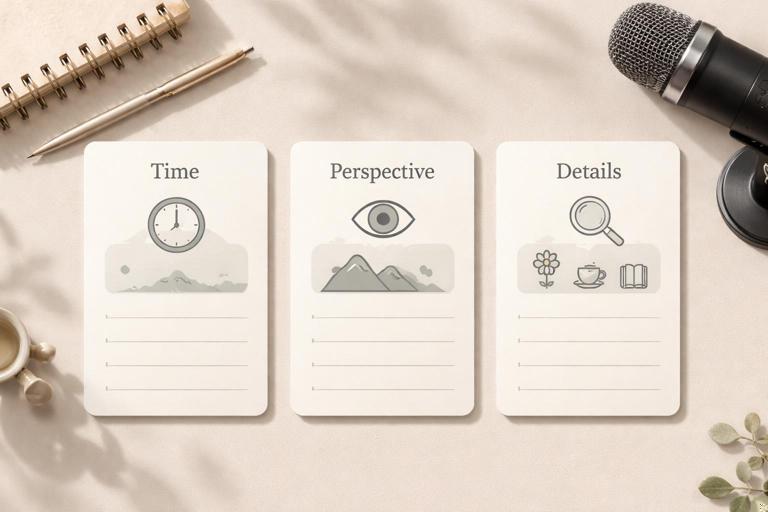
4) Perspective Prompts (Voice and Role Shifts)
Changing perspective is paraphrasing at the discourse level. The meaning stays, but the viewpoint changes.
- 주인공 입장에서 말해 봐.
- 친구에게 말하듯이 말해 봐.
- 상담사에게 설명하듯이 말해 봐.
- 옆 사람(조연) 입장에서 말해 봐.
Perspective prompts also train you to adjust formality and emotional tone without changing the core events.
5) Cause–Effect Prompts (Logic and Coherence)
These prompts make you express relationships between events. They are excellent for paraphrasing because you can change how you express the link while keeping meaning.
- 왜 그런 일이 생겼어?
- 그 일 때문에 뭐가 달라졌어?
- 만약 그때 그렇게 안 했으면 어떻게 됐을까?
- 결국 얻은 교훈/깨달음이 있어?
6) “Avoid These Words” Prompts (True Paraphrase Pressure)
To paraphrase, you sometimes need a constraint that prevents copying. Choose 2–4 key words from the original story and ban them for one round.
Example: 금지 단어: 당황하다, 찾다, 늦다
Now you must express the same ideas differently (e.g., “마음이 급해졌다,” “여기저기 확인했다,” “시간이 촉박했다”).
Practical Prompt Ladder: One Story, Five Speaking Rounds
Below is a complete practice ladder you can apply to any mini-fiction. You will see prompts and sample outputs. Use the sample outputs as models, but do not memorize them; your goal is to generate your own version.
Round 1 (Retell): 5W1H Skeleton Retell
Prompts
- 누가 나와?
- 어디서 일어나?
- 무슨 문제가 생겨?
- 어떻게 해결해?
- 결과가 뭐야?
Sample output (short)
오늘 아침에 지하철에서 어떤 사람이 이어폰을 안 가져온 걸 깨달았어요. 그래서 음악을 못 듣고 좀 불편했죠. 그런데 안내 방송을 듣다가 옆 사람에게 잠깐 물어봐서 상황을 확인했어요. 결국 큰 문제는 아니었고, 그냥 조용히 가면서 생각을 정리했어요.
Round 2 (Retell): Timeline Retell With Time Anchors
Prompts
- 출발하기 전에는?
- 지하철 타자마자?
- 중간에 어떤 일이 있었어?
- 도착하기 직전에는?
Sample output (more structured)
집에서 나올 때는 그냥 평소처럼 준비했어요. 지하철을 타자마자 이어폰이 없다는 걸 알았고, 순간 좀 아쉬웠어요. 중간에는 안내 방송이 들렸는데, 제가 잘 못 알아들어서 옆 사람에게 조심스럽게 물어봤어요. 도착하기 직전에는 마음이 좀 편해졌고, 오늘은 조용히 가는 것도 괜찮다고 생각했어요.
Round 3 (Paraphrase): Three-Sentence Compression
Prompts
- 세 문장으로만 말해.
- 디테일은 빼고 핵심만.
- 마지막 문장은 결과/느낌으로.
Sample output (compressed)
아침에 이동하는데 준비가 하나 빠진 걸 알아차렸어요. 그래서 평소처럼 못 하고 주변 소리를 더 신경 쓰게 됐죠. 대신 조용히 가면서 생각을 정리할 수 있어서 나쁘지 않았어요.
Round 4 (Paraphrase): Perspective Shift (Friend vs Formal)
Prompts
- 친구에게 카톡하듯이 말해 봐.
- 같은 내용을 회사에 보고하듯이 말해 봐.
Sample output A (casual)
나 오늘 지하철 타고 가는데 이어폰을 안 챙긴 거 있지. 그래서 그냥 멍하니 가다가 안내 방송도 잘 안 들려서 옆 사람한테 살짝 물어봤어. 근데 오히려 조용하니까 생각 정리돼서 괜찮더라.
Sample output B (more formal)
금일 출근 이동 중 개인 소지품을 미처 준비하지 못해 평소와 다른 방식으로 이동했습니다. 안내 방송을 정확히 확인하기 위해 주변 승객에게 간단히 문의했고, 이동에는 지장이 없었습니다. 결과적으로 조용한 환경에서 일정과 생각을 정리할 수 있었습니다.
Notice how the meaning stays similar, but the wording and tone change significantly.
Round 5 (Paraphrase): “Avoid These Words” Challenge
Prompts
- 금지 단어 3개를 정해.
- 그 단어 없이 같은 내용을 말해.
- 멈추면 안 되고, 다른 표현으로 우회해.
Example banned words: 이어폰, 안내 방송, 물어보다
Sample output (forced paraphrase)
아침에 이동할 때 음악 듣는 걸 못 하게 돼서 좀 허전했어요. 그리고 열차 안에서 나오는 공지 내용을 제가 정확히 못 알아들어서, 옆에 있던 사람에게 잠깐 확인을 부탁했죠. 결국 별일은 없었고, 조용히 가면서 머릿속을 정리했어요.
This round is uncomfortable in a good way: it trains you to keep speaking even when your preferred word is blocked.
Retelling Prompts: Ready-to-Use Sets
Use these sets when you want stable structure and fewer surprises. Choose one set per session.
Set A: Basic Narrative Track
- 상황이 뭐였어?
- 문제가 뭐였어?
- 주인공이 뭘 했어?
- 그 결과가 어땠어?
- 한 가지 디테일을 더 말해 봐.
Set B: Emotion-Action Track
- 처음 기분은 어땠어?
- 그 기분 때문에 어떤 행동을 했어?
- 중간에 기분이 바뀐 순간이 있어?
- 마지막 기분은 어때?
Set C: Problem-Solving Track
- 문제의 원인이 뭐야?
- 가능한 해결책이 뭐였어? (2개)
- 왜 그 방법을 선택했어?
- 해결이 잘 됐어?
Paraphrasing Prompts: Ready-to-Use Sets
Use these when you want to break dependence on the original wording.
Set D: Synonym and Repackaging Track
- 같은 뜻을 다른 말로 바꿔 봐. (2개 표현)
- 한 문장을 두 문장으로 나눠 봐.
- 두 문장을 한 문장으로 합쳐 봐.
- 같은 내용을 더 부드럽게 말해 봐.
Set E: Register and Politeness Track
- 친한 친구에게 말하듯이.
- 처음 만난 사람에게 말하듯이.
- 고객센터에 설명하듯이.
- 아주 짧게, 예의 있게.
Set F: Meaning-Preserving Transformations
- 원인부터 말해 봐, 결과는 나중에.
- 결과부터 말해 봐, 이유는 나중에.
- 주인공이 아니라 상황 중심으로 말해 봐.
- 감정을 빼고 사실만 말해 봐.
These transformations are “paraphrase engines”: they force you to reorganize information while keeping meaning.
Self-Checking: How to Know If You Retold or Paraphrased Successfully
After each round, do a quick check. Keep it simple and objective.
Retelling Check (Accuracy + Order)
- 핵심 사건 3개를 빠뜨렸나?
- 순서가 크게 바뀌었나?
- 누가/어디서/무슨 일이었는지 들리나?
Paraphrase Check (Meaning + Difference)
- 의미가 원래와 같나? (사실이 바뀌지 않았나?)
- 표현이 충분히 달라졌나? (같은 문장을 그대로 말하지 않았나?)
- 막힌 부분에서 우회 표현을 썼나?
If you changed meaning by accident, that is not failure; it is feedback. Identify which detail drifted (time, cause, emotion, outcome) and redo one more round focusing on that detail.
Common Problems and Targeted Fix Prompts
Problem 1: You Freeze Mid-Sentence
Fix: Switch to micro-prompts that allow chunking.
- 지금 말한 걸 한 번 끊어서 다시.
- “그래서” 다음에 한 덩어리만 말해.
- 동사 하나로만 말해 봐. (예: 확인하다/기다리다/포기하다)
Problem 2: You Copy the Original Too Closely
Fix: Add constraints that force novelty.
- 금지 단어 3개.
- 한 문장 길이를 절반으로.
- 주어를 바꿔서 말해. (나는 → 그 사람은 / 우리는)
Problem 3: You Lose the Plot When Paraphrasing
Fix: Anchor with a skeleton and “must-keep facts.”
- 절대 바꾸면 안 되는 사실 3개를 먼저 말해.
- 그 사실을 포함해서 다시 말해.
- 마지막에 결과를 꼭 넣어.
Problem 4: Your Speech Sounds Like a List
Fix: Add one “reason” and one “feeling” per retell.
- 왜냐하면… 한 번만 넣어.
- 기분 표현을 한 번만 넣어.
- 반응(상대/내 반응)을 한 번만 넣어.
This keeps your narration from becoming mechanical while still staying guided.
Mini Practice Scripts: Prompt-Only Cards (No Full Sentences)
Copy these “prompt cards” into notes. Use them while speaking. They are designed to work with any everyday mini-fiction.
Card 1: 60-Second Retell
- 언제/어디
- 누가
- 문제
- 행동 1
- 행동 2
- 결과
- 느낌 한 마디
Card 2: 90-Second Paraphrase
- 세 문장 요약
- 다른 관점(친구/공식)
- 금지 단어 2개
- 원인→결과 순서 바꾸기
Card 3: Detail Control
- 디테일 2개 추가 (행동/주변)
- 디테일 2개 삭제 (장소/시간)
- 감정 강도 조절 (약하게/강하게)
These cards keep your practice focused: you are not “chatting,” you are training specific speaking abilities—organized retelling and meaning-preserving paraphrasing—through reusable prompt structures.