Why Conflict Happens in Partnerships (and Why It’s Not a Failure)
Conflict in strategic alliances is normal because partnerships combine different incentives, timelines, cultures, and constraints under one shared outcome. A partner may optimize for brand safety while you optimize for speed; they may be measured on quarterly pipeline while you are measured on retention; they may have legal or security constraints that slow decisions. Conflict becomes damaging only when it is unmanaged: when assumptions stay unspoken, when small disappointments accumulate, or when people personalize what is actually a structural mismatch.
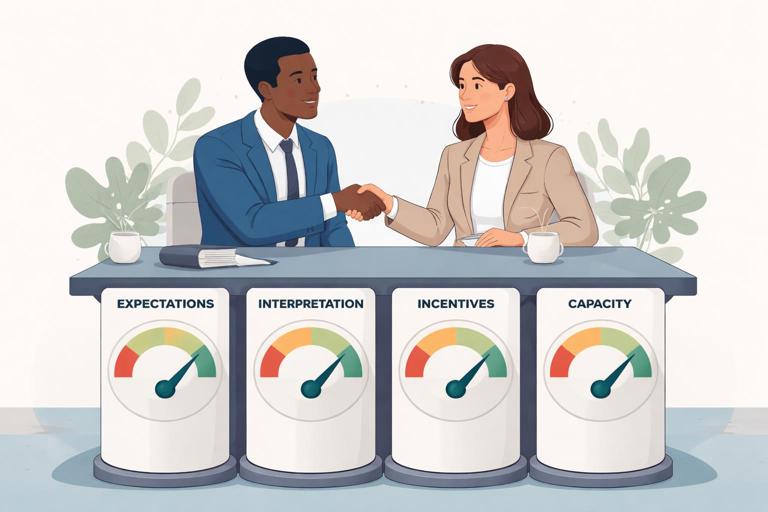
A useful framing is to treat conflict as a signal that one of four things is misaligned: expectations (what each side thought would happen), interpretation (how each side reads the same facts), incentives (what each side is rewarded for), or capacity (what each side can realistically deliver right now). Your job in conflict resolution is to identify which category is driving the tension, then choose the lightest-weight intervention that restores trust and forward motion.
Types of Partnership Conflict You’ll See in the Real World
1) Performance and delivery disputes
Examples include missed lead volumes, low conversion rates, delayed launches, poor enablement, or “we did our part” arguments. These often arise when each side tracks different metrics or when the operational reality changed after the agreement.
2) Scope creep and ownership ambiguity
Common symptoms: duplicated work, tasks falling through the cracks, or one side feeling they are doing “all the heavy lifting.” This is often less about effort and more about unclear decision rights and unclear definitions of “done.”
3) Commercial tension
Examples include disputes over pricing exceptions, discounting, revenue share calculations, payment timing, or who “owns” an account. These conflicts tend to escalate quickly because money is a proxy for fairness and respect.
- Listen to the audio with the screen off.
- Earn a certificate upon completion.
- Over 5000 courses for you to explore!

Download the app
4) Relationship and communication breakdown
Symptoms include slow responses, defensive tone, meeting avoidance, and escalation to executives without warning. These conflicts are often triggered by earlier operational issues that were never fully processed.
5) Strategic drift
One company changes priorities, reorganizes, or shifts target segments. The partnership that once made sense now feels like a distraction. This is where renegotiation becomes a strategic necessity, not a concession.
A Conflict Resolution Operating System (Before You Jump to Renegotiation)
Step 1: Stabilize the situation and reduce heat
When conflict spikes, your first goal is to stop further damage. Pause contentious threads, avoid blame in writing, and move to a synchronous conversation. Use a short message like: “I think we’re misaligned on expectations and it’s creating friction. Can we do a 30-minute reset call to align on facts and options?” This signals seriousness without accusation.
Step 2: Separate facts, stories, and impacts
In the reset call, explicitly separate: facts (observable events), stories (interpretations), and impacts (business consequences). For example: Fact: “The webinar happened on Oct 10 and produced 120 signups.” Story: “You didn’t promote it enough.” Impact: “We missed our Q4 pipeline target and now leadership questions the channel.” This structure prevents the conversation from getting stuck in accusations.
Step 3: Identify the conflict type and root cause
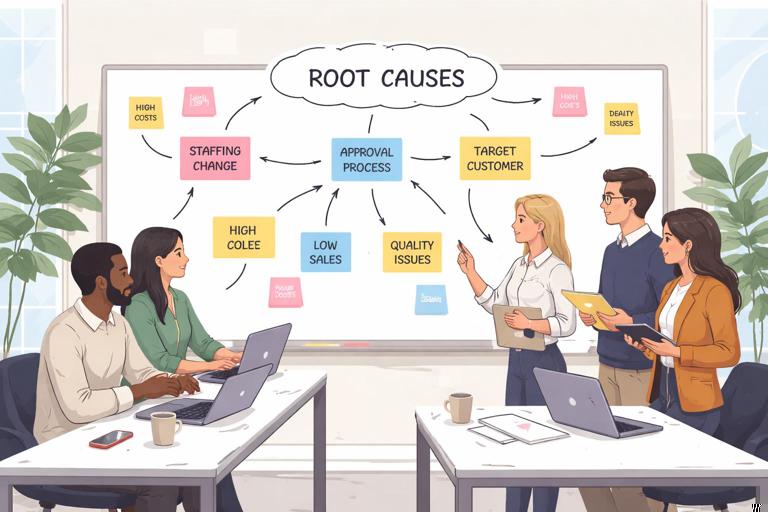
Ask diagnostic questions to locate the real driver: “What did you expect would happen?” “What constraints are you operating under right now?” “What does success look like for you this quarter?” “Where did we first notice slippage?” Many partnership conflicts are downstream of a single root cause like a staffing change, a new approval process, or a misread of the target customer.
Step 4: Choose the smallest fix that restores momentum
Not every conflict requires contract changes. Often the right fix is operational: a revised timeline, a clarified handoff, a new owner, a narrower scope, or a temporary pause. Renegotiation should be reserved for issues that are structural (incentives, economics, rights, obligations, or long-term scope).
Step 5: Document the reset in a “one-page alignment note”
After the call, send a short written recap: what we agreed happened, what we’re changing, who owns what, and when we’ll review. This reduces memory drift and prevents the conflict from resurfacing as “he said, she said.”
Practical Script: The 30-Minute Partnership Reset Call
Use a consistent agenda to make difficult conversations feel routine and safe. Here is a practical structure you can reuse.
- 5 minutes: Shared goal — “We both want this partnership to be successful and low-friction. Let’s align on what’s working and what’s not.”
- 10 minutes: Facts only — Each side lists 3–5 facts without interpretation. If someone adds a story, park it and return to facts.
- 10 minutes: Impacts and constraints — “Here’s how this affected our team,” and “Here are the constraints we’re under.”
- 5 minutes: Options and next steps — Choose one operational change to test immediately and schedule a follow-up checkpoint.
Keep the tone neutral, and explicitly reward candor: “Thanks for being direct; it helps us fix this faster.”
When to Renegotiate (and When Not To)
Renegotiation is appropriate when the current agreement no longer reflects reality in a way that creates recurring conflict. Typical triggers include: a major change in product capabilities, a shift in go-to-market focus, a new compliance requirement, a change in pricing model, or repeated disputes about economics or account ownership. Renegotiation is not appropriate when the issue is primarily execution (missed deadlines, poor follow-through) unless execution problems are caused by unrealistic obligations in the agreement.
A simple test: if you fixed communication and clarified responsibilities, would the problem disappear? If yes, you likely need operational repair. If no, you likely need renegotiation.
Renegotiation Step-by-Step: A Structured Approach That Preserves Trust
Step 1: Prepare a “change narrative” that is about reality, not leverage
Renegotiation fails when it feels like a power play. Start with a narrative grounded in changed conditions: “Since signing, our customer segment shifted,” or “Security requirements changed,” or “The integration effort is larger than expected.” Avoid framing like “We need better terms” without context.
Step 2: Define your must-haves, nice-to-haves, and tradeables
Write three lists: non-negotiables (what must change to make the partnership viable), preferences (what would improve it), and tradeables (what you can offer). Tradeables might include expanded co-marketing, faster support, better enablement, a limited-time incentive, or a narrower exclusivity boundary. This prevents you from improvising under pressure.
Step 3: Propose options, not demands
Bring 2–3 packages that solve the root problem in different ways. For example, if the conflict is about low partner-sourced revenue, options could include: (A) narrowing scope to the segment where you convert best, (B) adjusting economics for a defined period, or (C) shifting from revenue share to a fixed referral fee for simplicity. Options reduce defensiveness and increase the chance of agreement.
Step 4: Use objective anchors
Anchor the discussion in observable data: support ticket volume, sales cycle length, conversion rates, implementation hours, or compliance requirements. Objective anchors make renegotiation feel like engineering, not arguing.
Step 5: Agree on a transition plan
Renegotiation should include how you move from old to new terms: what happens to in-flight deals, how existing customers are treated, and what communications go out to internal teams. Many conflicts reignite during transitions because people keep operating under the old assumptions.
Step 6: Capture the agreement in plain language first
Before legal redlines, write a plain-language summary: scope, economics, responsibilities, timelines, and escalation path. This reduces legal churn and ensures both business teams agree on intent.
De-Escalation and Repair: How to Rebuild Trust After a Blow-Up
Relationship repair is not about being “nice”; it is about restoring predictability. Partners trust you when your actions match your words, when you surface problems early, and when you handle tension without surprises. After a blow-up (angry email thread, missed commitment, public blame, or executive escalation), you need a deliberate repair sequence.
Step 1: Acknowledge the impact without litigating every detail
Use language that validates the experience: “I see how this created extra work for your team,” or “I understand why this felt like a last-minute change.” Avoid “I’m sorry you feel that way,” which sounds dismissive. You can acknowledge impact even if you disagree on fault.
Step 2: Take ownership of your side of the system
Ownership does not require admitting everything was your fault. It means naming what you will change: “We should have flagged the risk earlier,” “We didn’t provide enough lead time,” or “We didn’t assign a single accountable owner.” This shifts the conversation from blame to prevention.
Step 3: Offer a concrete make-good
A make-good is a specific action that reduces the partner’s pain. Examples: dedicating a solutions engineer for two weeks, prioritizing a bug fix, funding a joint campaign asset, or providing executive air cover internally. The make-good should be proportional and time-bound, not an open-ended concession.
Step 4: Reset working norms
Agree on new norms that prevent recurrence: response time expectations, how to raise risks, what requires written confirmation, and how to handle last-minute changes. Norms are the “guardrails” that keep emotions from becoming the operating system.
Step 5: Rebuild with small wins
After trust is damaged, don’t immediately attempt a huge launch. Choose a small, low-risk initiative that can succeed quickly and visibly. Consistent delivery is what repairs credibility.

Handling Account Ownership and “Channel Conflict” Without Burning the Relationship
Few issues create more friction than who owns an account, especially when direct sales teams and partner teams both touch the same customer. When this conflict appears, treat it as a process problem, not a morality play.
Step-by-step triage for an account dispute
- Step 1: Freeze aggressive actions — Pause outreach that could embarrass the other party (duplicate emails, competing proposals) while you align.
- Step 2: Establish a timeline of touches — Who introduced whom, when, and what was said? Focus on verifiable events.
- Step 3: Identify the customer’s preference — If appropriate, ask the customer how they want to buy and who they want involved. Customer preference can be an objective anchor.
- Step 4: Choose a fair split mechanism — Options include: primary/secondary roles, split credit, or a one-time exception with a documented precedent.
- Step 5: Update the rulebook — Document the decision and add a rule to prevent repeats (for example, registration windows, minimum info required, or “first meaningful meeting” definitions).
Even if you “win” an account dispute, you can lose the partnership. Optimize for a repeatable rule that both sides can defend internally.
Repairing Internal Relationships: Your Team vs. Your Partner
Partnership conflict often spills inward: sales complains that partner leads are low quality, product complains about integration demands, support complains about escalations, finance complains about messy payouts. If you only manage the external relationship, you will eventually lose internal support and the partnership will die quietly.
Step-by-step internal repair
- Step 1: Translate partner issues into internal language — For example, “They are slow” becomes “Their security review adds 3–4 weeks; we need to adjust timelines.”
- Step 2: Create a single source of truth — A short internal brief: current status, risks, decisions needed, and who owns what. This reduces hallway narratives.
- Step 3: Protect your teams from surprise work — If the partner asks for something new, route it through a clear intake and prioritization process rather than “just get it done.”
- Step 4: Give credit publicly, address issues privately — Praise internal teams for partner wins; handle partner frustrations in smaller groups to avoid reputational damage.
Escalation Without Drama: A Clean Path for Tough Moments
Escalation is not a threat; it is a tool to unblock decisions and reset priorities. It becomes toxic when it is used as punishment or surprise. A healthy escalation path is transparent and predictable.
Step-by-step escalation protocol
- Step 1: Signal early — “If we can’t resolve this by Friday, I suggest we bring in our exec sponsors to decide.”
- Step 2: Escalate with a decision memo — One page: background, facts, options, recommendation, and the decision needed.
- Step 3: Keep the meeting about decisions, not blame — Executives should choose between options, not re-argue history.
- Step 4: Communicate the decision and operationalize it — Assign owners, timelines, and how you’ll measure whether the decision worked.
When escalation is clean, it can actually increase trust because it shows you can handle conflict professionally.
Hard Conversations Toolkit: Phrases That Reduce Defensiveness
In partnerships, phrasing matters because you are negotiating reality while preserving the relationship. Use language that is specific, non-accusatory, and oriented toward joint problem-solving.
- To surface misalignment: “I think we’re operating from different assumptions. Can we compare notes on what each side expected?”
- To address missed commitments: “We planned for X by Y. It didn’t happen. What changed, and what do we need to adjust?”
- To request renegotiation: “Given what’s changed since we signed, I think the current terms create friction for both teams. Can we revisit scope and economics so execution is smoother?”
- To de-personalize: “I don’t think this is about effort; I think it’s about the system we set up.”
- To close a conflict loop: “What would ‘resolved’ look like to you, in practical terms?”
Case Example: From Blame to Renegotiated Scope
Imagine a SaaS company and a services partner agreed to jointly sell into mid-market. After two months, the SaaS team complains that the partner sends unqualified leads; the partner complains that the SaaS sales team ignores referrals and discounts direct deals. Tension escalates via email, and the partner threatens to deprioritize the alliance.
Using the reset call, both sides list facts: the partner sent 18 referrals, only 6 were contacted within 48 hours, and only 2 reached proposal. The SaaS team shares that the referrals lacked required technical context, causing delays. The partner shares they lost a key pre-sales resource and can’t do deep qualification anymore. Root cause: capacity change on the partner side and unclear minimum referral requirements on the SaaS side.
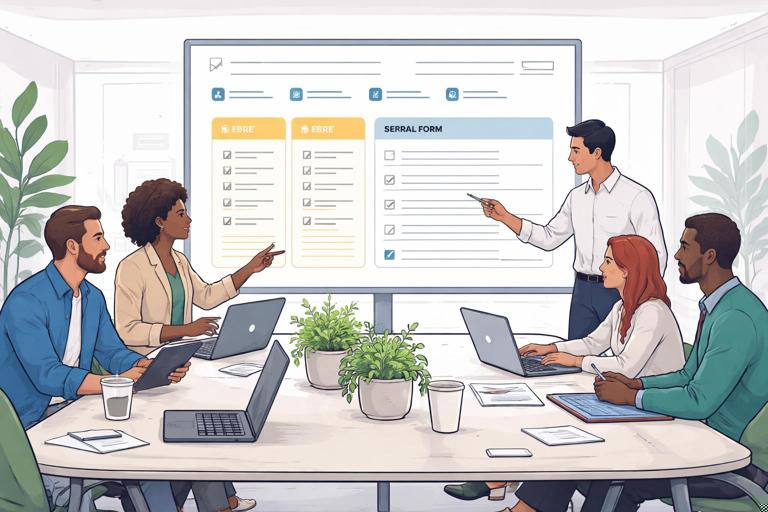
Instead of arguing about effort, they renegotiate scope: the partner will focus only on two verticals where they have strong discovery capability, and the SaaS company will provide a lightweight qualification form and a dedicated SDR queue for partner referrals. They also agree on a temporary make-good: the SaaS team runs a joint enablement session for the partner’s new pre-sales hire. The conflict resolves because the new agreement matches reality and reduces repeated friction.
Case Example: Relationship Repair After a Public Escalation
Consider a platform partnership where an integration launch date slipped twice. The partner’s marketing team publicly blamed your company in an internal channel that your team later saw. Your product team becomes hostile and refuses to prioritize partner requests.
Repair starts with acknowledging impact: you tell the partner, “The public blame created internal resistance on our side, and it also wasn’t fair to your team to be left without clear updates.” You take ownership: “We didn’t flag the dependency risk early enough.” You offer a make-good: a two-week dedicated engineering window with a shared daily checkpoint. Then you reset norms: no public blame, risks raised within 24 hours, and launch dates only announced after a joint readiness check. Trust rebuilds through small wins: a minor feature ships on time, then the full integration relaunch proceeds with tighter coordination.