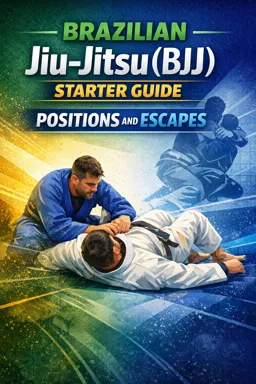
Back Escapes: A Pathway That Starts With the Neck
Escaping back control is less about a sudden spin and more about winning a slow, continuous hand fight while you make your body “hard to choke.” Your priorities stay in this order: (1) protect the neck, (2) choose the correct side based on the opponent’s leg control, (3) bring your shoulders to the mat, (4) turn into them to recover guard or half guard. If you skip step (1), every movement becomes a chance for them to finish the choke.
Key idea: “Two hands beat one hand” (and your chin is not a hand)
Beginners often try to survive by tucking the chin. Chokes still work through the jaw and face, and the discomfort makes you panic. Instead, treat the choking arm like a seatbelt you must manage with your hands: one hand controls the choking wrist/hand, the other clears the forearm and rebuilds your neck position.
- Slow hand fighting: constant small adjustments to keep the choking hand from connecting.
- Neck re-hiding: once you clear space, put your head back into a safe position (chin slightly down, head aligned, shoulders engaged) so the neck is not exposed again.
- No explosive turns: fast spins often open the neck and give them a tighter angle.
(1) Immediate Choke Defense Sequence
This sequence is your “reset button.” Do it first, even if you think you can escape quickly.
Step-by-step: control the choking hand/wrist, clear forearm, re-hide the neck
- Identify the choking arm. If they have a seatbelt grip, the choking arm is the one that will go across your neck (their forearm near your throat).
- Two-on-one the choking hand/wrist. Bring both hands to their choking-side wrist/hand. Your goal is to stop the hand from sliding deeper behind your head. Keep your elbows tight to your ribs so they can’t peel your grip easily.
- Clear the forearm off your neck line. While maintaining wrist control, use your other hand (or your forearm) to “swim” inside and push their forearm down toward your chest. Think: move the forearm away from the neck, not just the hand.
- Re-hide the neck. Once the forearm is no longer cutting across your neck, bring your head back to neutral alignment and keep your shoulders active. Do not lift your chin high; keep your head heavy and your neck protected behind your shoulder line.
- Keep the hand fight alive. Do not let go to start moving your hips until you feel the choke threat is reduced. If they re-attack, you repeat the sequence.
Practical cues
- Wrist control beats biceps control when you’re late. If you grab higher on the arm, their hand can still sneak behind your head.
- Hands in front of your collarbones. If your hands drift away from your neck line, you’re giving them space to reconnect.
- Breathing check: if you can breathe calmly, your defense is working; if breathing becomes strained, return to two-on-one and clear again.
(2) Hooks vs. Body Triangle: Choosing the Safe Side
Your escape direction depends on how their legs are controlling you. Choosing the wrong side makes it harder to get your shoulders to the mat and can increase choke pressure.
When they have hooks (both feet inside your thighs)
With hooks, you generally choose the side that makes it easiest to pin one of their legs and slide your hips away. A common beginner-friendly rule: escape toward the side where you can trap their top hook (the hook that is higher on your hip line), because it reduces their ability to follow your hip movement.
- Listen to the audio with the screen off.
- Earn a certificate upon completion.
- Over 5000 courses for you to explore!

Download the app
- Goal: make one of their hooks “dead” by trapping it with your leg/hip position before you start scooting.
- Why: if both hooks stay active, they can keep you centered and re-seat you as you move.
When they have a body triangle (their legs locked around your waist)
With a body triangle, side selection matters more. You typically want to go to the side of the locked triangle so you are not turning into the pressure of their lock.
- Safe side selection: move your shoulders toward the side where their locking foot/ankle is “weaker” and their squeeze is less effective (usually the side of the lock rather than the free-knee side).
- Why: turning the wrong way can tighten the triangle and make your breathing and hip movement worse.
- Important: do not try to pry the body triangle open with your hands. Keep hands for choke defense; use hip angle and shoulder-to-mat mechanics to reduce their control.
| Opponent leg control | Primary objective | Side choice guideline |
|---|---|---|
| Hooks | Kill one hook, then scoot | Go toward the side where you can trap/flatten a hook |
| Body triangle | Reduce squeeze, get shoulders down | Go toward the lock side to avoid tightening pressure |
(3) Hip Scoot + Shoulder-to-Mat: Bringing Your Back to the Floor
Once the choke threat is managed, your next job is to take away their “back angle.” You do that by getting one shoulder to the mat and scooting your hips away so they can’t stay glued behind you.
Mechanics: shoulder first, hips second (but hands never stop)
- Pick your escape side (based on hooks/body triangle).
- Drop the escape-side shoulder toward the mat. Imagine you’re trying to put that shoulder blade on the floor. This starts turning your back control into a more side-on position.
- Hip scoot away in small increments. Use your feet to push and slide your hips away from their hooks/triangle. Think “inch-worm” movement: small scoots while your hands keep controlling the choking wrist.
- Keep your head tight to the mat line. Don’t let your head pop up; that often exposes the neck and lets them re-seat the back.
- Repeat: hand fight → shoulder down → scoot. This loop is safer than trying to do everything at once.
What it should feel like
- Your escape-side shoulder gets heavier on the mat over time.
- The opponent’s chest starts sliding from directly behind you to more beside you.
- Their hooks feel less “sticky” because your hips are no longer centered between their knees.
(4) Turn Into Them to Recover Guard or Half Guard
Once your shoulders are close to the mat and their back angle is weakened, you can turn into them. The goal is not to “win a scramble,” but to arrive in a stable defensive position: half guard or full guard.
Step-by-step: turning into guard (beginner pathway)
- Confirm the choke is still controlled. Keep at least one hand on the choking wrist/hand as you begin the turn.
- Bring your top knee inside. As you turn toward them, slide your top knee between your bodies. This knee is your wedge that prevents them from re-attaching to your back.
- Choose half guard first if unsure. Catch one of their legs with your legs as you turn. Half guard is often the easiest “landing” because it stops them from circling back behind you.
- Upgrade to full guard if it’s available. If their leg is light and your hips are free, bring your bottom leg through and connect your legs around their waist.
- Only then release the hand fight. Once you have a guard structure (half or full), you can transition your grips to more standard guard controls.
Common beginner mistake
Turning too early. If you turn into them while your shoulders are still off the mat and the choking hand is free, you often give them a tighter choke angle or allow them to re-seat the back as you rotate.
(5) Troubleshooting: Common Reactions and How to Respond
Problem A: They switch choking sides during your escape
As you scoot and drop a shoulder, the opponent may change the seatbelt orientation to keep the choking arm in position.
- Response: do not chase their whole body. Chase the choking wrist/hand with two hands again.
- Reset sequence: two-on-one → clear forearm → re-hide neck → resume shoulder-to-mat and scoot.
- Key cue: if you feel the forearm climbing back to your neck, pause your hip movement and win the hand fight first.
Problem B: They climb to “high back” (chest higher on your shoulders)
When they climb high, their choking arm gets a better angle and your hip scoot may feel stuck.
- Response: make your shoulders heavy and slide down slightly.
- How: keep controlling the choking wrist, then focus on putting your upper back/shoulders toward the mat and subtly “shrugging” your shoulders down to deny them height.
- Do not: reach overhead to peel grips; reaching often exposes the neck and separates your elbows from your ribs.
Problem C: They threaten an armbar as you defend the choke
Some opponents will attack the arm you’re using to defend (especially if your elbow drifts away from your body).
- Response: keep elbows tight and hands connected to your neck line.
- Immediate fix: if you feel your arm being isolated, bring your elbow back to your ribs and return to a two-on-one on the choking wrist with compact arms.
- Movement rule: continue the escape with small scoots; big turns with a separated elbow can feed the armbar.
Problem D: Your hip scoot isn’t moving them (they feel glued on)
- Check 1: are you trying to scoot before your shoulder is dropping? Put the escape-side shoulder closer to the mat first.
- Check 2: are both hooks still active? Re-focus on trapping/flattening one hook with your hip angle and leg position.
- Check 3: are you pausing the hand fight? If the choke threat returns, your body tenses and your hips stop moving. Reset the defense sequence and then continue.
Problem E: You turn in, but they start circling back to your back
- Response: prioritize inserting your knee wedge sooner.
- Detail: as you turn, your top knee must come between you and them before you try to square up fully. If your knee is late, they can re-attach behind your hips.
- Safer landing: accept half guard first (catch a leg) rather than chasing full guard while they’re still mobile.
Training Drill: Slow Continuous Escape Loop (No Explosive Turns)
Use this as a beginner drill with a cooperative partner, then gradually add resistance.
- Partner starts with back control and a light seatbelt (no full choke).
- Defender performs: two-on-one on choking wrist → clear forearm → re-hide neck.
- Defender chooses side (hooks vs body triangle), then: shoulder-to-mat → small hip scoot.
- Repeat the loop 3–5 times before attempting the turn-in.
- Finish by inserting the knee wedge and recovering half guard.
Focus metric: your hands should be working the entire time, and your turns should feel like controlled rotations rather than sudden spins.