Three Practical Lenses for Everyday Astrology
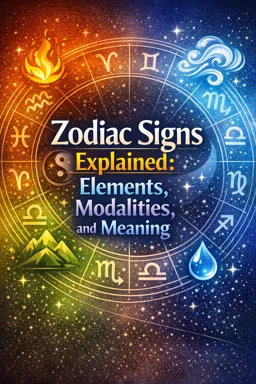
This chapter turns what you already know about elements and modalities into three usable lenses for real interactions: communication, decisions, and relationships. Instead of trying to “type” people, you’ll practice noticing patterns and choosing responses that reduce friction.
| Lens | What you observe | What you adjust |
|---|---|---|
| Communication | Direct vs indirect; fast vs measured; concrete vs abstract | Format, pacing, level of detail, tone |
| Decisions | Instinct, values, logic, feelings | What evidence you bring; how you frame options |
| Relationships | Space vs closeness; consistency vs variety | Boundaries, rituals, novelty, reassurance |
How to Use the Lenses (Step-by-Step)
- Name the context: Is this a quick coordination moment, a conflict, or a long-term planning talk?
- Pick the lens you need most right now (communication, decisions, or relationships).
- Choose an element strategy (Fire/Earth/Air/Water) to match the person’s core needs in that moment.
- Choose a modality strategy (Cardinal/Fixed/Mutable) to match their momentum style.
- Make one adjustment (pacing, structure, emotional validation, or options) and watch what changes.
Actionable Strategies by Element
Fire: Communication, Decisions, Relationships
Communication pattern to work with: tends toward direct, fast, and action-oriented. Fire often prefers the “headline” first and the “why” second.
- Do: lead with the point, then offer a clear next step.
- Avoid: burying the ask under too much preface or ambiguity.
Decision pattern to work with: instinct and momentum. Fire decides best when there is a clear challenge, purpose, or payoff.
- Do: present 2–3 options with visible outcomes and a time box.
- Avoid: endless deliberation without a decision date.
Relationship pattern to work with: needs freedom plus enthusiasm. Fire bonds through shared experiences and forward motion.
- Do: plan adventures, celebrate wins, keep the relationship “moving.”
- Avoid: using closeness as control (e.g., guilt for needing space).
Micro-script: “Here’s the main thing. I’m proposing X by Friday. If you prefer Y, tell me today.”
- Listen to the audio with the screen off.
- Earn a certificate upon completion.
- Over 5000 courses for you to explore!

Download the app
Earth: Communication, Decisions, Relationships
Communication pattern to work with: measured, concrete, and detail-aware. Earth often wants specifics: what, when, cost, and responsibilities.
- Do: provide structure (agenda, bullet points, timelines).
- Avoid: vague promises or changing plans without notice.
Decision pattern to work with: values + practicality. Earth decides best with evidence, feasibility, and risk management.
- Do: bring constraints, resources, and a realistic plan.
- Avoid: pressuring for a fast yes without due diligence.
Relationship pattern to work with: consistency and reliability. Earth bonds through follow-through and shared routines.
- Do: keep agreements, show up on time, create dependable rituals.
- Avoid: emotional intensity without a plan for repair and stability.
Micro-script: “Here are the steps, the cost, and the timeline. What part feels most risky to you?”
Air: Communication, Decisions, Relationships
Communication pattern to work with: abstract, idea-driven, and often quick. Air tends to explore possibilities and may talk to think.
- Do: invite brainstorming, clarify definitions, summarize decisions.
- Avoid: taking exploratory talk as a final commitment.
Decision pattern to work with: logic and comparison. Air decides best when options are mapped and trade-offs are explicit.
- Do: use pros/cons, scenarios, and “if/then” thinking.
- Avoid: forcing a decision before questions are answered.
Relationship pattern to work with: variety and mental connection. Air bonds through conversation, shared interests, and flexibility.
- Do: keep dialogue alive, allow room for independence, try new activities.
- Avoid: interpreting the need for space as lack of care.
Micro-script: “Let’s list three options and the trade-offs. Then we’ll pick one and write down what we decided.”
Water: Communication, Decisions, Relationships
Communication pattern to work with: indirect at times, emotionally nuanced, and context-sensitive. Water often needs safety before full honesty.
- Do: validate feelings, ask gentle questions, reflect what you heard.
- Avoid: bluntness that skips emotional impact or repair.
Decision pattern to work with: feelings and trust. Water decides best when the emotional consequences and relational stakes are acknowledged.
- Do: name how each option might feel and what support is available.
- Avoid: treating emotions as “noise” instead of data.
Relationship pattern to work with: closeness and loyalty. Water bonds through care, privacy, and emotional consistency.
- Do: offer reassurance, follow through on repair, protect confidentiality.
- Avoid: disappearing during conflict or minimizing sensitivity.
Micro-script: “I care about how this lands for you. What felt hard about that, and what would help right now?”
Actionable Strategies by Modality
Cardinal: Initiate Without Overrunning
Communication: Cardinal energy likes clarity and movement. It can sound decisive, even when still gathering input.
- Strategy: ask for input early, then propose a plan.
- Step-by-step: (1) State goal, (2) ask “What matters most?”, (3) propose next step, (4) confirm roles.
Decisions: prefers to choose a direction and refine later.
- Strategy: use “pilot decisions” (small reversible commitments).
- Example:
“Let’s try this for two weeks, then review.”
Relationships: often takes the lead; may need reminders to slow down and co-create.
- Strategy: schedule check-ins to ensure both people feel included.
Fixed: Stabilize Without Stagnating
Communication: Fixed energy prefers consistency and may resist sudden changes in tone or plan.
- Strategy: give context before change; acknowledge what stays the same.
- Step-by-step: (1) Affirm shared value, (2) name what’s changing, (3) explain why, (4) offer time to adjust.
Decisions: commits deeply; may need time to shift once decided.
- Strategy: present changes as upgrades to stability, not threats to it.
Relationships: loyal and steady; can struggle with flexibility.
- Strategy: create predictable rituals plus small planned novelty (so change is not chaotic).
Mutable: Adapt Without Drifting
Communication: Mutable energy is responsive and can pivot quickly; it may over-explain or keep options open.
- Strategy: use summaries and decision points.
- Step-by-step: (1) Explore, (2) summarize, (3) choose, (4) set a follow-up date.
Decisions: excels at integrating new info; may delay final commitment.
- Strategy: define “enough information” and set a deadline.
Relationships: needs variety and breathing room; may avoid heavy intensity.
- Strategy: balance freedom with clear agreements (what’s flexible vs non-negotiable).
Putting Element + Modality Together (Quick Match Guide)
When you combine an element strategy (what someone needs) with a modality strategy (how they move), you get a practical approach you can apply in minutes.
| Type | Communication move | Decision support | Relationship support |
|---|---|---|---|
| Fire + Cardinal | Lead with goal and action | Time-box + pilot | Shared adventures + autonomy |
| Fire + Fixed | Be direct, don’t micromanage | Commit to a path; avoid constant re-litigating | Loyalty + respect pride/identity |
| Fire + Mutable | Keep it upbeat; clarify next step | Choose a direction, leave room to adjust | Variety + encouragement |
| Earth + Cardinal | Structured plan, clear roles | Practical first step | Reliability + shared goals |
| Earth + Fixed | Consistency, specifics | Evidence + stability | Rituals + steady affection |
| Earth + Mutable | Details with flexibility | Define “done” + deadline | Helpful support + room to adapt |
| Air + Cardinal | Fast overview + invite input | Compare options quickly | Independence + shared projects |
| Air + Fixed | Clear principles, fewer interruptions | Logic + consistency | Respect boundaries + intellectual loyalty |
| Air + Mutable | Brainstorm then summarize | Decision checkpoints | Novelty + lightness + honesty |
| Water + Cardinal | Warm directness; name impact | Feelings + support plan | Closeness + reassurance |
| Water + Fixed | Gentle, private, consistent | Trust + time | Deep loyalty + careful repair |
| Water + Mutable | Soft questions; reflect back | Clarify needs; avoid overwhelm | Compassion + flexible closeness |
Concise Sign-Specific Tips (Communication • Decisions • Relationships)
Aries
- Communicate: lead with the ask; keep it brief and present-tense.
- Decide: offer a challenge and a clear win condition; avoid slow committees.
- Relate: respect independence; reconnect through shared action after conflict.
Taurus
- Communicate: be steady and specific; don’t rush a response.
- Decide: show tangible benefits and costs; allow time to settle.
- Relate: build trust through consistency; change plans gently and early.
Gemini
- Communicate: invite questions; summarize agreements at the end.
- Decide: compare options; keep decisions modular (what’s decided vs still open).
- Relate: keep conversation alive; don’t confuse curiosity with lack of commitment.
Cancer
- Communicate: start with care; ask what they need before problem-solving.
- Decide: name emotional impact and support; avoid “cold” framing.
- Relate: prioritize reassurance and repair; protect privacy and loyalty.
Leo
- Communicate: be direct with warmth; acknowledge effort before critique.
- Decide: connect choices to purpose and pride; avoid public cornering.
- Relate: offer appreciation; give space to shine without competition.
Virgo
- Communicate: use clear details and definitions; ask for the standard of “good enough.”
- Decide: provide data and steps; prevent analysis paralysis with a deadline.
- Relate: notice practical care; address issues early and calmly.
Libra
- Communicate: keep tone fair and collaborative; name shared values.
- Decide: narrow to two options; clarify what’s truly equal vs what matters more.
- Relate: prioritize mutuality; don’t force decisions mid-conflict.
Scorpio
- Communicate: be honest and consistent; avoid half-truths or evasiveness.
- Decide: address trust and long-term consequences; don’t pressure for instant vulnerability.
- Relate: respect boundaries; repair with accountability, not excuses.
Sagittarius
- Communicate: keep it big-picture and optimistic; confirm specifics afterward.
- Decide: connect to meaning and growth; avoid overly restrictive framing.
- Relate: allow freedom; bond through learning, travel, or shared exploration.
Capricorn
- Communicate: be concise and outcome-focused; bring a plan, not just feelings.
- Decide: clarify responsibilities and metrics; respect time and competence.
- Relate: trust builds through reliability; appreciate effort and long-term commitment.
Aquarius
- Communicate: discuss principles and systems; avoid emotional coercion.
- Decide: map impacts on the group and future; allow independent thinking time.
- Relate: honor individuality; connect through shared causes and ideas.
Pisces
- Communicate: use gentle clarity; check understanding without interrogation.
- Decide: include intuition and emotional reality; reduce overwhelm by simplifying options.
- Relate: offer compassion with boundaries; create calm spaces for connection.
Capstone Activity: Write a One-Page Sign Profile Using the Framework
You will write a one-page profile for one chosen sign (your own, a partner’s, a coworker’s, or a fictional character). Your goal is not to label them, but to design healthier interactions.
Materials
- One sheet of paper (or a document) and a timer (20–30 minutes).
- Your notes on element and modality strategies from this chapter.
Step-by-Step Instructions
- Choose the sign and write the name at the top.
- Lens 1: Communication
- Describe their likely default style using the three sliders: direct vs indirect, fast vs measured, concrete vs abstract.
- Write one “works well” example and one “misfires” example from real life or a plausible scenario.
- Lens 2: Decisions
- Rank the four decision drivers from most to least influential for this sign in your experience: instinct, values, logic, feelings.
- Write one sentence on what evidence persuades them (data, stories, outcomes, reassurance, principles, etc.).
- Lens 3: Relationships
- Place them on two sliders: space vs closeness and consistency vs variety.
- List two behaviors that help them feel secure and two behaviors that reliably create friction.
- Strengths: list 3 strengths that show up when the sign is resourced and regulated.
- Growth edges: list 2–3 patterns that show up under stress (write them as behaviors, not moral flaws).
- Two communication strategies that support healthier interactions
- Strategy A should adjust format (e.g., “text first, then talk,” “agenda before meeting,” “start with feelings then plan”).
- Strategy B should adjust pacing (e.g., “time-box to 10 minutes,” “sleep on it,” “decision checkpoint on Friday”).
One-Page Template (Copy/Paste)
Chosen sign: ________  Date: ________  Context (work/family/romance/friendship): ________

1) Communication
- Direct ↔ Indirect: ________
- Fast ↔ Measured: ________
- Concrete ↔ Abstract: ________
- Works well when: ______________________________________________
- Misfires when: _________________________________________________

2) Decisions
- Rank drivers (1=most): Instinct __ Values __ Logic __ Feelings __
- What persuades them: ___________________________________________
- Best way to present options: ____________________________________

3) Relationships
- Space ↔ Closeness: ________
- Consistency ↔ Variety: ________
- Helps them feel secure (2): 1) __________ 2) __________
- Creates friction (2): 1) __________ 2) __________

Strengths (3):
1) __________________ 2) __________________ 3) __________________

Growth edges (2–3):
1) __________________ 2) __________________ 3) __________________

Two communication strategies for healthier interactions:
A) Format adjustment: ____________________________________________
B) Pacing adjustment: ____________________________________________